While I do not have any statistics to back up this statement, I will say the Ruger 10/22 is the most popular rimfire rifle in terms of units sold. The 10/22 has a healthy aftermarket parts segment as the 10/22 is an easy rifle to work on, with numerous companies making a variety of parts upgrades for the 10/22 including barrels, stocks, and triggers.
Along with the aftermarket parts and accessories support for the 10/22, there is also the aftermarket 10/22 receiver. There are a few 10/22 clones on the market with KIDD Innovative Design arguably being the most revered in the community. Since there are aftermarket receivers, it is possible to have a complete 10/22 rifle that is entirely non-Ruger, a 10/22 built with no Ruger components, and this is where I find myself today.
However, it did take me 25 years to get to this point.
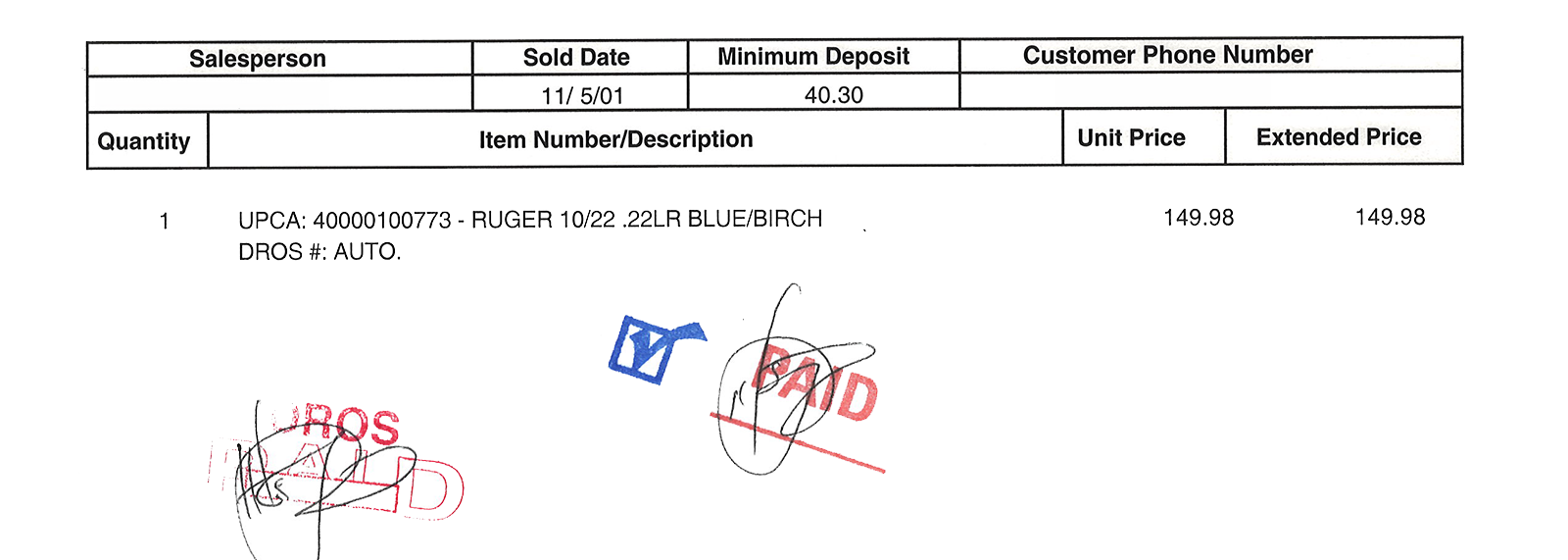
Back in 2001, I bought a Ruger 10/22 Carbine.
Cropped scan of the actual California Dealer Record of Sale (DROS) on 05 Nov 2001.
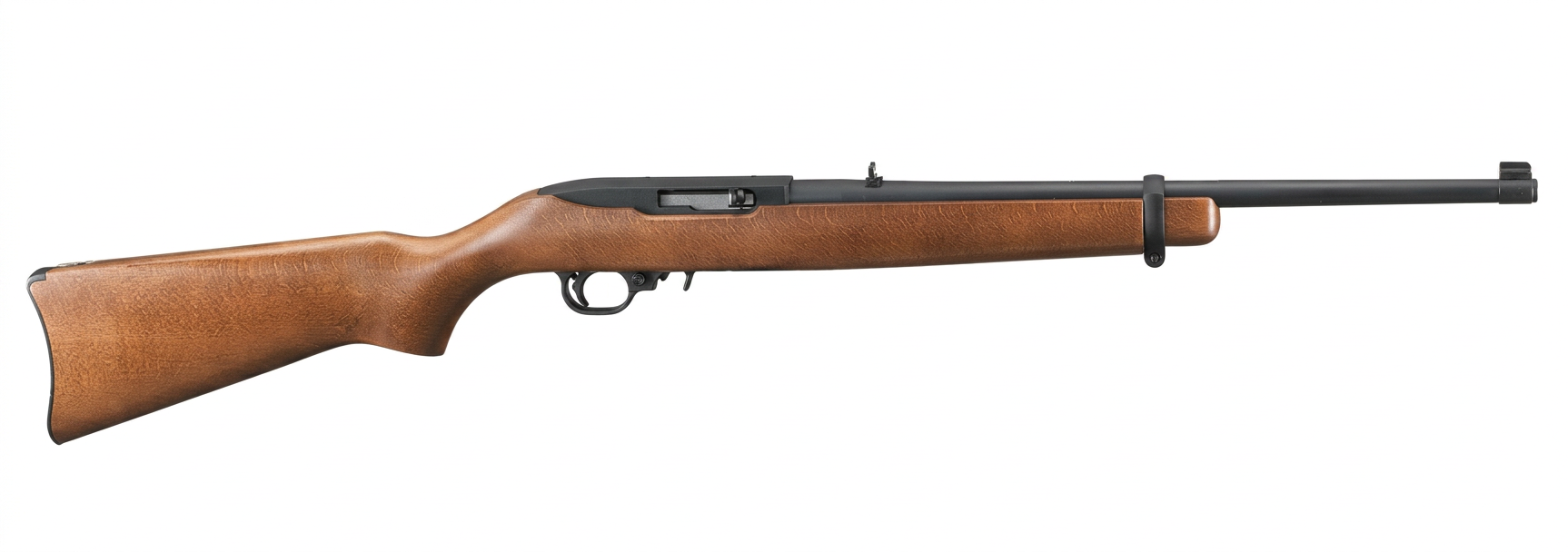
At the time ‘Carbine’ was the name for the standard base model with the 18.5″ barrel rifle a wood stock, and was very inexpensive (sub-$200 USD out the door).
Stock photo of Ruger 10/22 Carbine with the classic wood stock and barrel band
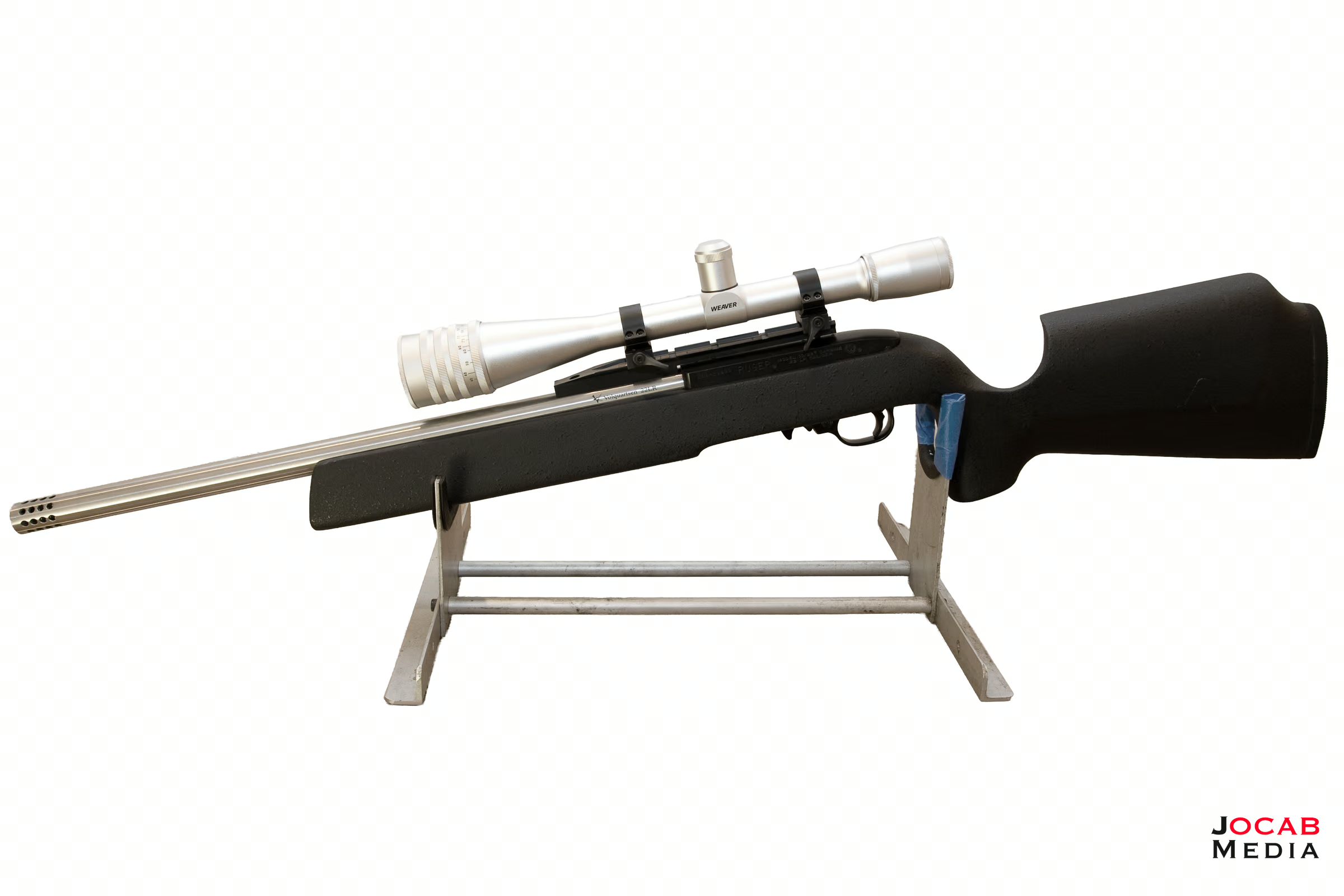
After acquiring a Ruger 10/22, I immediately swapped out the barrel for a Volquartsen bull barrel (16.5″ Tension barrel) and a Hogue Overmold stock. Then I did minor upgrades like a Volquartsen trigger spring kit and Volquartsen extractor. I later swapped out the Hogue stock for a Bell and Carlson stock and then the Volquartsen Tension barrel for a 20″ Volquartsen stainless steel match barrel.
Old photo of my Ruger 10/22 in a Bell and Carlson Anschutz-style stock from mid-2000’s.
My Ruger 10/22 sat around untouched for several years between 2005 and 2015 as my evolving shooting disciplines did not involve rimfire.
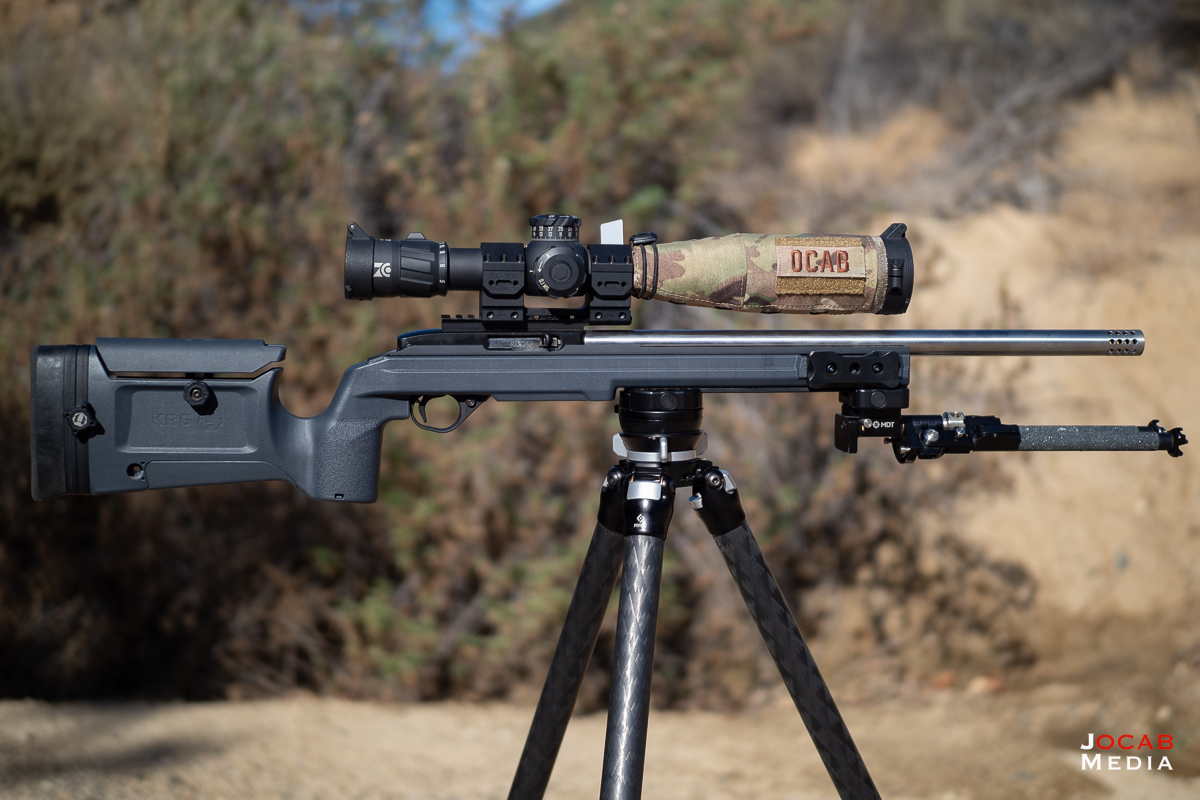
In the mid-2010s, I started to dabble more into bolt rifles which led me back to rimfire by way of NRL22. While I use bolt rifles for NRL22, I did dust off my 10/22 to play around with it from time to time. A few years ago, I wanted to see if I could make my 10/22 viable for NRL22 matches, which led me to swapping out the Bell and Carlson stock for a KRG Bravo.
My Ruger 10/22 in the KRG Bravo 10/22 chassis
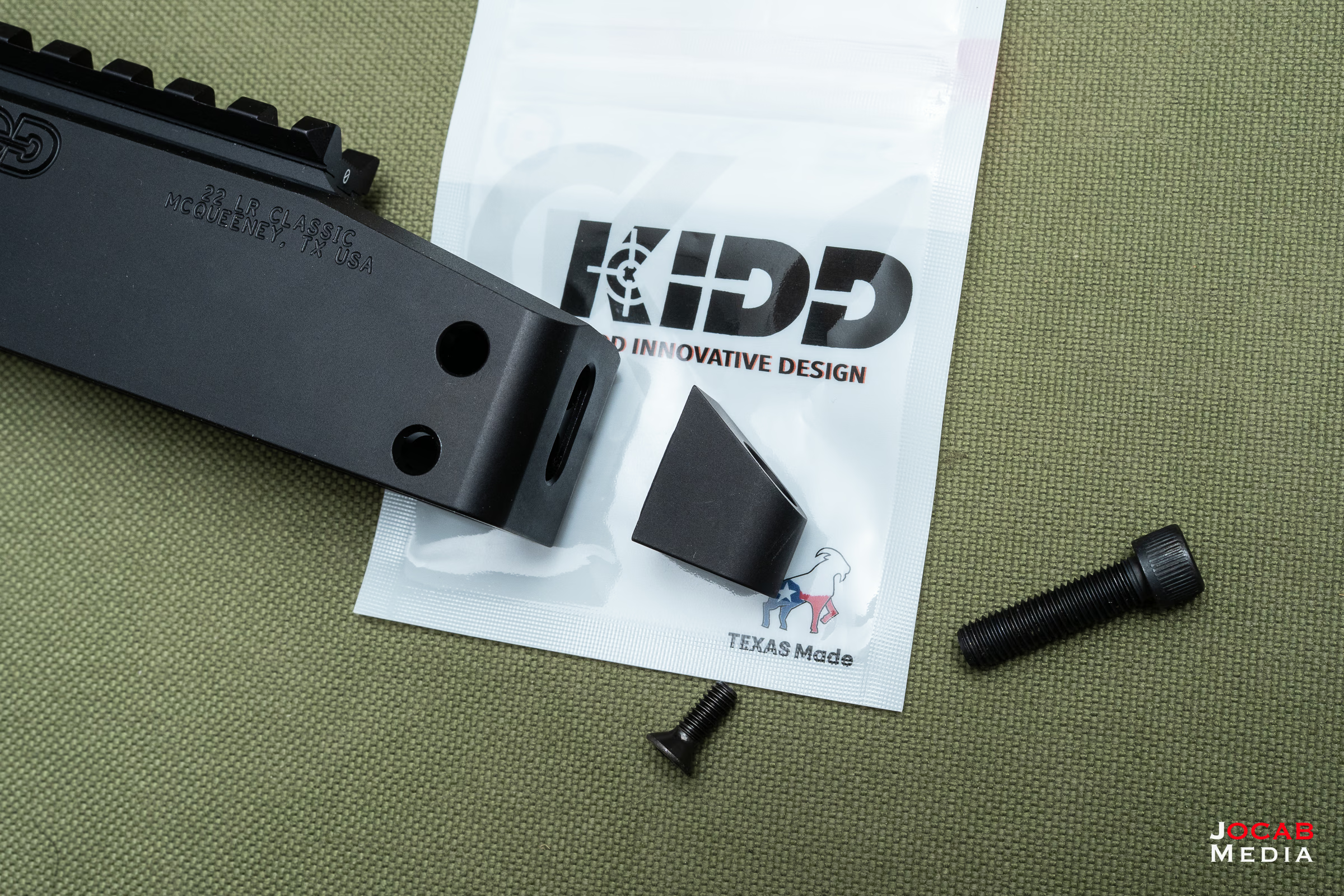
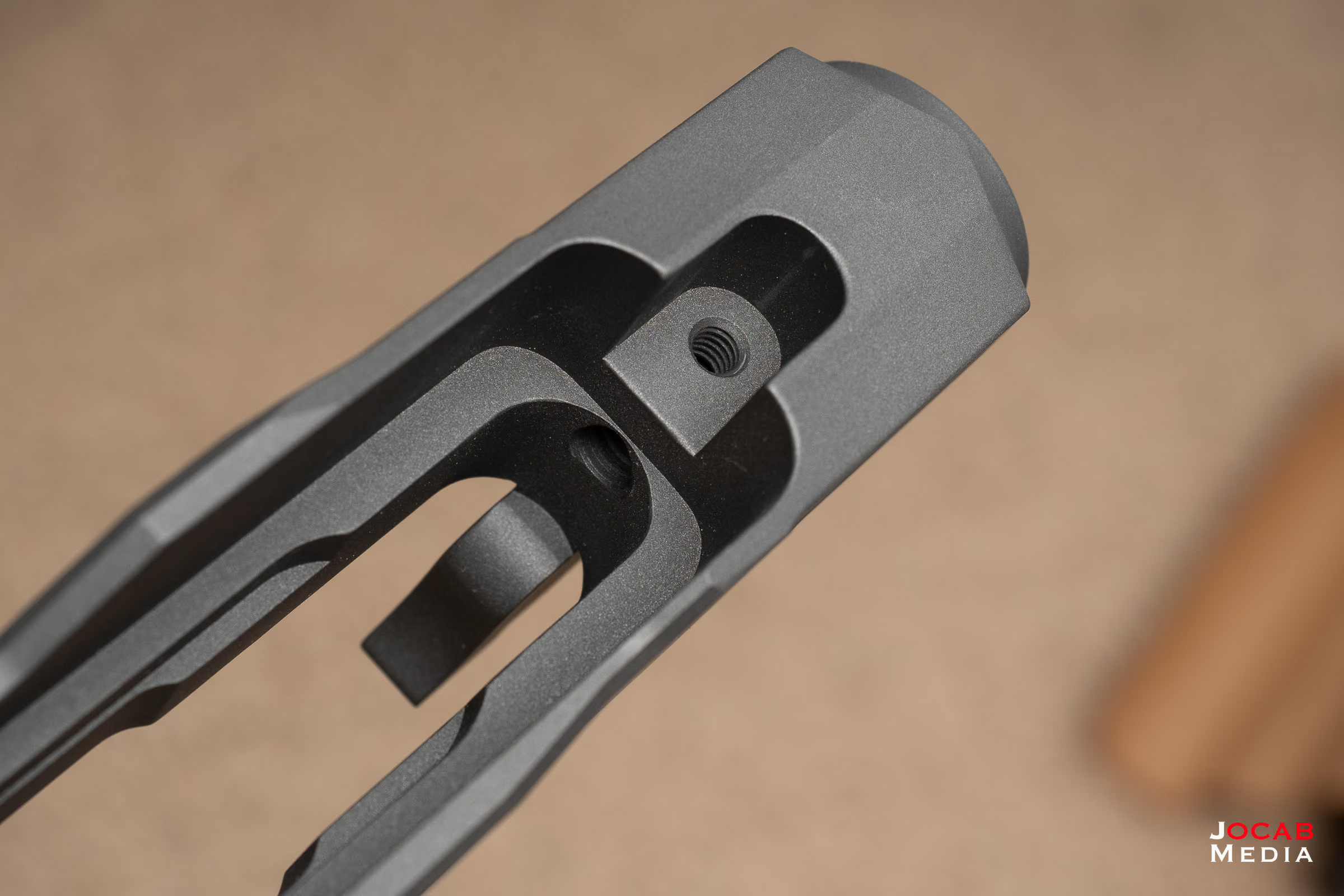
As I continued to experiment with the 10/22 in NRL22 matches, I found the single action screw to be detrimental to the consistency of my rifle and I started looking at the KIDD receiver which can use an optional rear tang screw. The rear tang would work in conjunction with any stock or chassis that is inlet for it, and provides an additional action screw to keep the receiver locked into place to the stock or chassis, to keep it from pivoting or rocking in the stock on a single action screw.
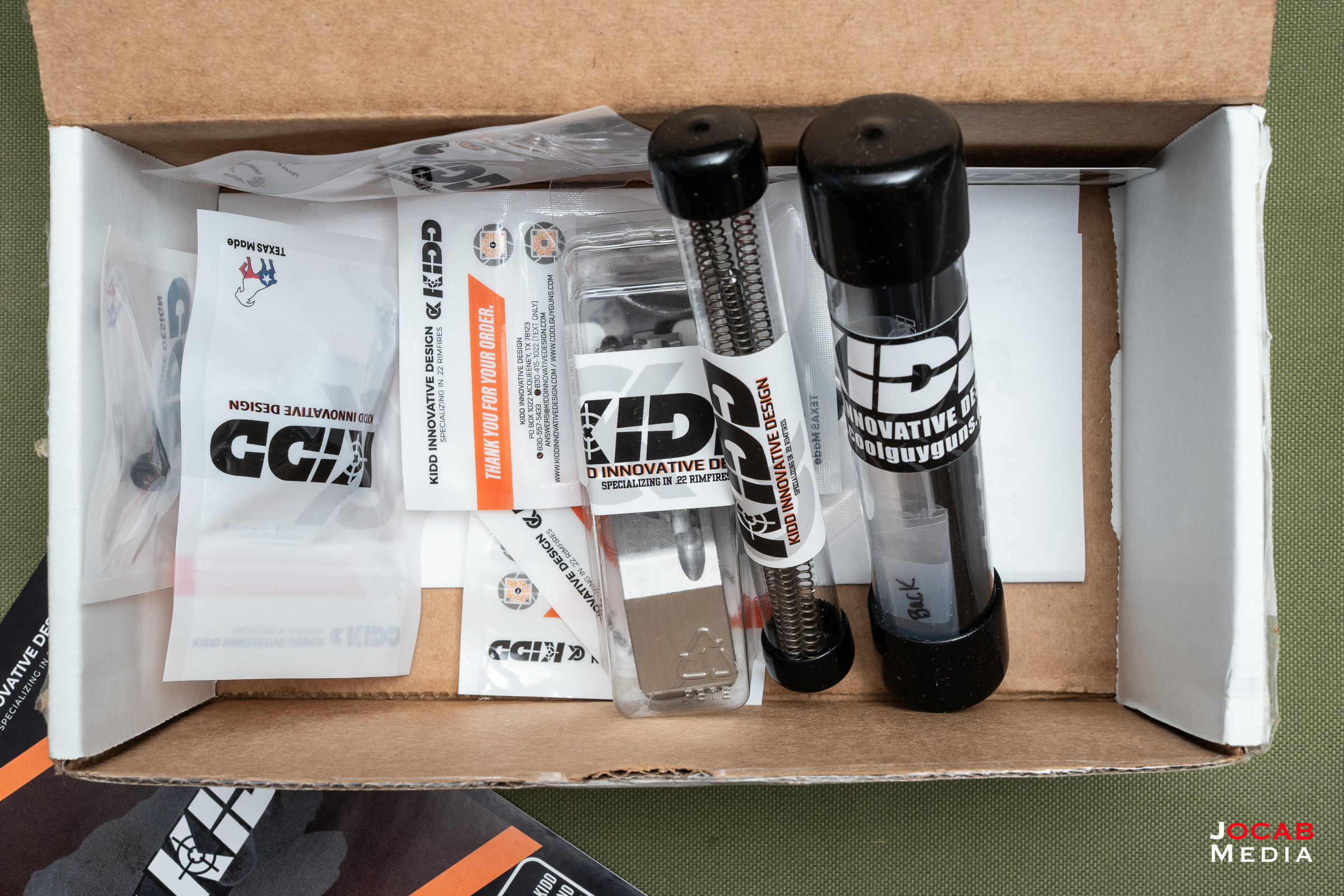
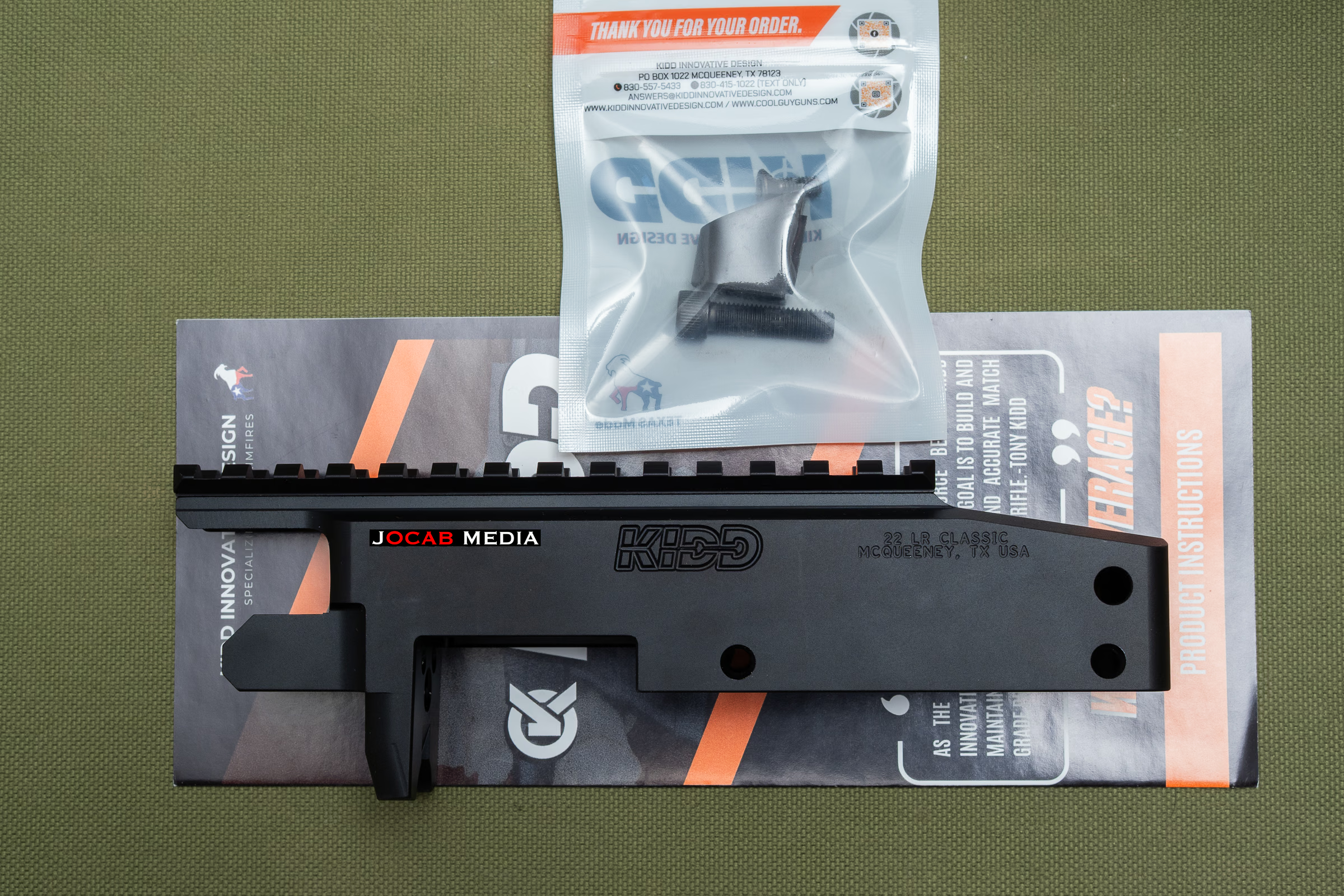
This resulted in the order being placed in 2025 for a KIDD 10/22 classic slip fit receiver and the corresponding KIDD receiver parts to eliminate all remnants of the original Ruger 10/22 that I bought in 2001.
Even with this setup, I discovered that I was not happy with the KRG Bravo 10/22 chassis. It is a decent lower budget chassis for general purpose use with centerfire rifles. But I feel the KRG Bravo is lacking for PRS/NRL22 style shooting, as it does not have the adaptability found in more feature-rich (and more expensive) chassis systems.
KIDD receiver in KRG Bravo 10/22 chassis
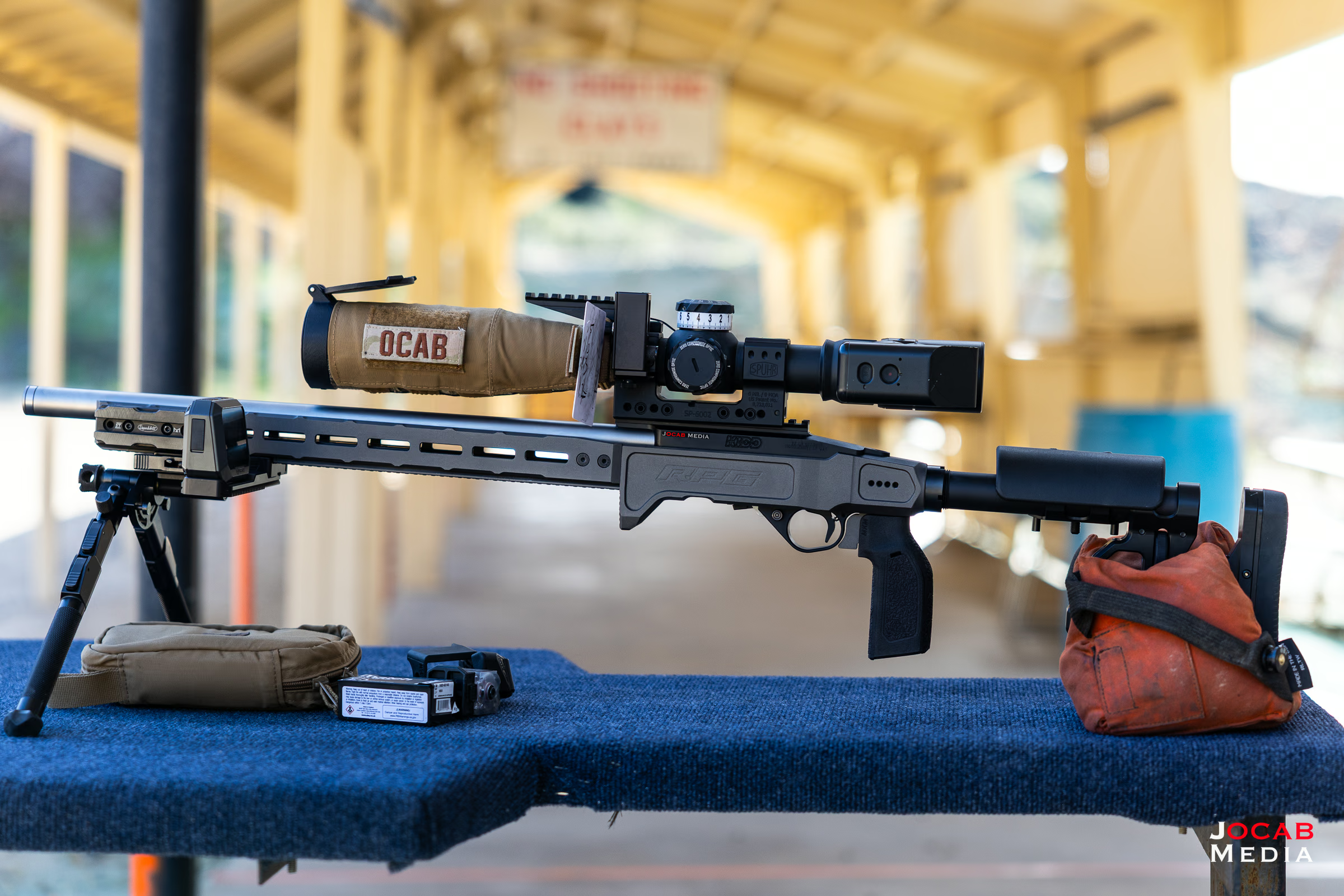
Incidentally, someone had messaged me asking my opinion about the Victor Company RPG chassis shortly after I re-assembled my 10/22 on the KIDD receiver. I had never heard of the RPG chassis and started doing a little research on it.
What I saw intrigued me enough and I decided to pick up a Victor Company RPG chassis so I could provide an opinion on it backed by actual hands-on experience.
In the latter half of 2025, California had passed a law effectively making barrel purchases more difficult, requiring retailers to conduct identity and age verification for all sales including online starting in 2026, and requiring all barrels to go through FFL dealers in California in 2027.
This prompted me to get a KIDD 20″ Stainless Steel match barrel from KIDD before the 2026 restrictions went into effect.
With the new KIDD barrel, I thought my KIDD 10/22 build reached its final form.
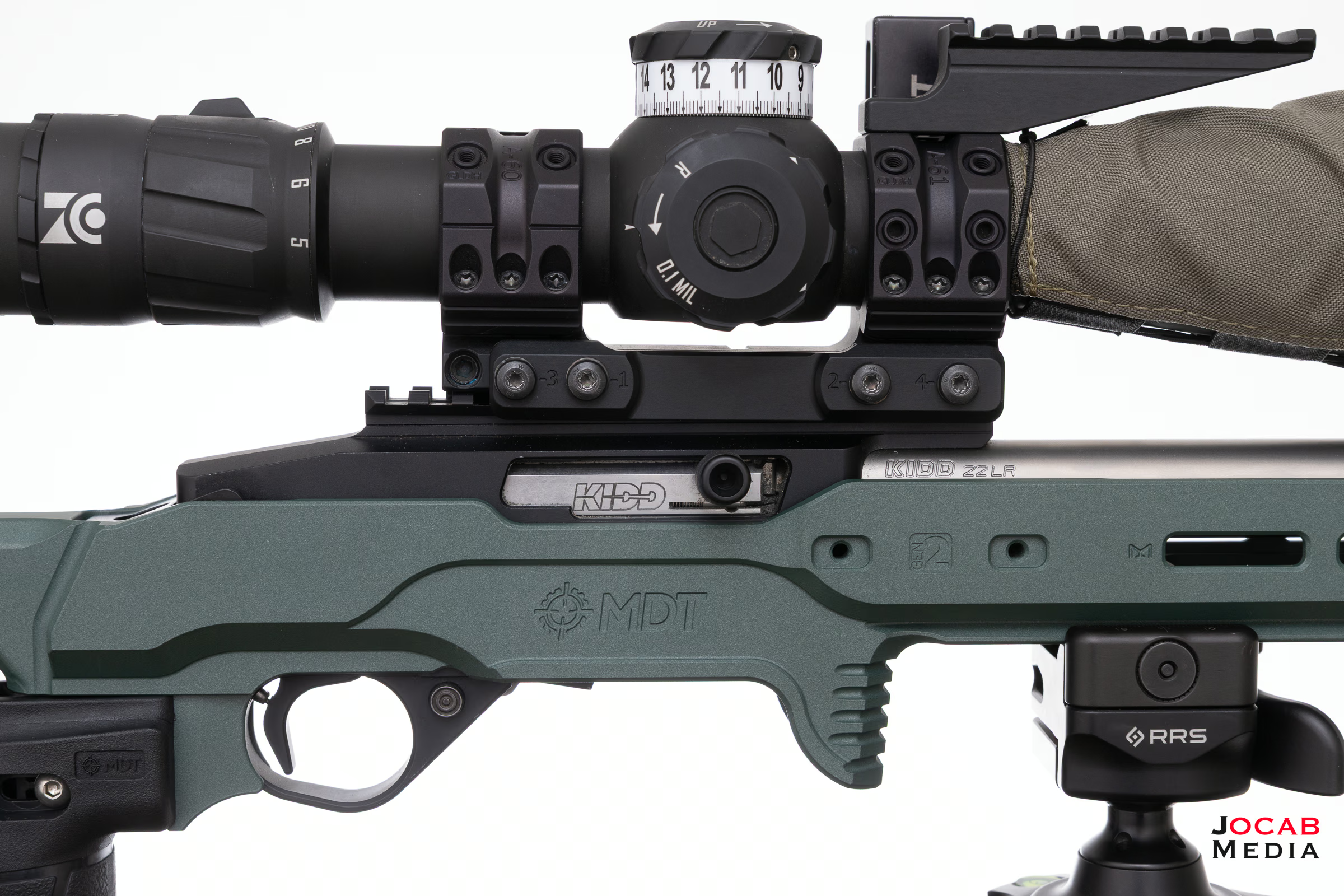
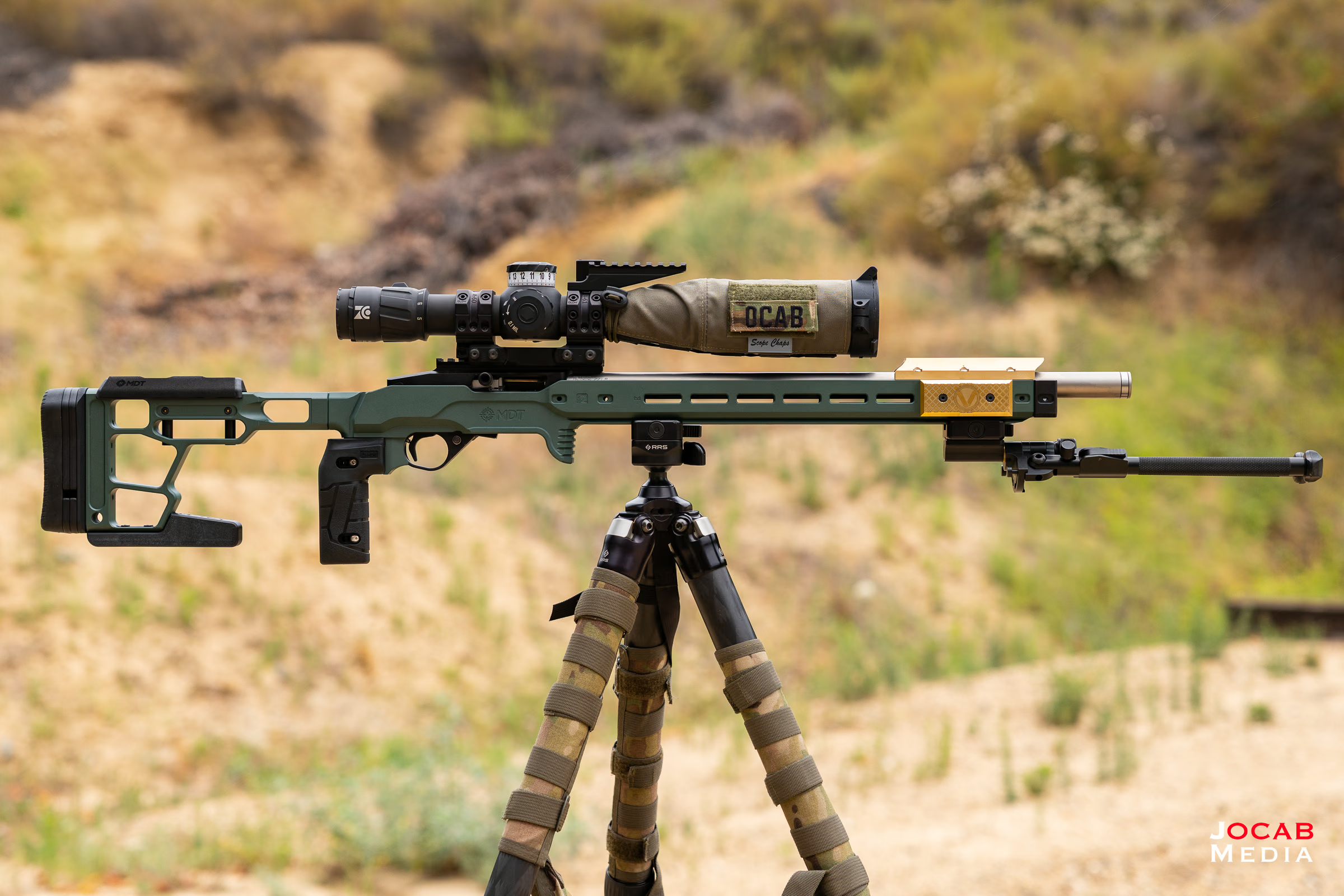
However, after running the rifle in the Victor Company RPG chassis for a few months, I reversed course and acquired the MDT ACC Premier Gen 2 chassis to reach the form it is now currently in.
KIDD 10/22 Build Sheet
Part/Service
Make/Model
Cost (at time of purchase)
Action
KIDD Aftermarket Black .22LR Receiver Classic Slip Fit Model with Rear Tang
$269
Bolt
KIDD .22LR Bolt Ingraved Silver
$149
Bolt Recoil System
KIDD Black Viton Charging Assembly with Springs
$50
Barrel
KIDD 20″ 22LR Match Bead Blasted Stainless Barrel
$242
Trigger
KIDD Single Stage 1.5 lb
$215
Chassis
MDT ACC Premier Gen 2, Charcoal Green, Non-Folding
Without the optics, this KIDD 10/22 build came in at $2139 USD, which is based on the pricing at the time I ordered the parts, and does not include the California fees and taxes to process an out-of-state transfer on the receiver.
Component Breakdown
At the time I wrote this article, the price of a KIDD receiver alone costs more than a complete off-the-shelf Ruger 10/22 standard model with the 18.5″ barrel and birch stock, which will likely agitate most people. However, the quality control of a KIDD receiver and the corresponding parts is far above what you get with the Ruger 10/22.
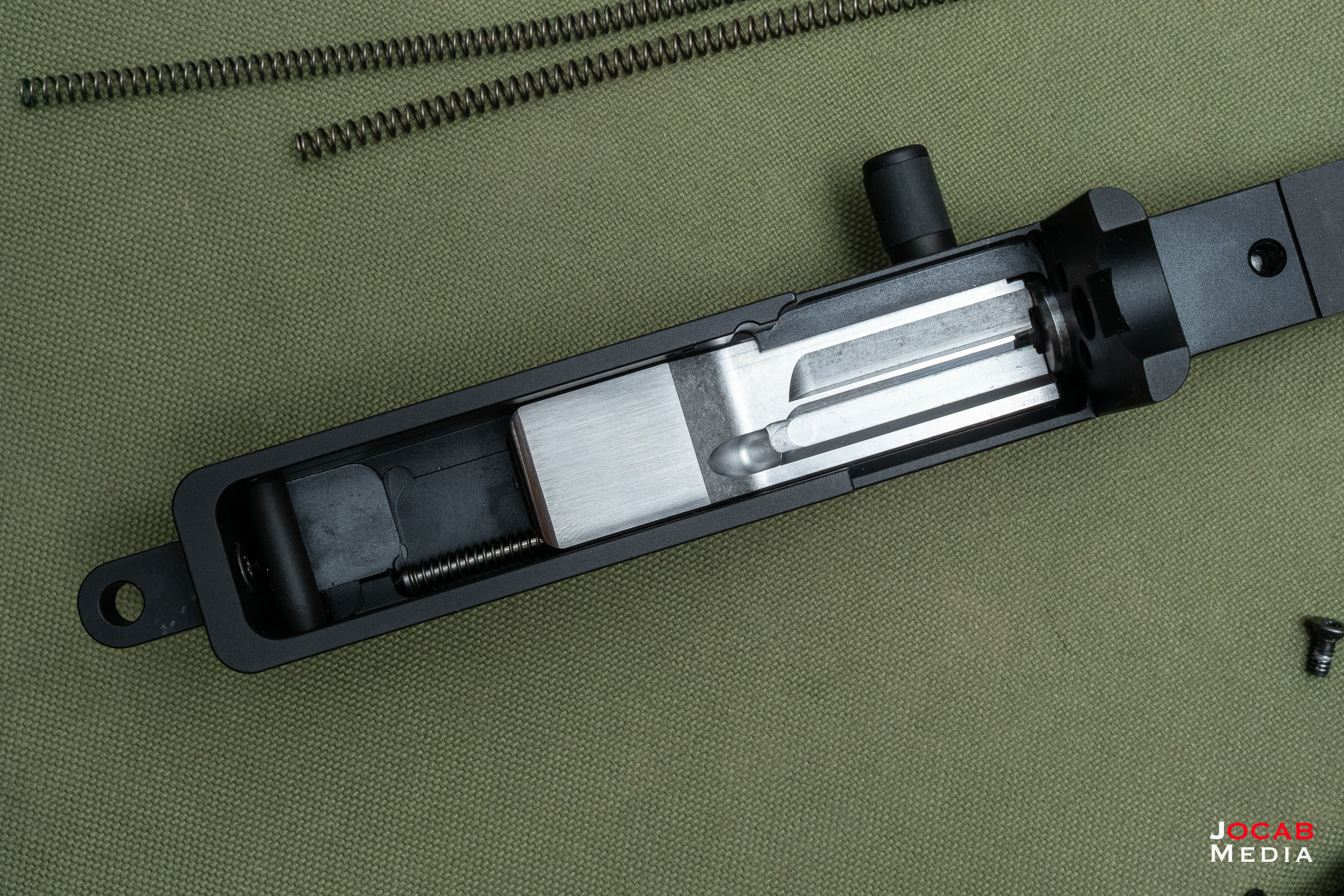
A Ruger 10/22 receiver is cast aluminum that is painted, which is why the receiver will look rough. Whereas a KIDD receiver is made out of anodized billet 6061-T6 aluminum and has the clean lines you would expect out of a quality produced machine.
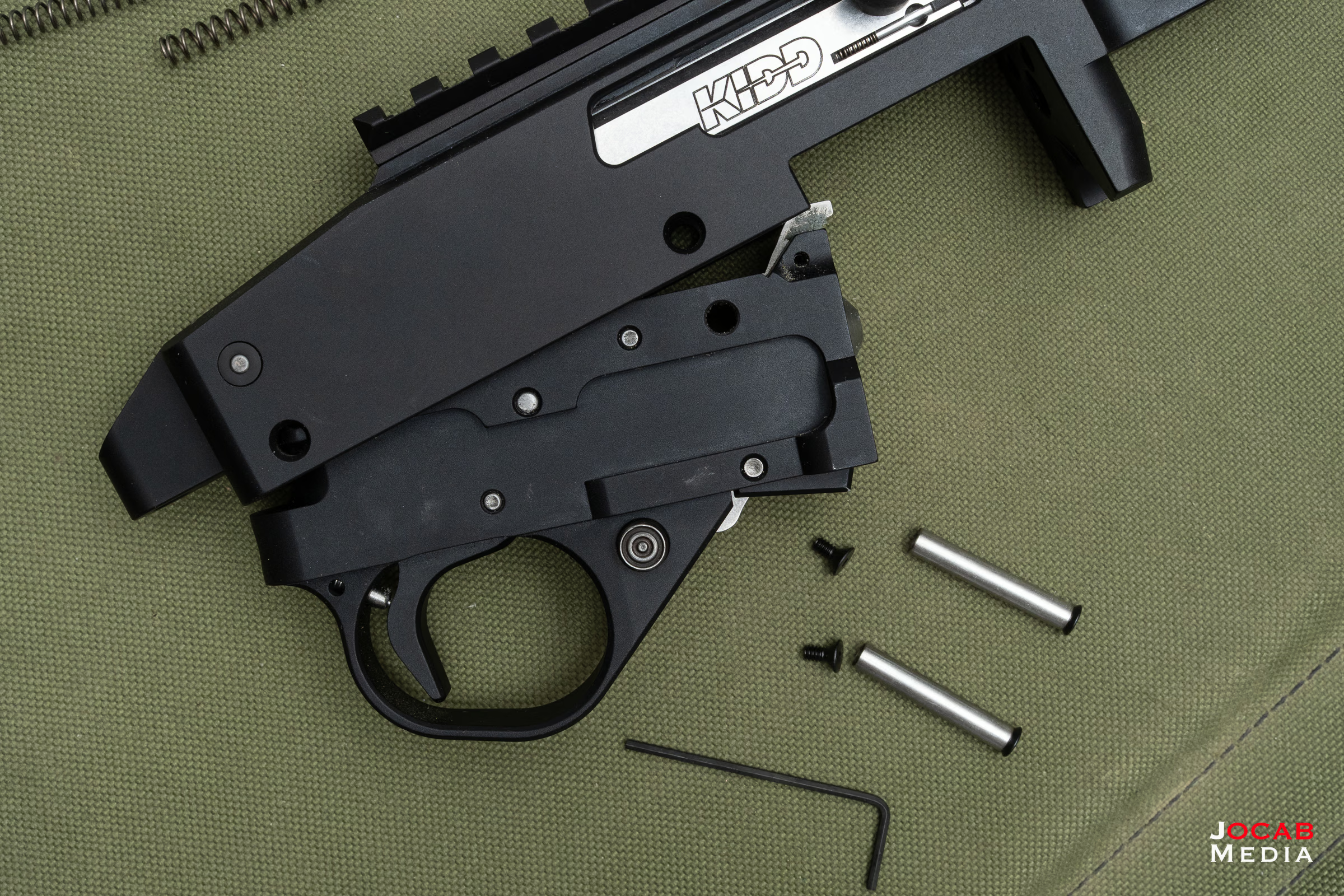
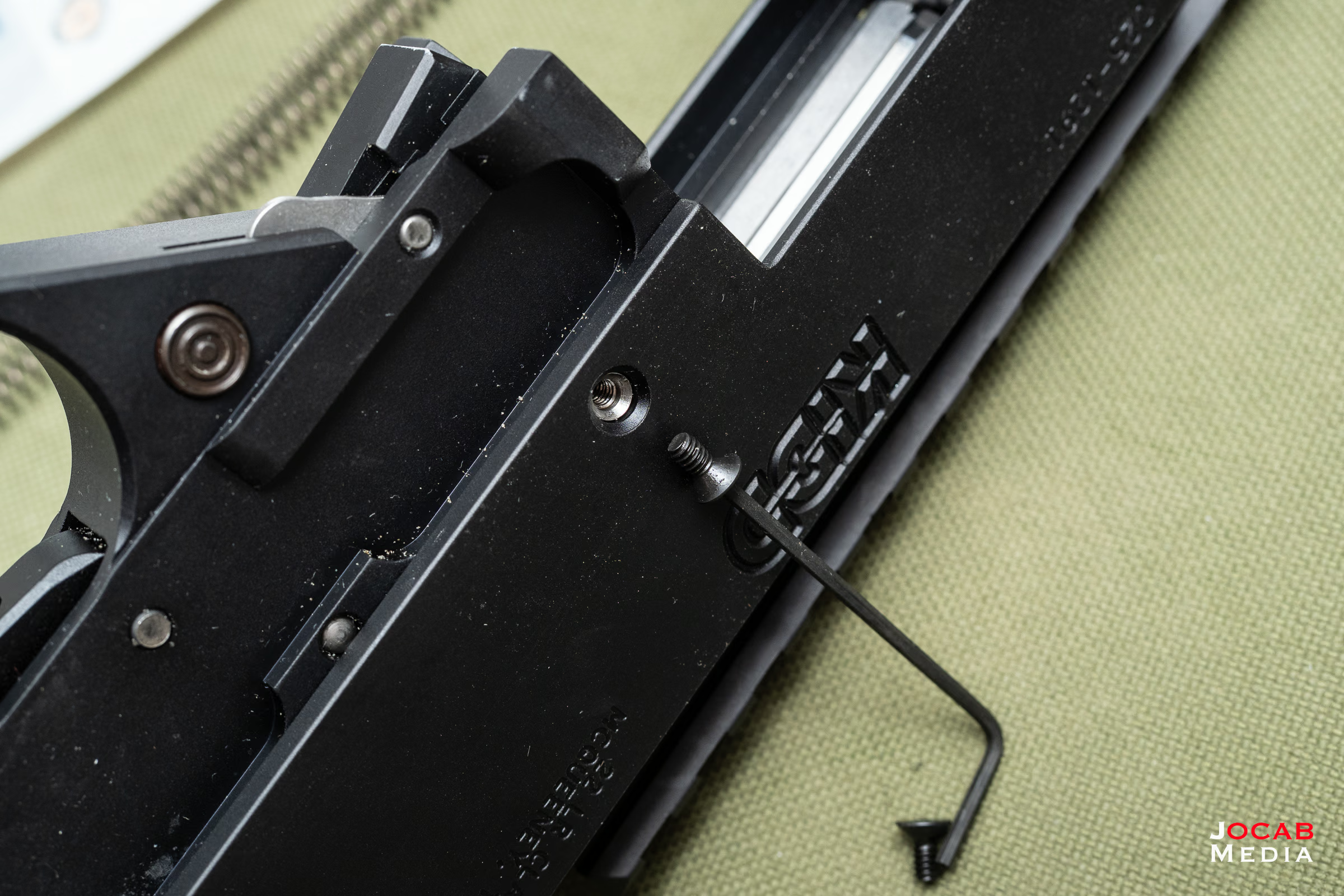
The KIDD receiver also eliminates the standard trigger pins to mate the trigger to the receiver, which are only secured by virtue of being held in by the stock. KIDD uses threaded cross pins for a cleaner, secure method of retaining the trigger pins holding the KIDD single-stage 1.5lb trigger that I am using for this build.
In general, the fit and finish and the quality control of a KIDD receiver warrants the price difference over the cheaply manufactured, mass produced Ruger 10/22 receiver.
The KIDD 10/22 trigger is arguably the best 10/22 trigger available, even if price has crept higher over the years. People continue to balk at the price of a KIDD trigger, opting to modify the factory trigger to get better performance at a lower investment.
While the latter is an option that I elected myself early on, I have to say that the KIDD 10/22 trigger is a must have for any 10/22 owner that wants the best experience with their rifle.
Naturally, I used a KIDD bolt with a KIDD recoil system and charging handle.
As far as the KIDD 20″ stainless steel match barrel, it is a straightforward choice given KIDD is known for quality barrels and are easy to obtain with no wait list.
I feel that this build is equally defined by the chassis as it is the receiver, as the chassis acts as the main interface between the shooter and the rifle. While I am now using the MDT ACC Premier Gen 2, I need to spend a little time discussing the Victor Company RPG.
As mentioned before, I was never really satisfied with the KRG Bravo 10/22 chassis. It was suitable for NRL22, but it did not have ergonomics and balance I wanted from a rifle. Someone made a comment on social media about the Victor Company RPG and prompted me to seek out a little more information on it, and I decided to get one to try out.
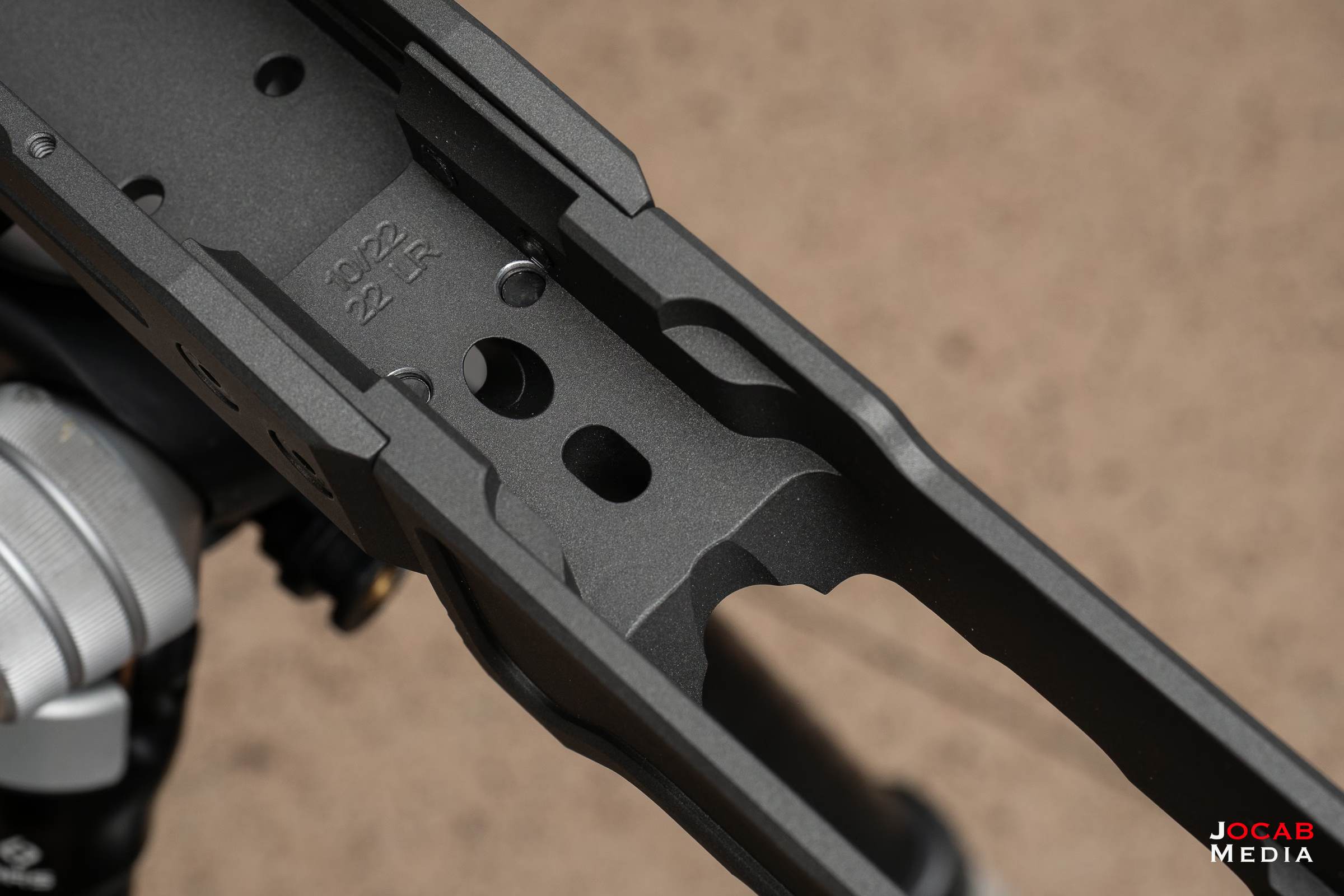
Out of the box, the chassis appeared well machined. However, the process of dropping in the rifle into the chassis changed my opinion on this matter. When trying to assemble the barrelled action into the RPG chassis, the rear tang hole would not line up with the threaded hole in the RPG chassis.
Untouched rear tang area. Material later removed in the rear inlet.
I had to use a Dremel to remove material from the inside of the RPG inlet in order for the receiver to set back far enough to the rear for the rear tang screw to align in place.
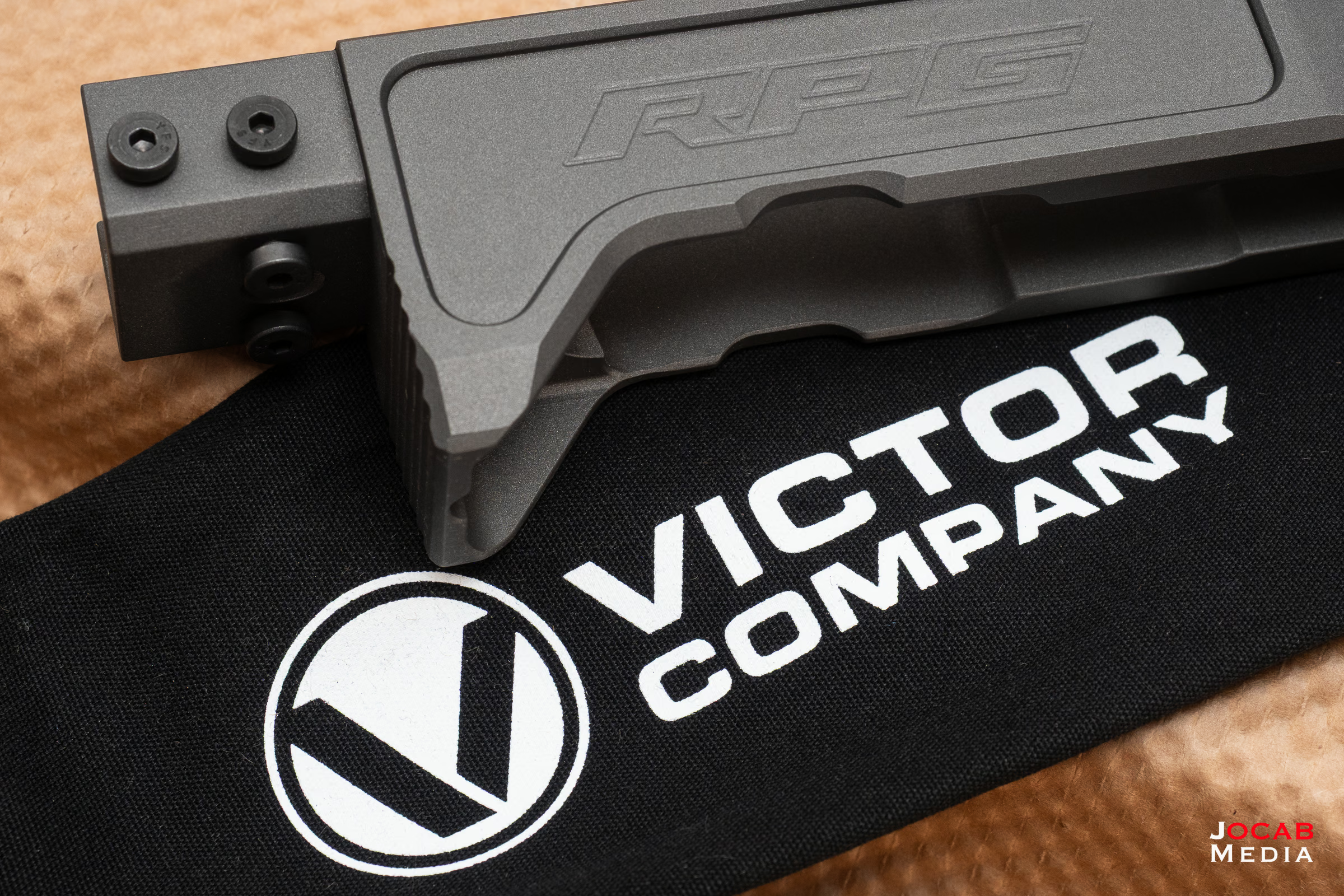
A second issue is that that Arca dovetail on the competition forend is not to the Really Right Stuff 1.5″ dovetail specification. It is wider to some degree. What this means is you have any lever clamp that is set to close properly on a RRS 1.5″ plate, it will not be able to close on the Victor Company forend.
Fortunately, I have adjustable RRS lever clamps. However, after every use of the Victor Company RPG chassis with a tripod or a bipod with an adjustable lever clamp, I have to readjust the clamp of the bipod or tripod to use with any of my other chassis forends, Arca rails, and Arca plates that adhere to the RRS 1.5″ dovetail spec.
I am not sure if the Cerakote coating is the sole cause of this deviation. What often happens with chassis forends with milled Arca dovetails is that they will have these items Cerakoted and the thickness of the Cerakote is too much for the tolerance of the lever clamp and affects the tightness / tension of the clamp closure.
Someone pointed out that the stippled or texturing that is milled in the bottom of the forend could also be increasing the height of the dovetail resulting in the width being out of specification.
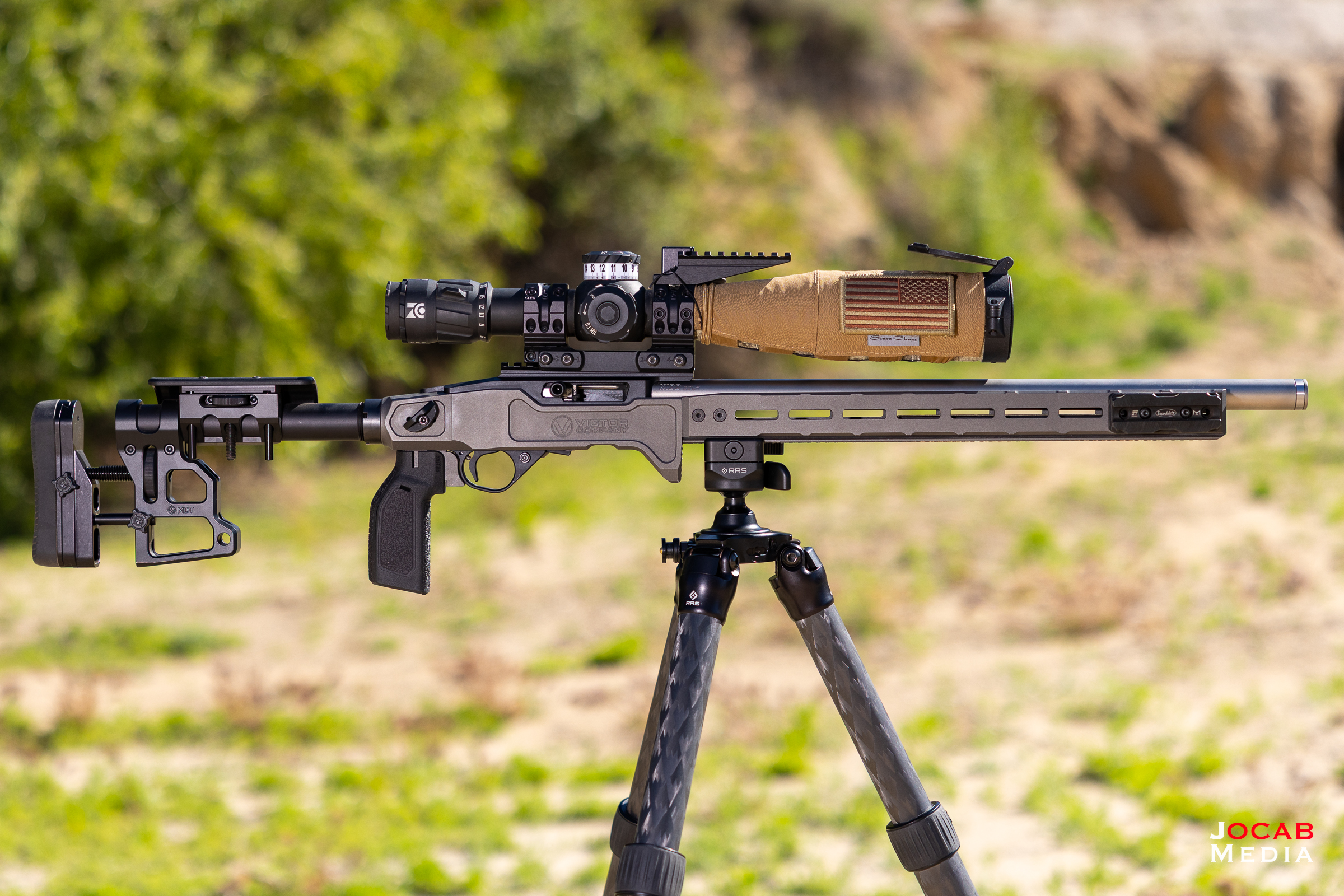
In any case, I mated the MDT Skeleton Carbine Stock (SCS) and MK Machining Adaptive Precision Grip to the Victor Company RPG chassis.
As far as the grip, I also did not research too long before selecting the MK Machining Adaptive Precision Grip. The RPG chassis will work with any non-beavertail AR-compatible grip, and I was already familiar with MK Machining (I actually bought two Zero Compromise Optic scopes from them before) and felt the Adaptive Precision Grip would likely work for me (vertical grip angle).
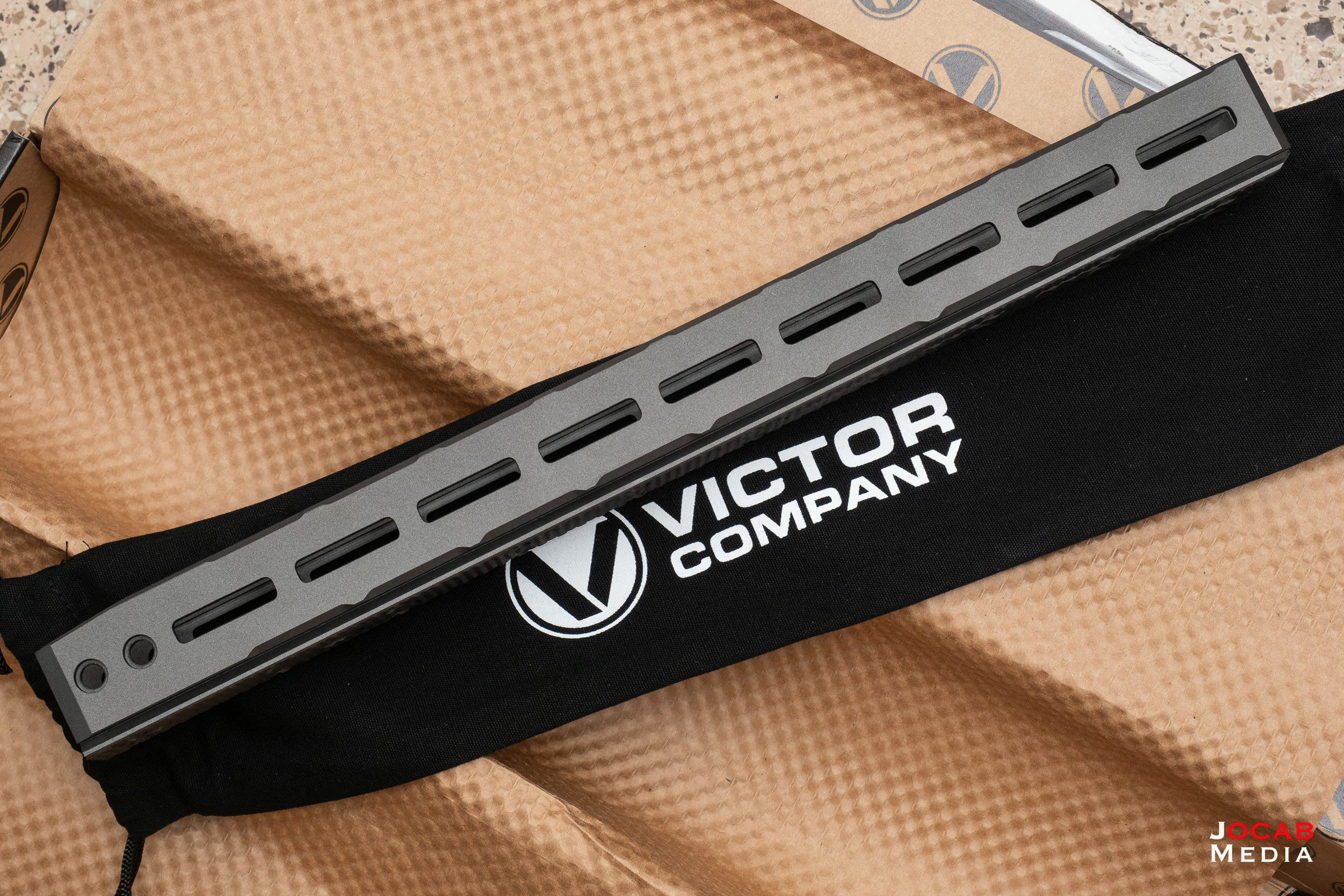
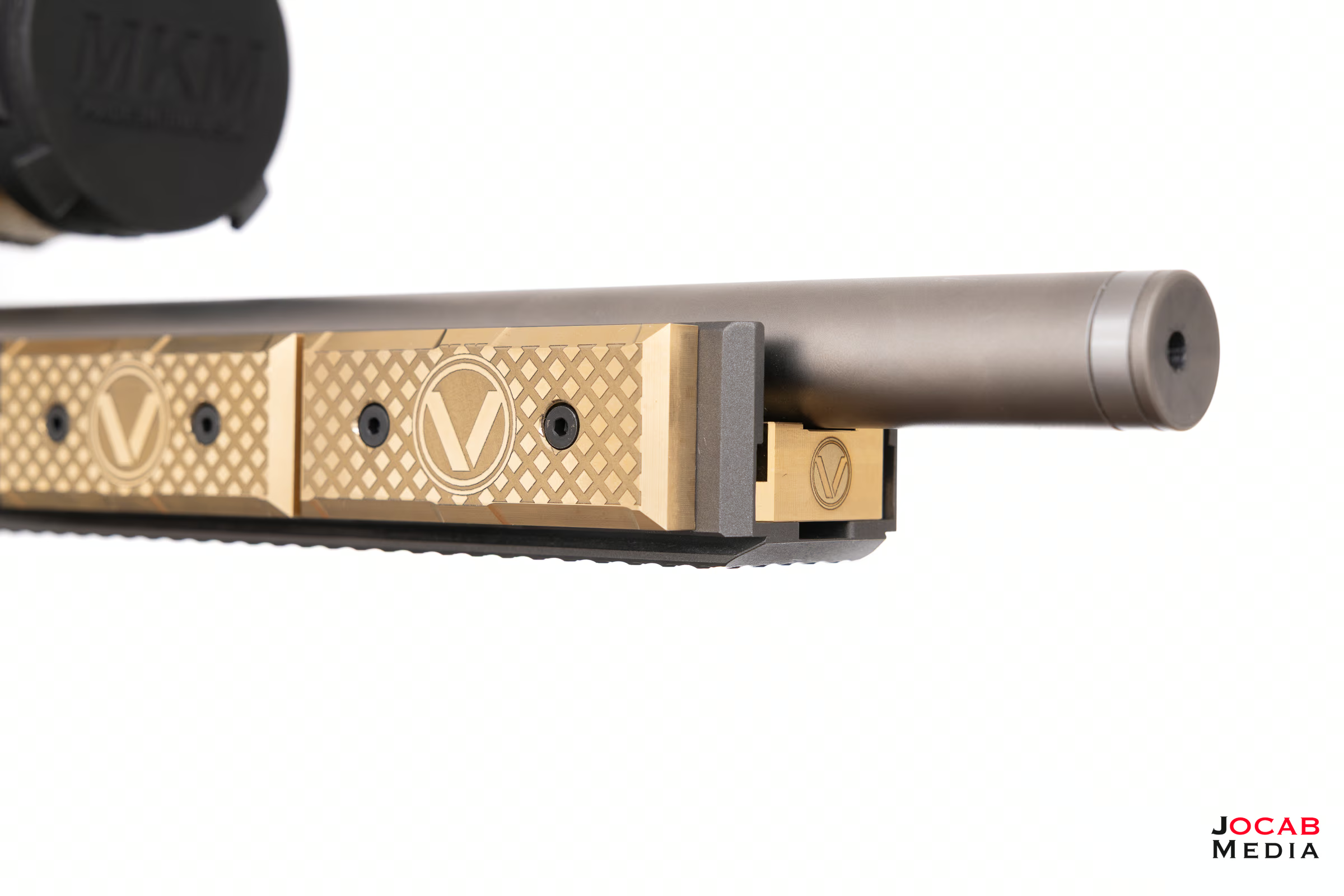
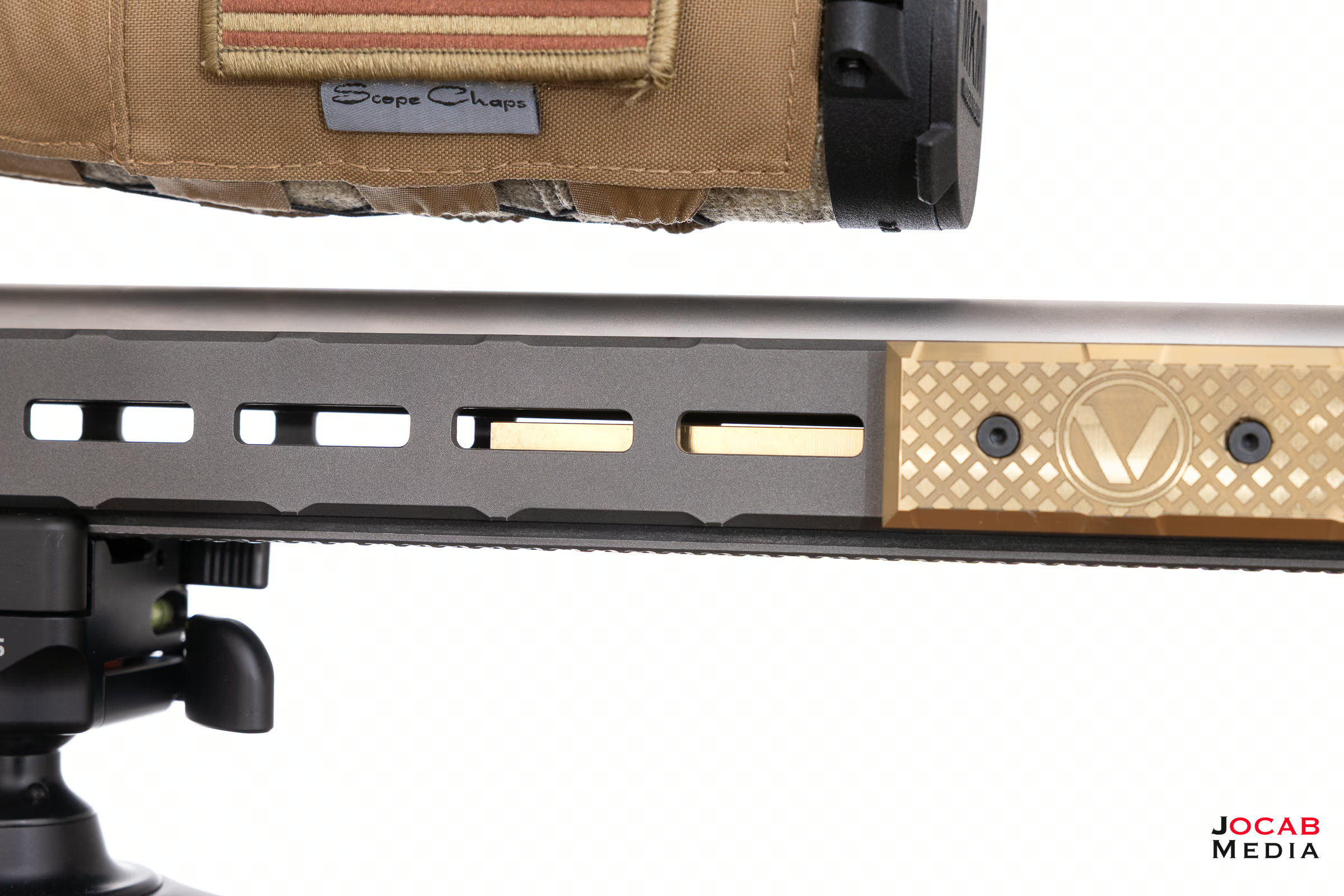
Overall this setup felt quite comfortable and the balance was decent. However, I wanted to tweak the balance further and acquired the brass internal weights and brass external MLOK weights by Victor Company.
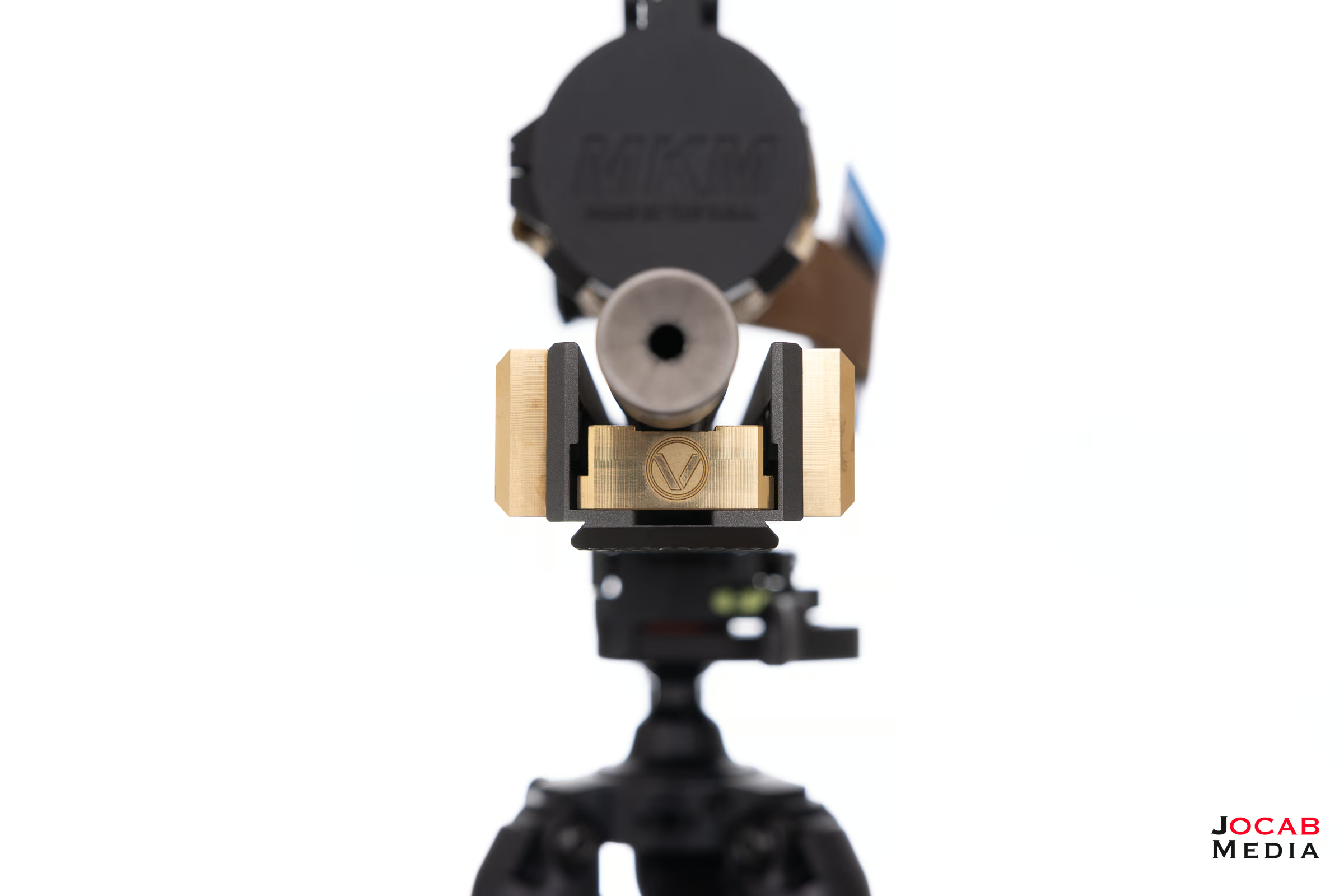
When I installed the brass weights which are thicker (and heavier) than the MDT ACC internal weights, it exacerbated the fact that the barreled action is not sitting straight and level in the Victor Company RPG chassis.
As you can see in the above photos, the barrel is favoring the right side of the forend inlet. Furthermore, the barrel is also canted/tilted below the level horizon line of the forend. This results in the barrel making contact with the thick internal weights that Victor Company produces for use in the RPG.
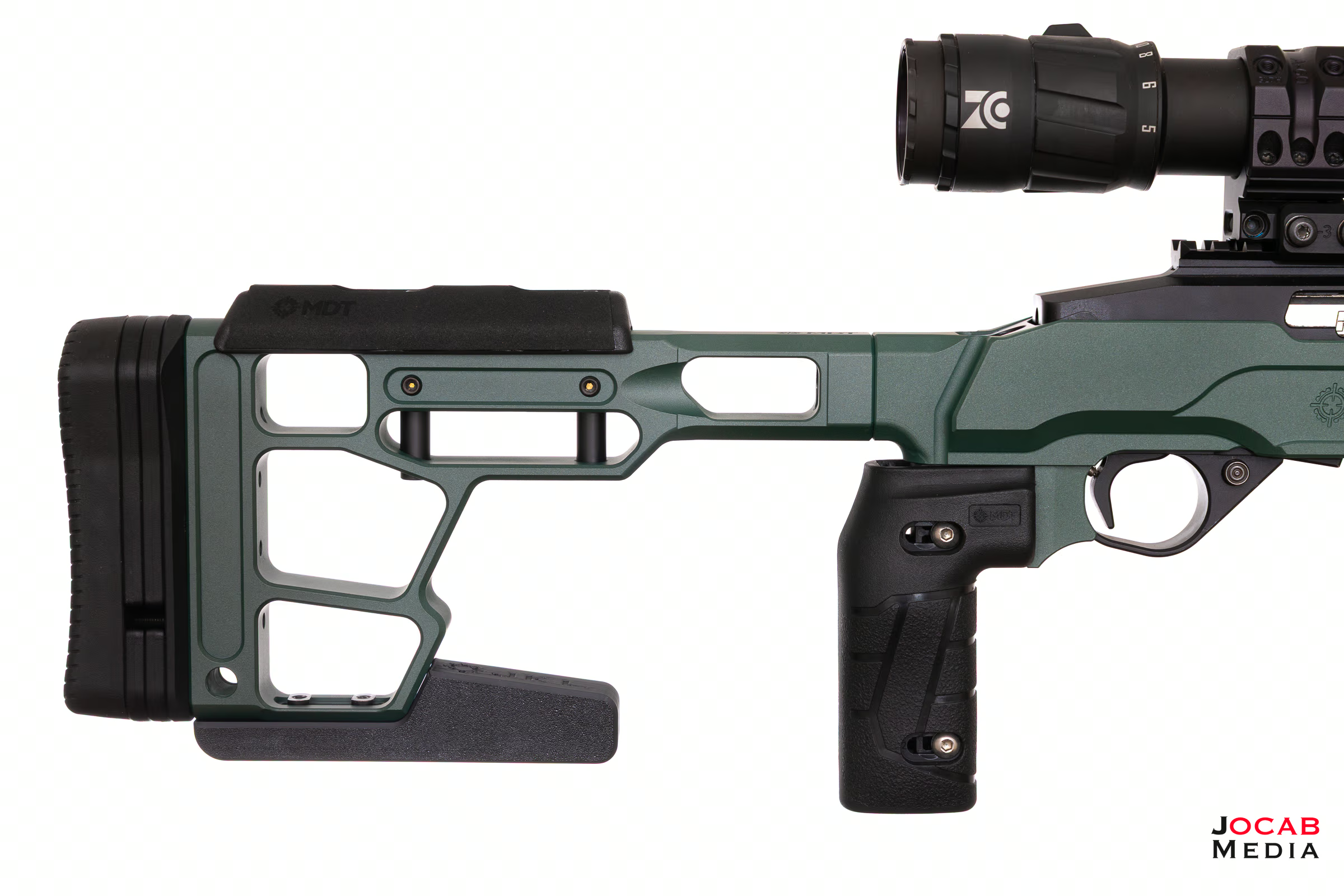
The fit and finish issues really started to eat away at me which prompted me to order the MDT ACC Premier Gen 2 non-folding chassis in charcoal green, which includes the MDT SRS-X Lite buttstock and MDT vertical grip.
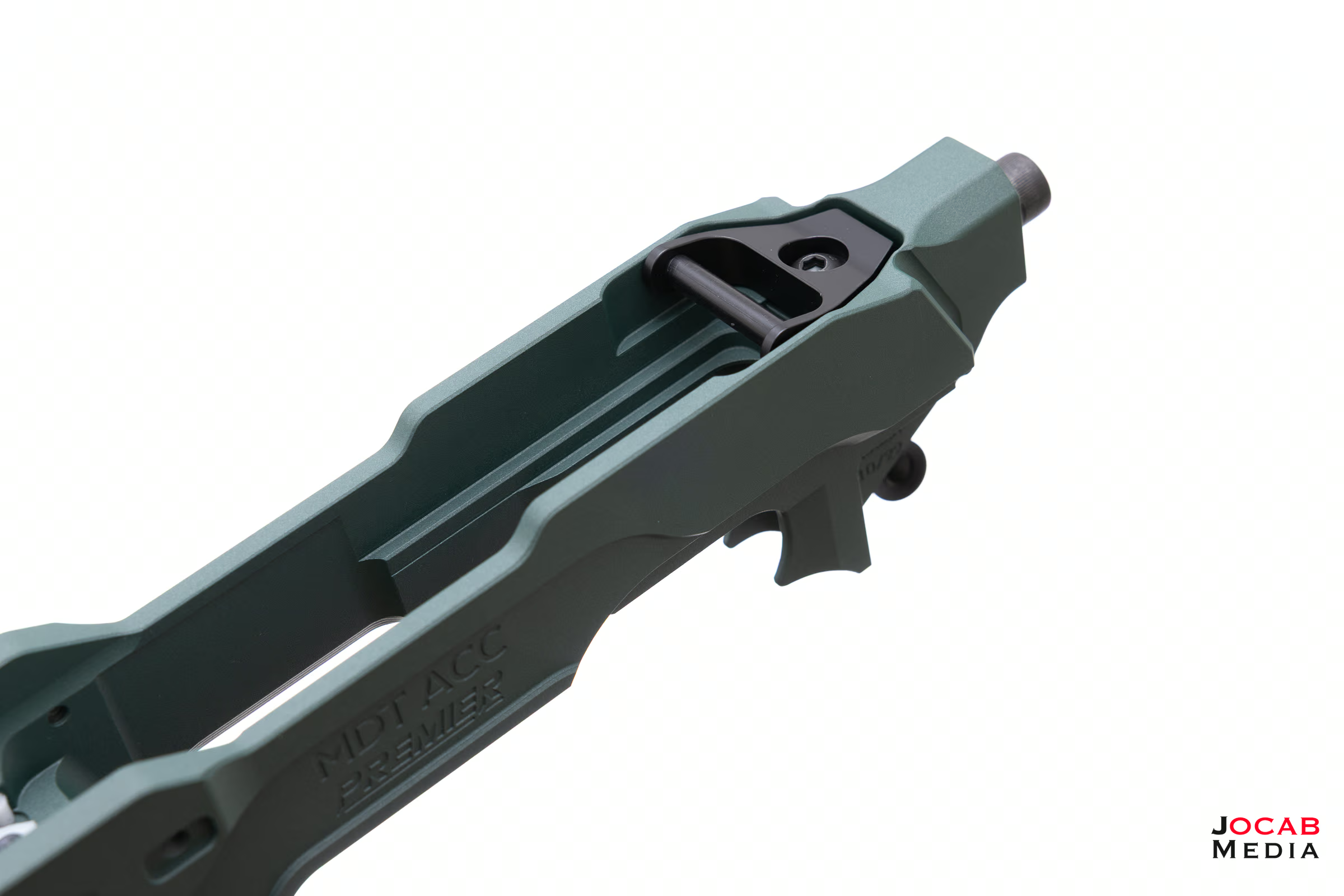
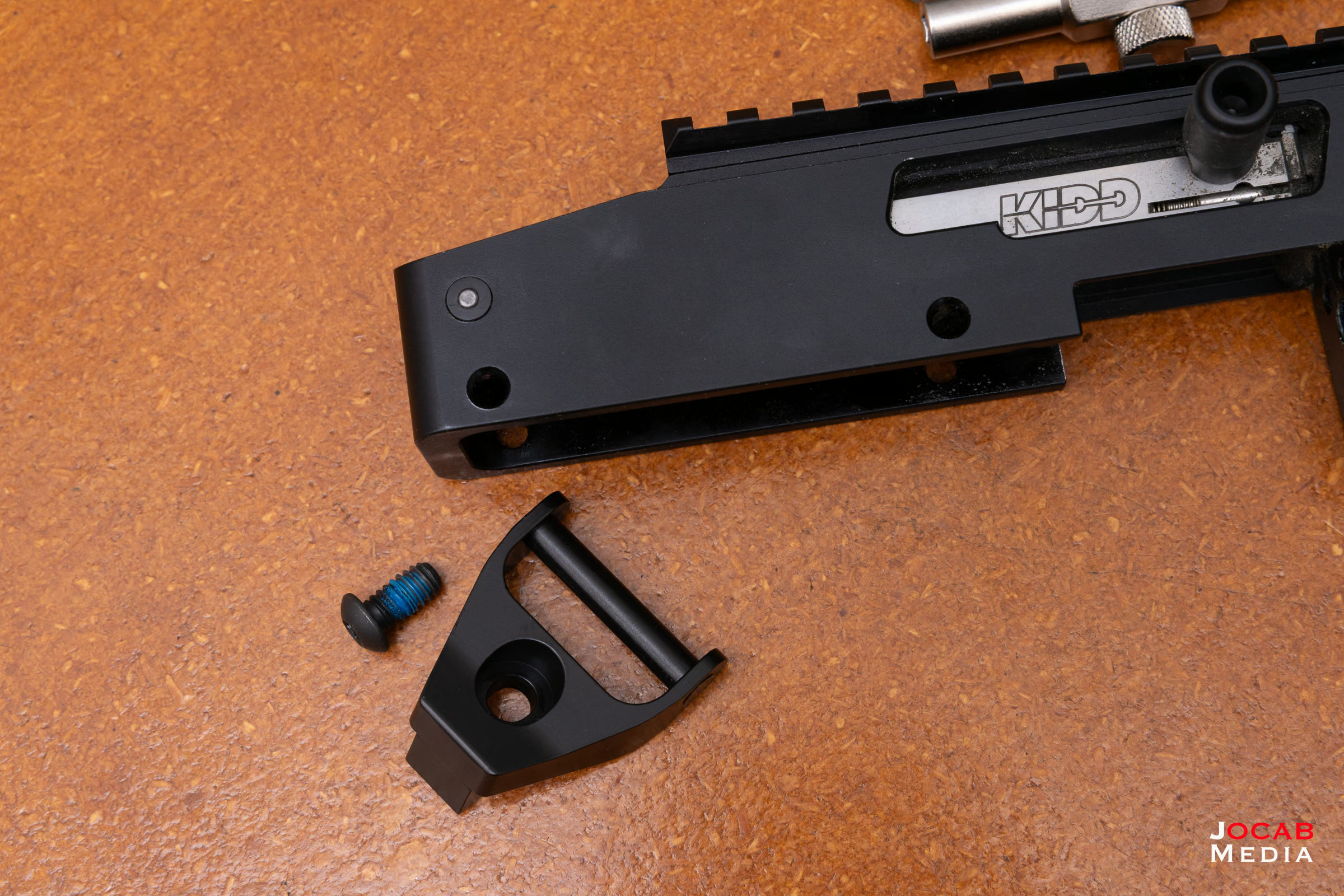
The amusing aspect of the MDT ACC Premier Gen 2 is that it is designed to use a proprietary method to secure the rear of the receiver to the chassis, negating the need to use the KIDD rear tang.
This component of the ACC Premier Gen 2 10/22 chassis replaces the recoil buffer pin as it functions not only as the buffer pin, it also secures the rear of the receiver to the chassis, preventing vertical and side-to-side play. The MDT proprietary rear mount point for the ACC Premier Gen 2 10/22 chassis makes it compatible with a factory Ruger 10/22 receiver.
KIDD did release a rear tang that will fot with the MDT ACC Premier Gen 2. Yet, I decided to install the MDT component and I discovered it is a solid fit and opted to use it over the KIDD rear tang.
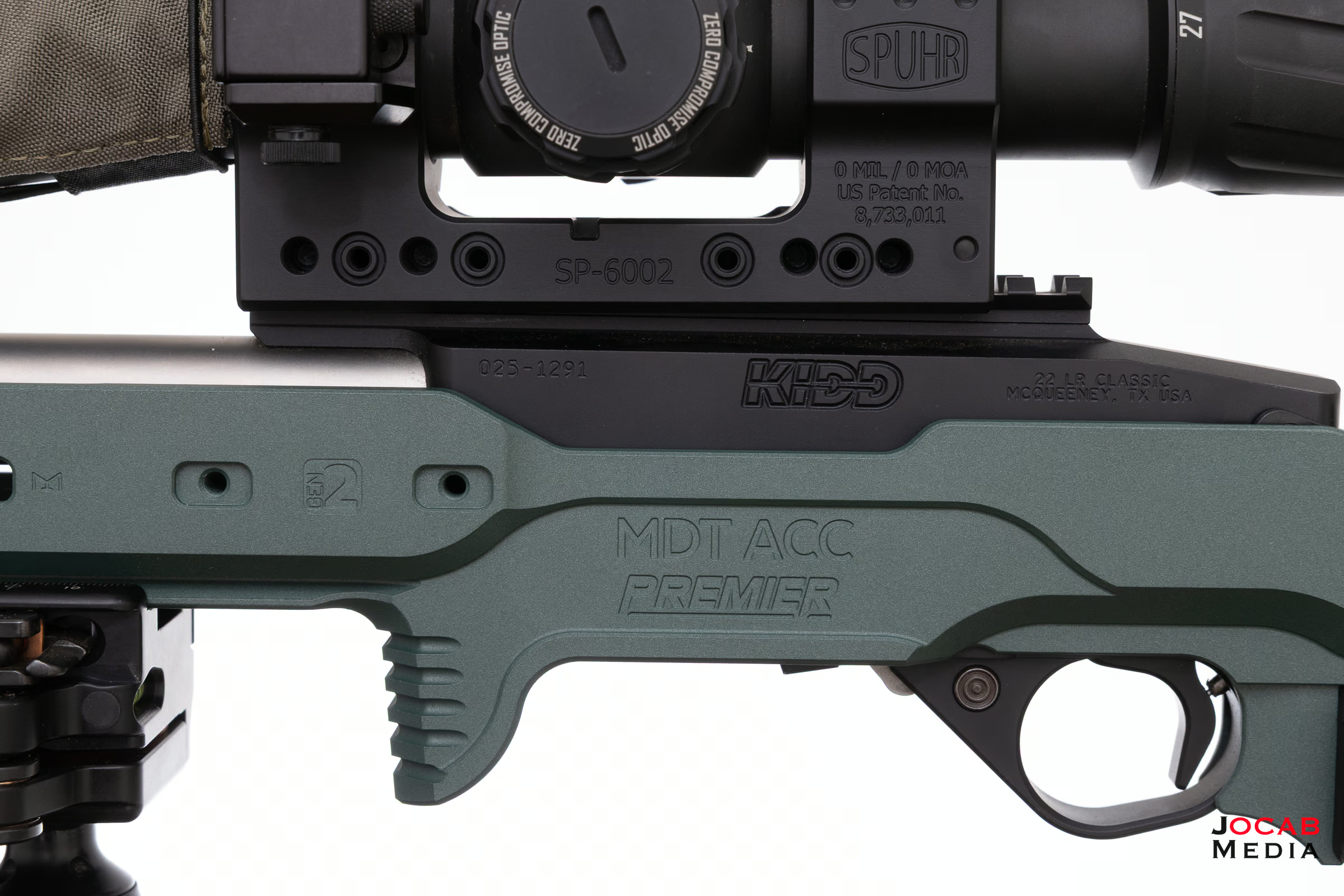
The fit and finish of the MDT ACC Premier Gen 2 for the 10/22 matches the same high quality control on all of the other MDT chassis for other actions and platforms.
I acquired a JKL Precision rear bag rider to use with the SRS-X Lite buttstock that is standard with the MDT ACC Premier Gen 2.
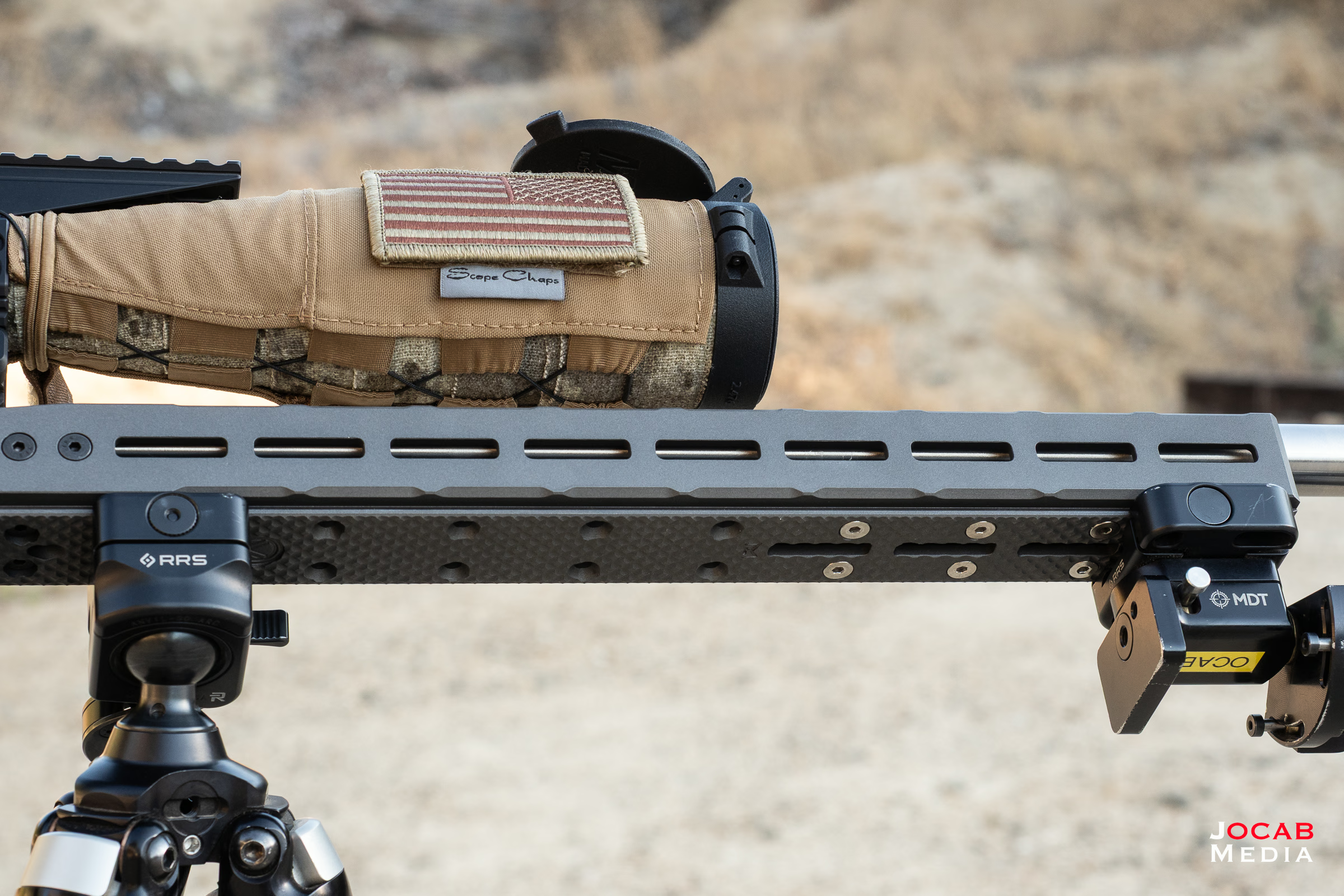
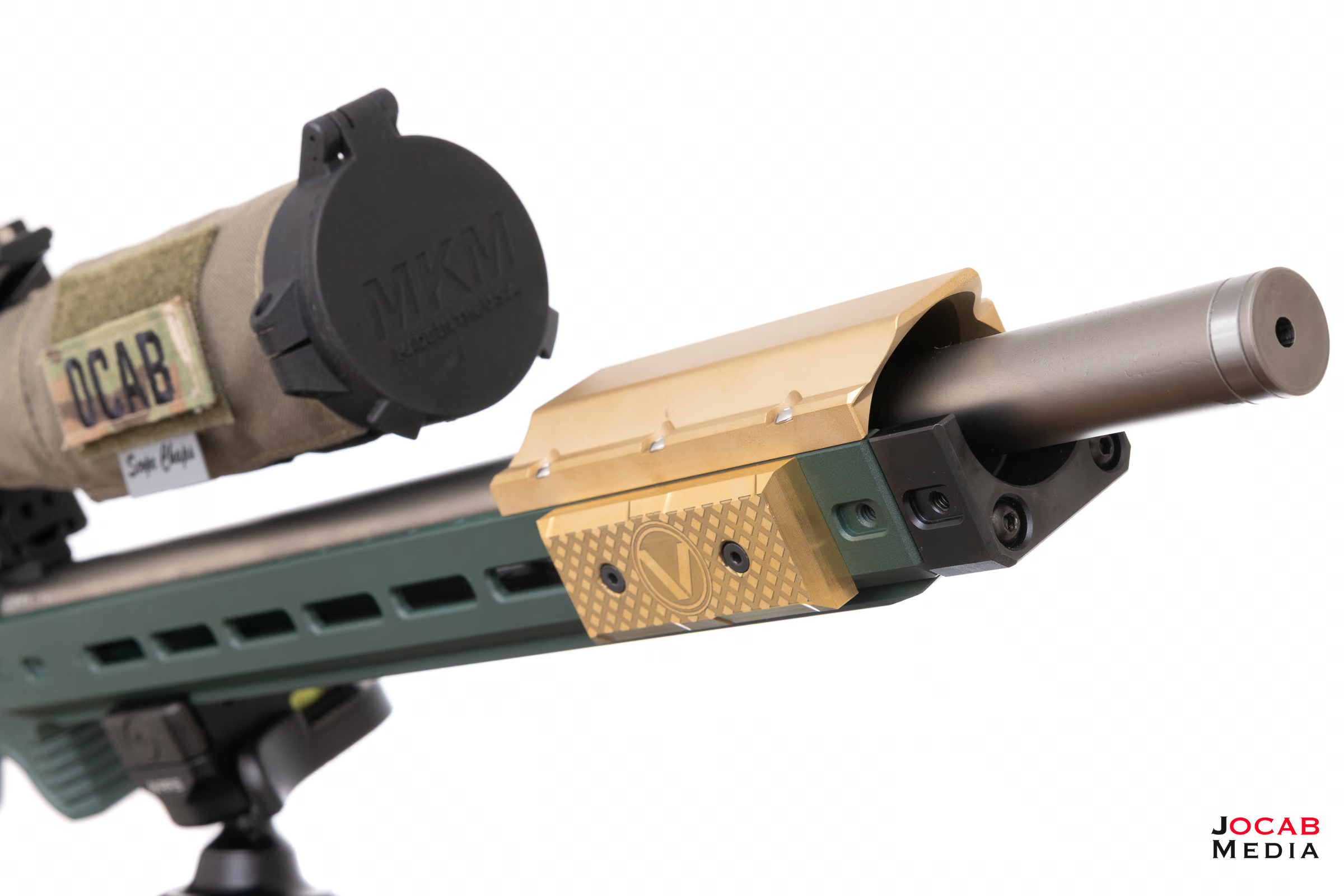
I used MDT ACC internal weights along with repurposing a pair of the Victor Company brass MLOK weights. I picked up the MDT ACC Premier Gen 2 front tip weight, as well. Note that the thicker brass internal Victor Company weights do not fit the MDT ACC Premier Gen 2 chassis.
Furthermore, I discovered a brass version of the MDT Control Bridge made by a company called Meehl Solutions and subsequently acquired one, which weighs 11.6 ounces (compared to the 2.72 ounces of the MDT Control Bridge).
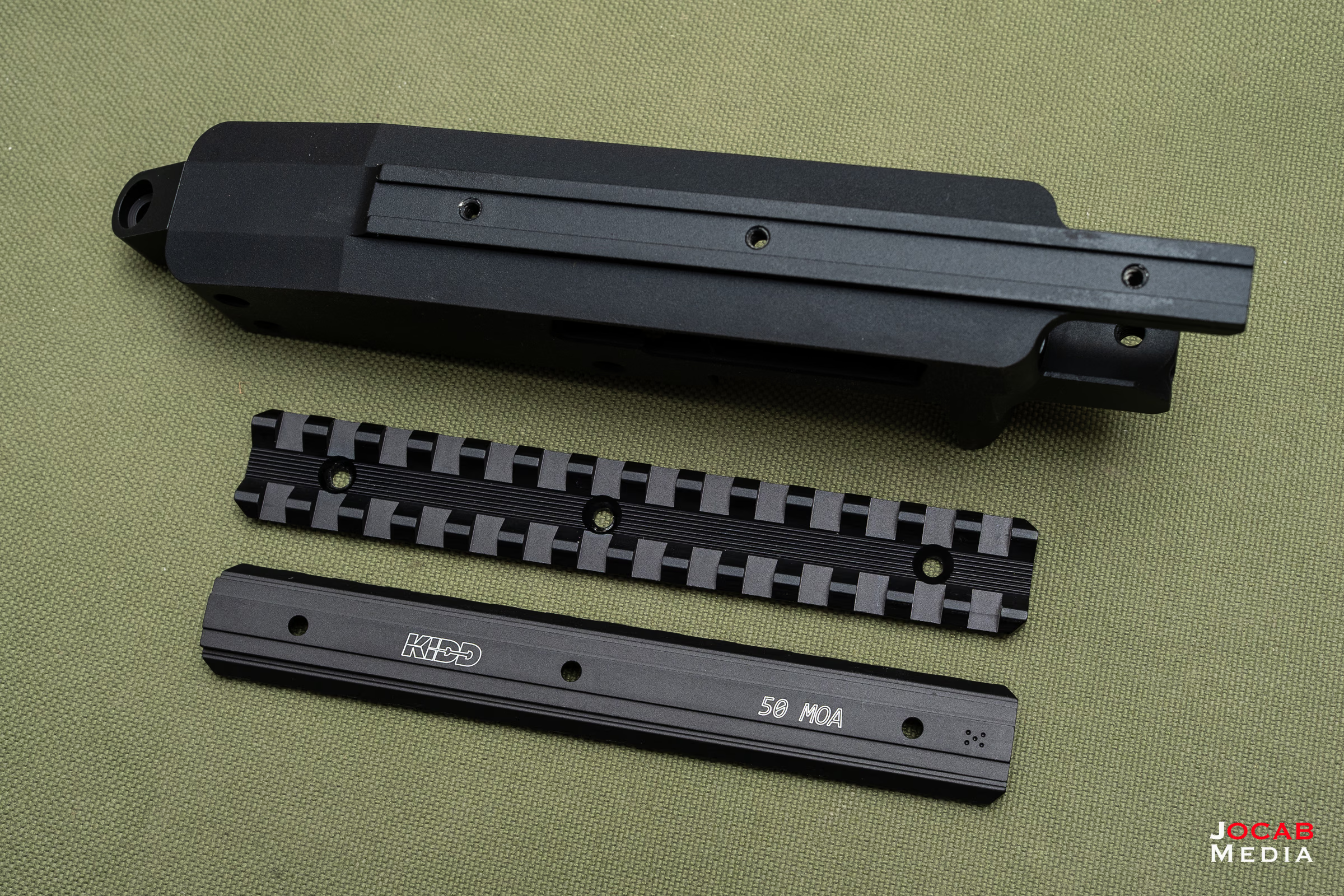
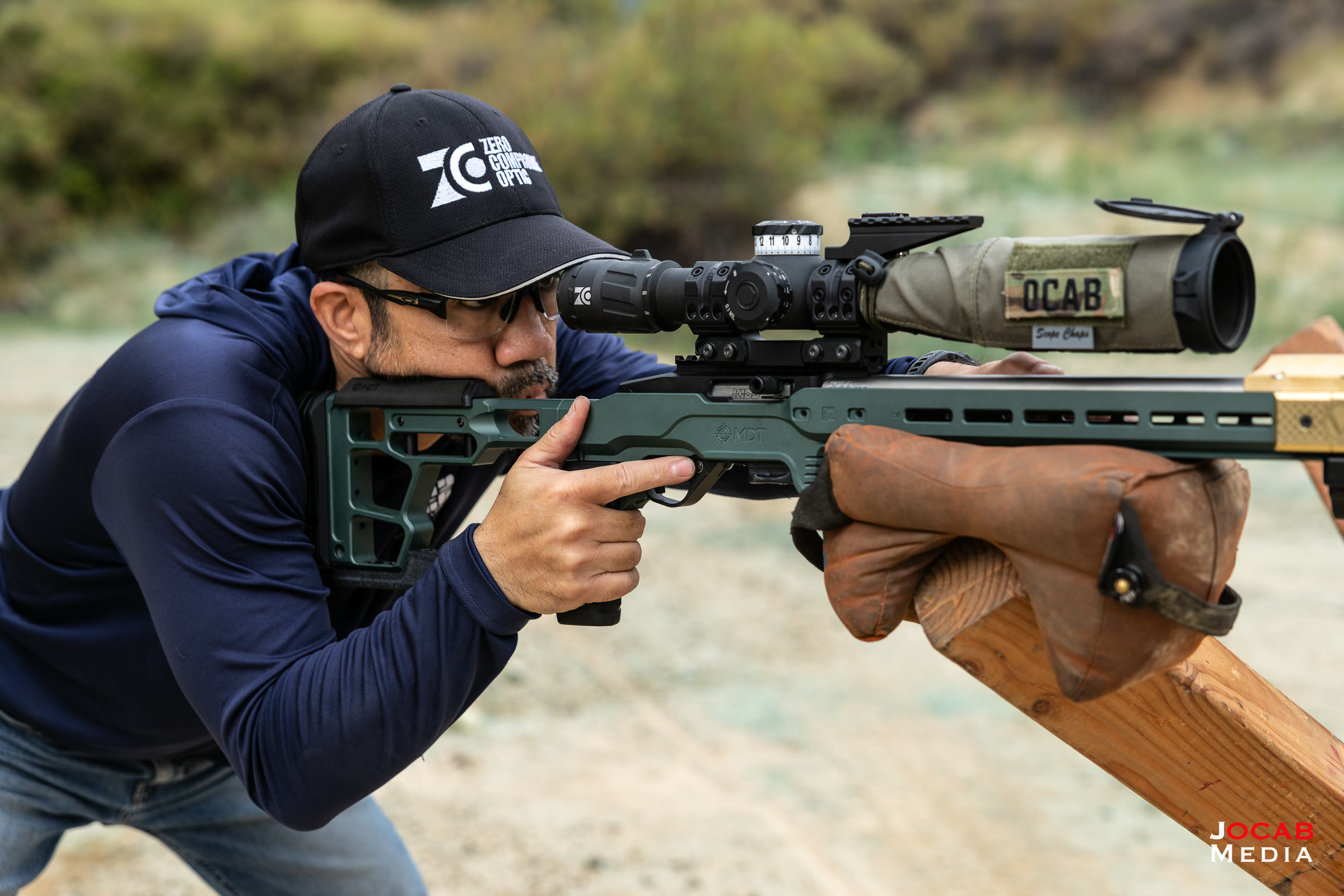
I ended up taking the Zero Compromise Optic ZC527 off one of my Vudoo Gun Works rifles to use on this build, which is why I used a 50 MOA scope base.
The ZC527 I used sits in a Spuhr 0 MOA mount and I have a lot of vertical adjustment in the ZC527 which makes 50 MOA a good choice to maximize vertical travel (and I have a spare 30 MOA base to use with scopes with less elevation travel).
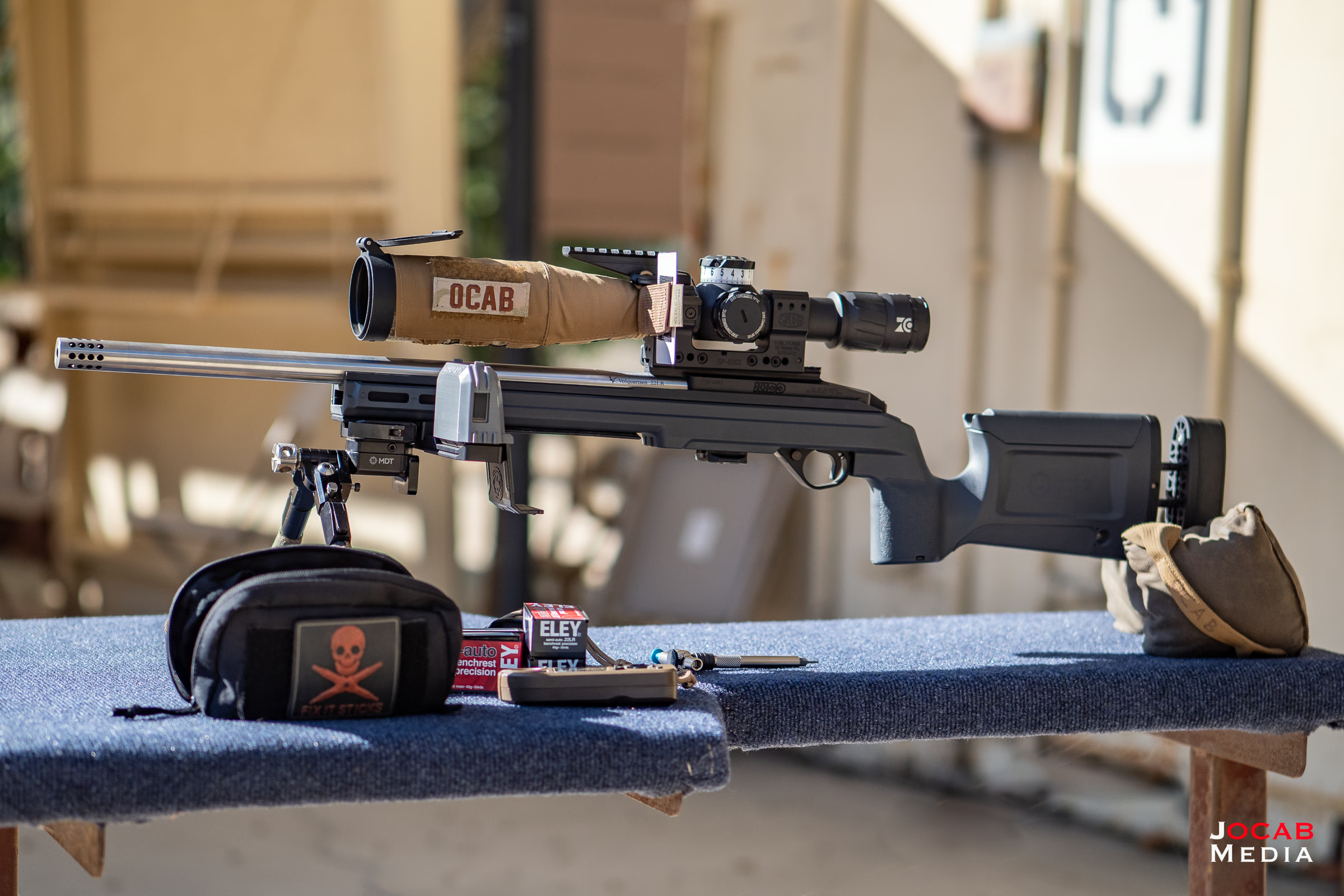
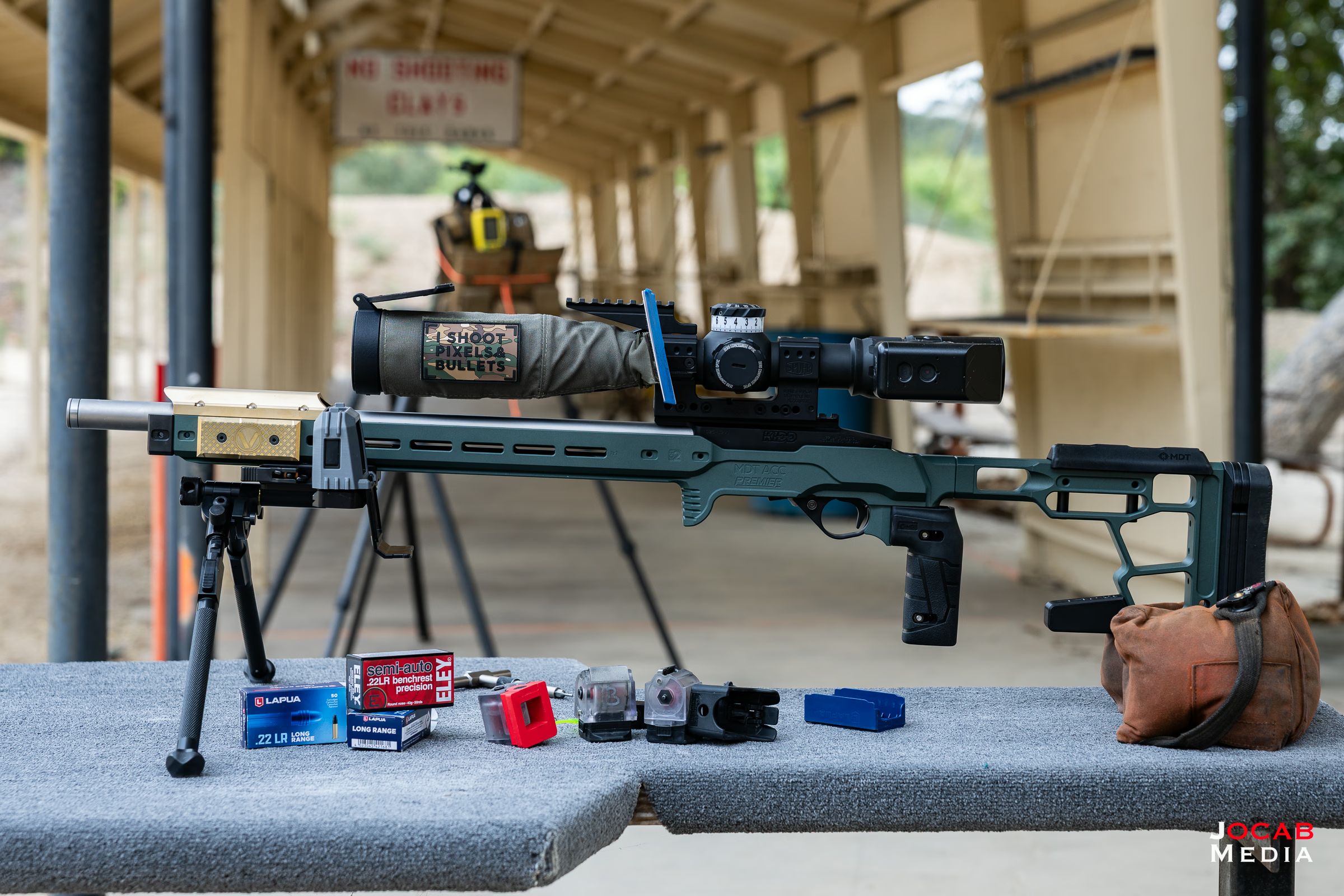
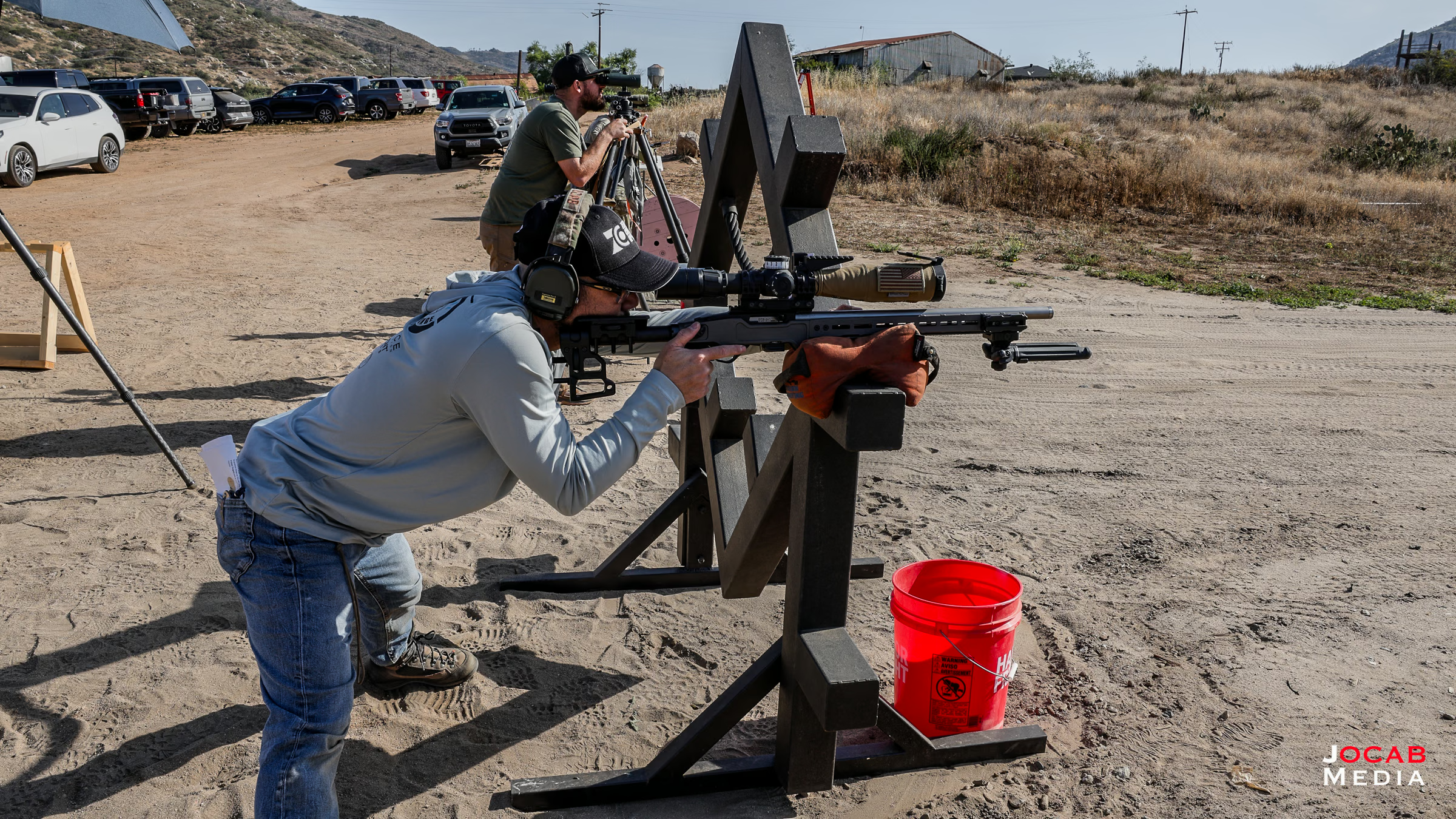
I have taken this latest configuration of my 10/22 rifle to the range for testing ammo, casual shooting and practice drills, and used it in a few NRL22 and PRS rimfire matches.
I will say that as far as accuracy, it does not compare to a bolt rifle. I feel that there is more consistency downrange with a bolt rifle as I do think there are fliers by virtue of the semi-auto operation. Yet it still performs sufficiently for NRL22 and PRS.
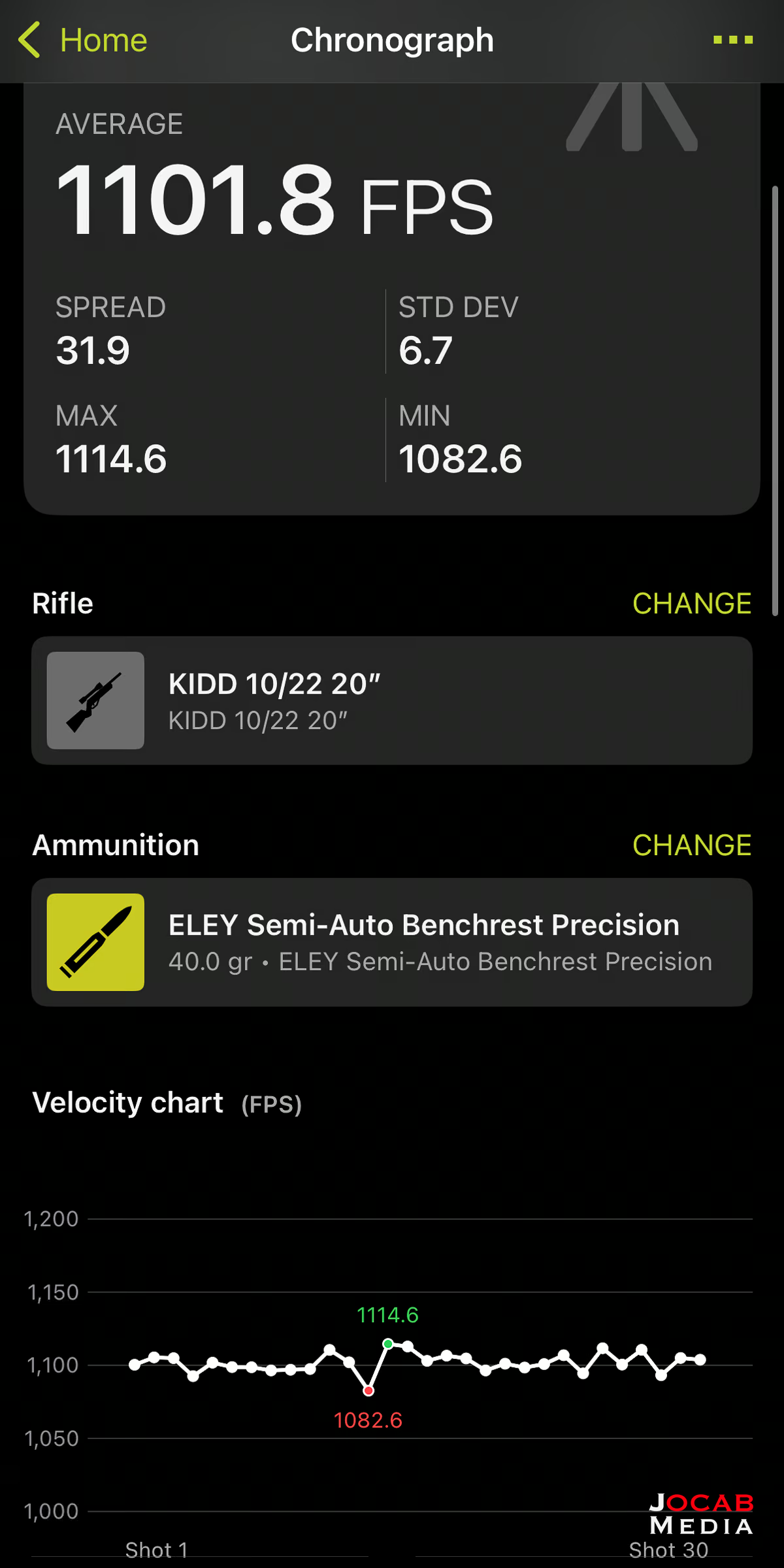
I found that this rifle with the KIDD 20″ Stainless Steel Match barrel prefers higher velocity ammunition. I have tried Lapua Center-X which shoots at 1020 fps and slower with poor results (1.5″ groups at 50 yards), while Lapua Super Long Range with velocities at around 1060 fps shoot with better group sizes (~0.75″ at 50 yards).
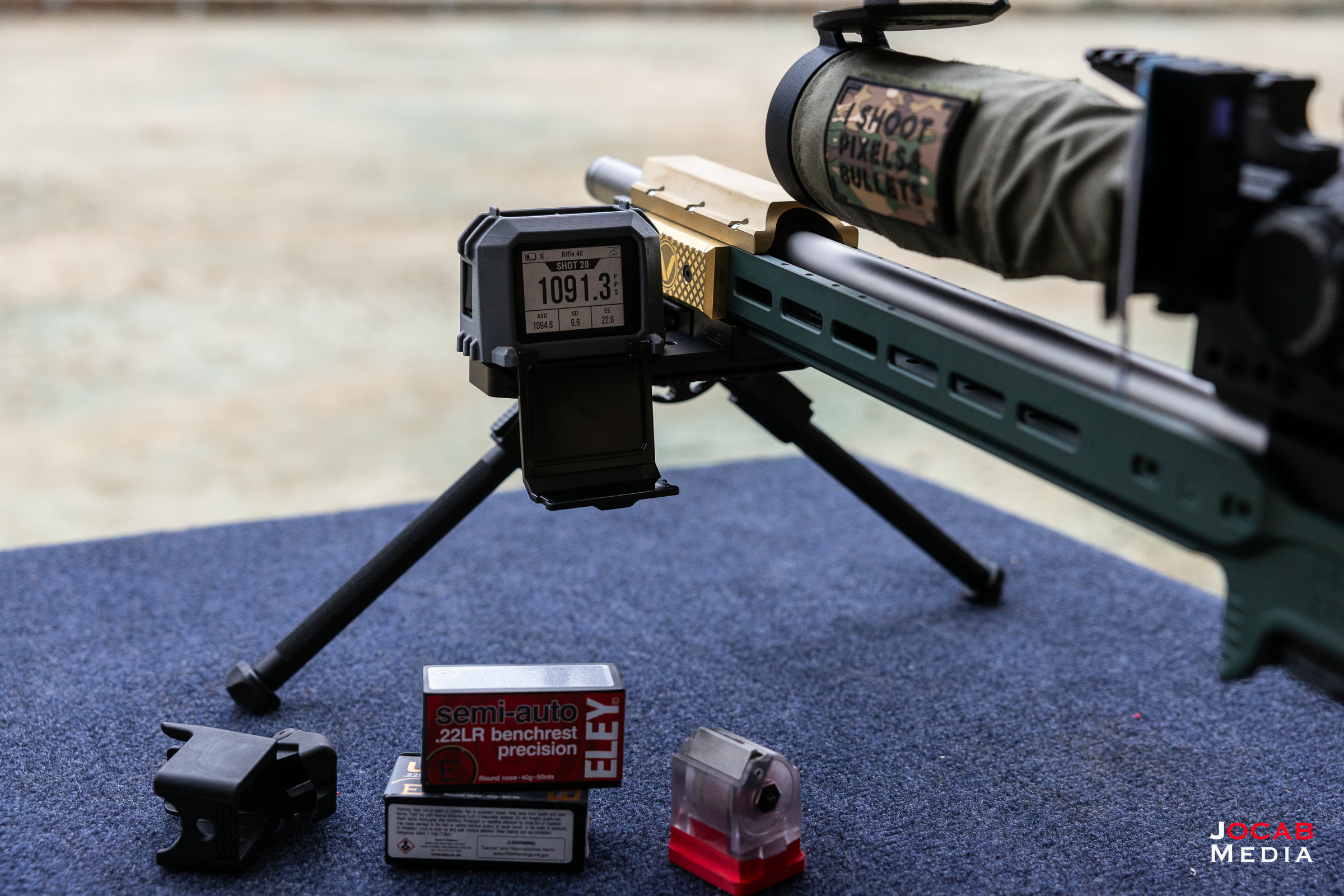
ELEY Match and ELEY Semi-Auto Benchrest Precision shoot equally well if not better with velocities of 1085 fps and 1100 fps, respectively.
ELEY Semi-Auto Benchrest Precision
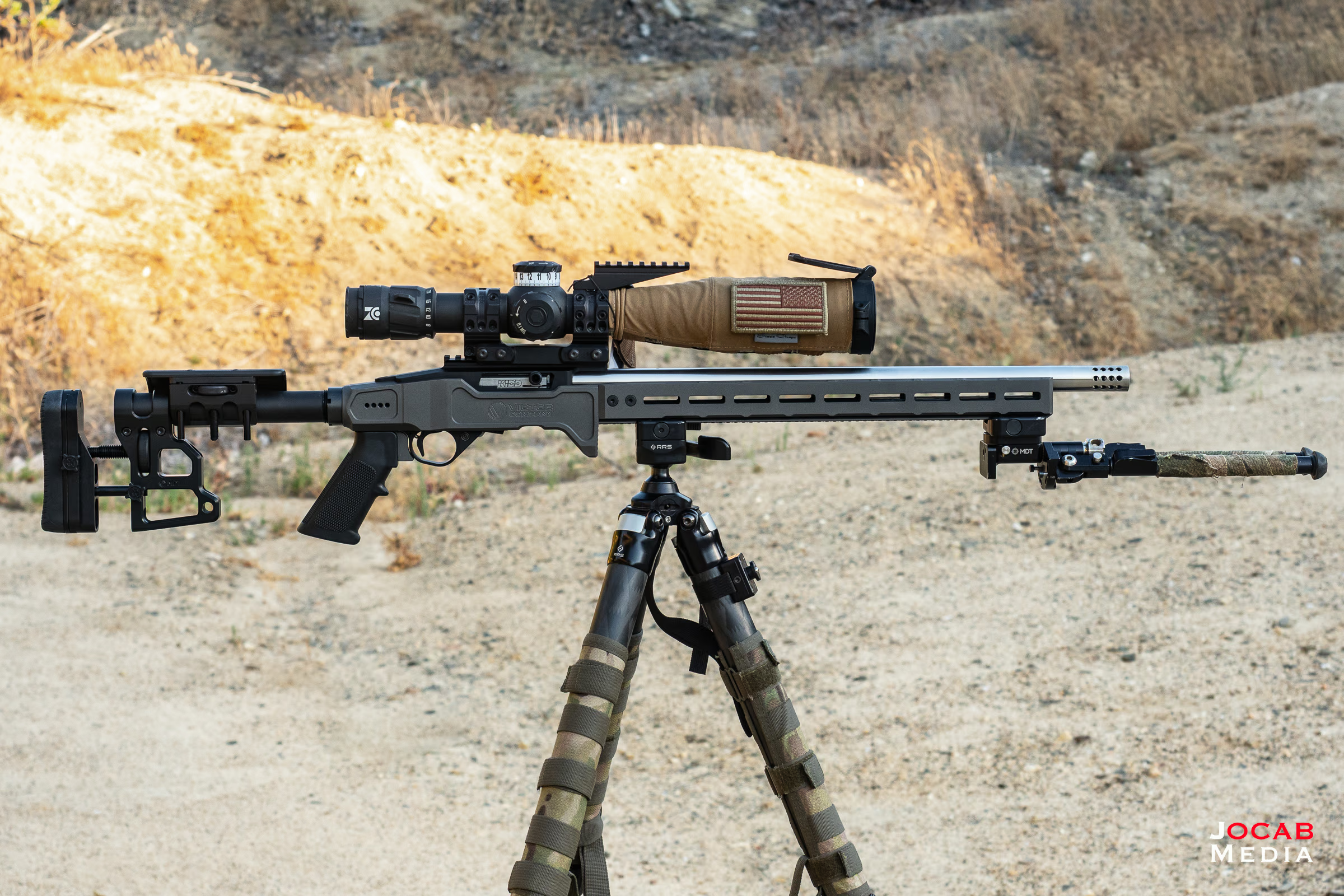
The rifle handles well for NRL22 / PRS shooting. As mentioned earlier, the setup currently has two MDT internal weights, a pair of Victor Company brass MLOK external weights on the forend, and the MDT forend tip weight.
The balance is still a little back heavy without a bipod, while with a bipod it is deployed effectively on barricades. The weight of this rifle configuration without the bipod is 15 lb 4.8 oz, which does include the Scope Chaps scope cover along with the Cole-Tac cheat sheet without a vinyl card attached.
I do want to mention one issue I experienced after switching to the MDT ACC Premier Gen 2 10/22 chassis. I was noticing that my zero was wandering vertically as much as 2 MIL which is when I realized the front action screw (often referred to as the Takedown screw) was constantly loosening requiring re-tightening. When I noticed the action screw was losing torque after a single 10-round magazine being fired, I knew there was an issue. Based on some reading and thought, I theorized the screw might actually be bottoming out and thus not torquing to the chassis.
The action screw that comes with the MDT ACC Premier Gen 2 10/22 chassis is a 12-24 thread around 1/2 inch long. I sourced 3/8″ long 12-24 screws from McMaster-Carr and this ended up resolving the issue as the screw no longer loses torque. 7/16″ might have also worked, but 3/8″ still has plenty of thread engagement from what I could tell.
A quick review of each of the rifle components:
Receiver and bolt: Fit, finish, and quality control seems to be on point with what KIDD is known for. Solid buy.
Barrel: The KIDD 20″ stainless steel barrel is honestly shooting about the same as my Volquartsen 20″ stainless steel (18.5″ effective with 1.5″ compensator). I don’t think I gained any accuracy moving to the KIDD. Good buy, but other options likely just as good.
Trigger: I already had the KIDD single-stage trigger for several years and I continue to assert that it is a phenomenal trigger and must have upgrade for a factory Ruger 10/22. Solid buy.
Chassis: I feel the MDT ACC Premier Gen 2 is an excellent chassis for the 10/22 receiver. The quality control of MDT top notch and is still evident on this 10/22 chassis. The Arca dovetail is close to RRS specification and the barreled action sits square to the inlet. The proprietary integrated recoil buffer pin and chassis mount seems like a great method of securing the action at a second point of contact. Solid buy.
Optic: I am a huge Zero Compromise Optic fan and the ZC527 MPCT-3X I am using is technically repurposed from one of my Vudoo Gun Works rifles. I would highly recommend a ZC527 to anyone for use in centerfire or rimfire. My scope is an original 15 MIL locking elevation turret and any future ZCO I buy would be a 10 MIL non-locking elevation turret. Solid buy.
Optic mount: The Spuhr ISMS SP-6002 I am using is the same mount I used with the ZC527 while it sat on my Vudoo Gun Works Gen 1.2. It was a great choice back in 2019. However, there are other single-piece mounts being made with quality and design that equals or even bests Spuhr, at lower price points. Good buy, but other options like Area 419 are better buys.
After starting off with a sub-$200 factory Ruger 10/22 Carbine in 2001 and ending with a fully non-Ruger 10/22 built on a KIDD Innovative Designs receiver in 2026, was the journey worth it?
I do not have a clear answer, but part of me wishes I had just started off with a KIDD to begin with. Spending 20+ years modifying a stock factory Ruger 10/22 only to end up with a completely different rifle with no original components from the original factory rifle seems like wasted time and money.
However, I think it is very common for new shooters to want to try and make a diamond out of coal, so to speak, and take a factory rifle, whether a Ruger 10/22, a Remington 700, or some other platform, and maximize the accuracy. When I bought my Ruger 10/22 in 2001, I was still a very green shooter, with only a casual knowledge base when it came to firearms.
Starting off with a factory Ruger 10/22 and learning to build it up was one way I became more knowledgeable in firearms. It became a skill builder in terms of learning a rifle platform, all the aspects of accuracy for the platform, ammunition selection, and applying marksmanship with that platform.
However, if someone were to ask me today if they should get a Ruger 10/22 or go with a KIDD, I would tell them to go with a KIDD. The fact that they even asked this question is an indicator that want a quality firearm and thus, would appreciate what the KIDD manufactured receiver or KIDD complete rifle offers.
Overall, I feel that my 10/22 platform is in a state where I would feel comfortable running it in NRL22 and PRS rimfire matches. I feel that bolt rifles are more consistent so I will still gravitate for a bolt rifle if I wanted the most accuracy, yet semi-auto is still quite competitive.
I will not say that my KIDD 10/22 rifle is in its final form. There’s always a chance I will make a change to it in the future. However, I think I will stick to the current configuration for the time being.
Manufacturers used on current rifle build configuration:
This is a short addendum to address the Victor Company RPG chassis system.
I will say that I am disappointed with the Victor Company RPG chassis. I wanted to like it because it did look like a clean, efficient design.
The use of AR buffer tube based buttstocks and AR grips (without a beavertail) allows for a lot of personal customization to fit one’s preferences.
However, the fact that I had to take material out of the chassis to get the rear tang to line up with the threaded hole, along with the Arca dovetail width deviation from 1.5″, and the fact that the action was not square in the inlet to the forend highlights quality control issues, at least for the unit I received.
I do not know if recent production runs of the Victor Company RPG and the Competition Forend have been tweaked to resolve the issues I have experienced. If they are, then I would not hesitate to recommend the Victor Company RPG for the 10/22.
I did end up selling the Victor Company RPG with forend to another competitive shooter in the area as he plans on doing some custom machining and bedding of the chassis to experiment with the 10/22 platform.














Comment on this post