
The laser rangefinder binocular product segment has been seeing regular one-upmanship over the past few years as technology continues to improve. On 17 September 2026, Leica continued the one-upsmanship trend with the release of the Leica Geovid Max.
I heard about the Leica Geovid Max a couple of months prior listening to a podcast where it was mentioned they were being tested and I became eager awaiting the release date.
The reason why I became interested in the Geovid Max is because it was claimed that Leica resolved the slow performance of the Geovid Pro with the Max. While Leica has optical quality that is close to Swarovski and arguably has the best laser rangefinders in the civilian space, the slow data return of the Geovid Pro prevented me from considering the Leica Geovid line.
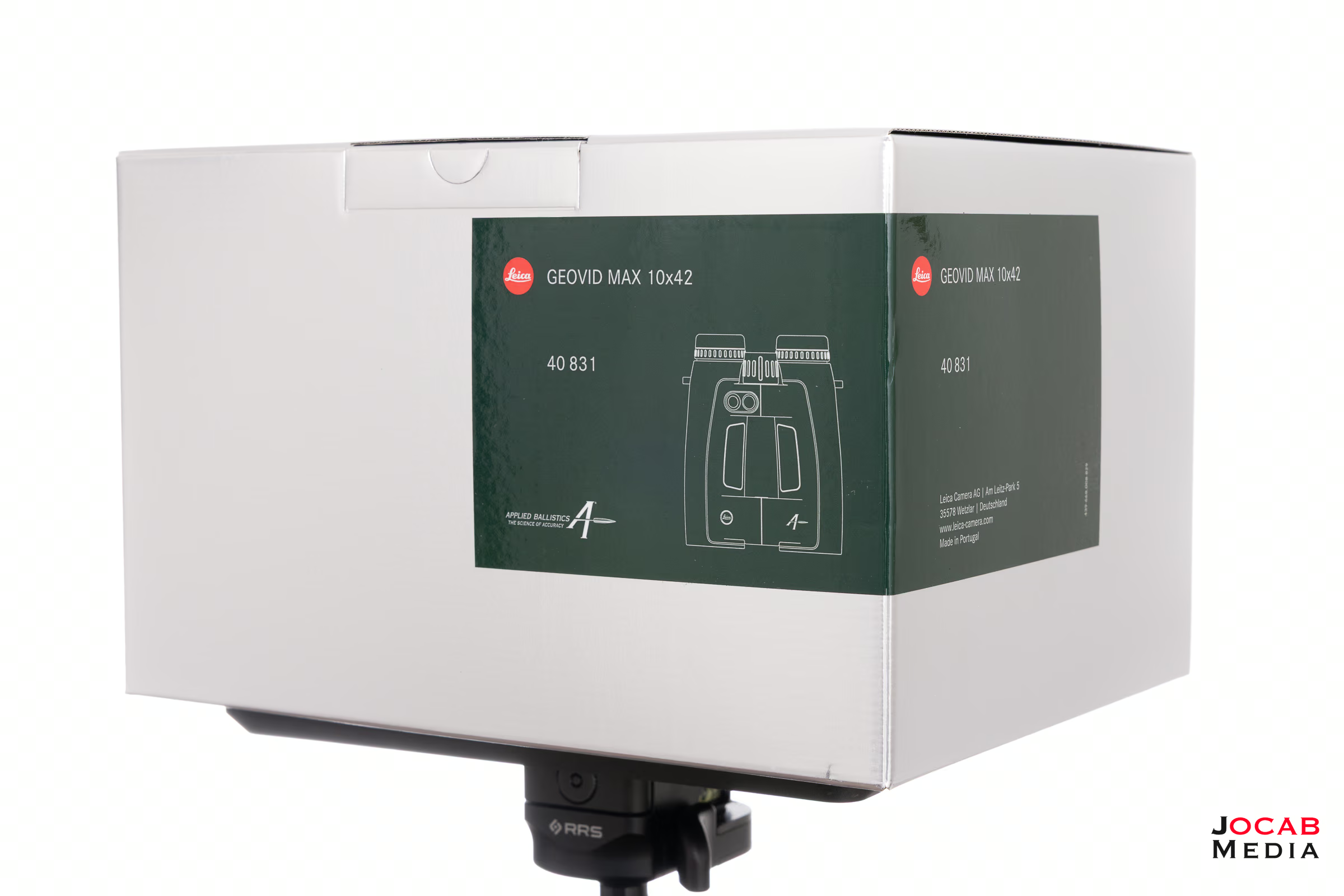
Thus, when the embargo lifted on the official release date of September 17, I ordered the Leica Geovid Max 10×42 from EuroOptic. A summary of the basic specifications are:
- 10x magnification (currently only available in 10x)
- 42mm objective
- Twilight factor 20.5
- Field of view 339 ft @ 1000 yds (113 m @ 1000m) ± 3% or 6.5 degrees
- Eye relief 16 mm
- Minimum focus distance of 16 ft / 5 m
- Adjustable interpupillary distance 56 to 74 mm
- 90% Light transmission
- Battery 1 x 3 V / Lithium-type CR2
- Battery lifetime approx. 2000 measurements at 68°F / 20°C
- Water resistant to a depth of 16 ft / 5 m
- Housing Magnesium, nitrogen filled
- Dimensions (W x H x D) 4.9 x 6.9 x 2.8 inch / 125 x 174 x 70 mm
- Weight approx. 37 oz / 1040 g (without battery)
Of course, the more interesting items are the features beyond the technical specifications.
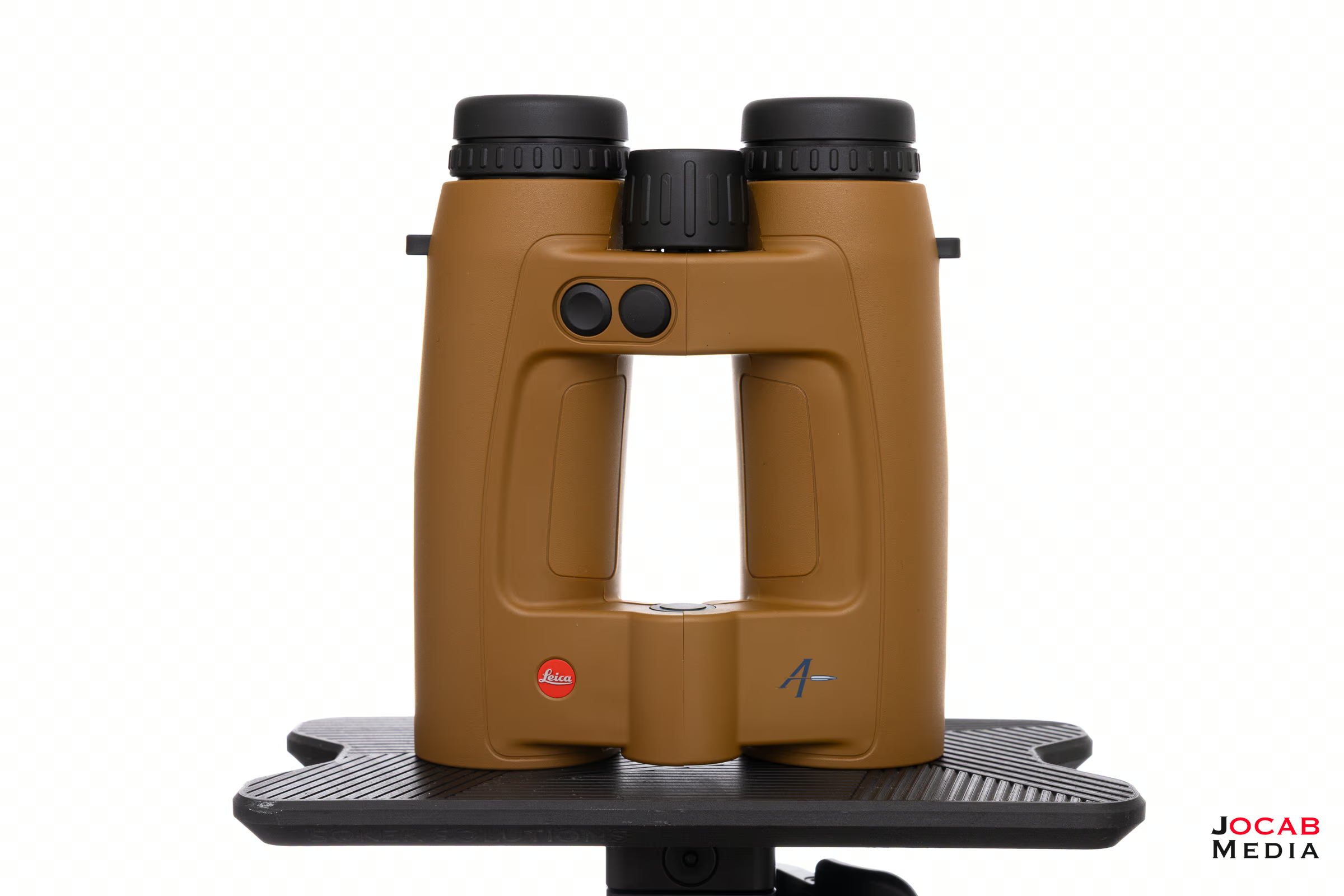
First off, the rangefinder is rated for up to 8200 yards on retro (highly) reflective surfaces, 7300 yards on reflective surfaces, 4600 yards on trees, and 2900 yards on deer, in ideal conditions. The laser is eye safe with a beam divergence of 1.8 x 0.8 MRAD.
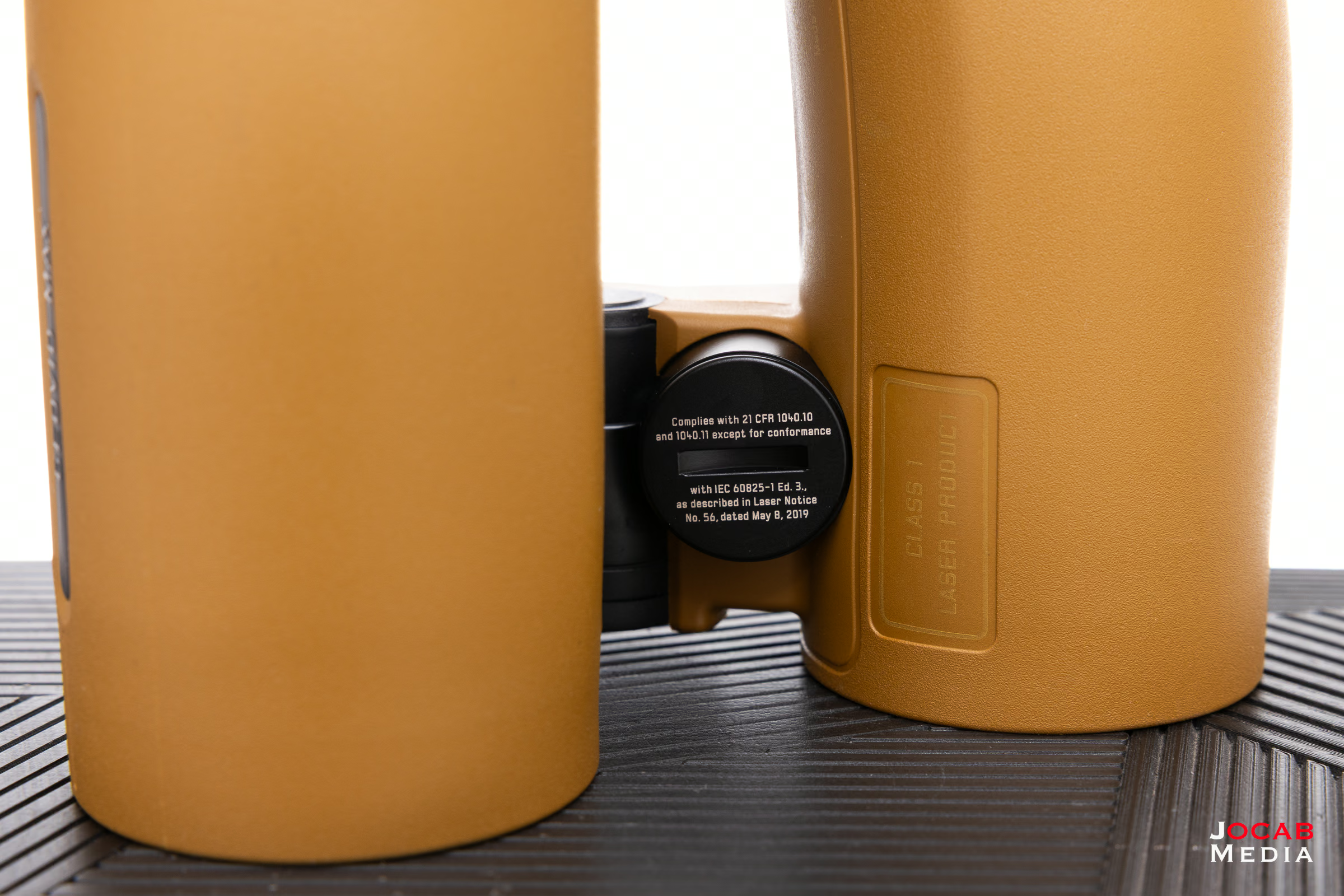
The Geovid Max has onboard environmental sensors for barometric pressure and temperature, with no humidity measurement sensor. It does have an inclination sensor and compass.
These sensors are all used to feed into the Applied Ballistics Professional ballistic calculator that is onboard. AB Pro is one step above the more common AB Elite, and has all the features of Elite along with the WEZ tool, or Weapon Employment Zone Analysis. WEZ is a model that calculates a percentage probability of hitting a target.
The Leica Geovid Max separates itself from the previous Geovid Pro line with the 640×480 resolution active-matrix MicroLED display. This display is a critical new feature of the Geovid Max as this display is feature rich providing various data points all on one view. Furthermore, the display is customizable to the operator’s preference.
Leica claims speeds as fast as 0.3 seconds to return data once the measurement button is pressed. If the extended mode (for longer distance measurements) is activated, data is returned in 1.4 sec. Note that any measurement taken under 2000 yards in automatic mode (not extended) is 0.3 seconds.
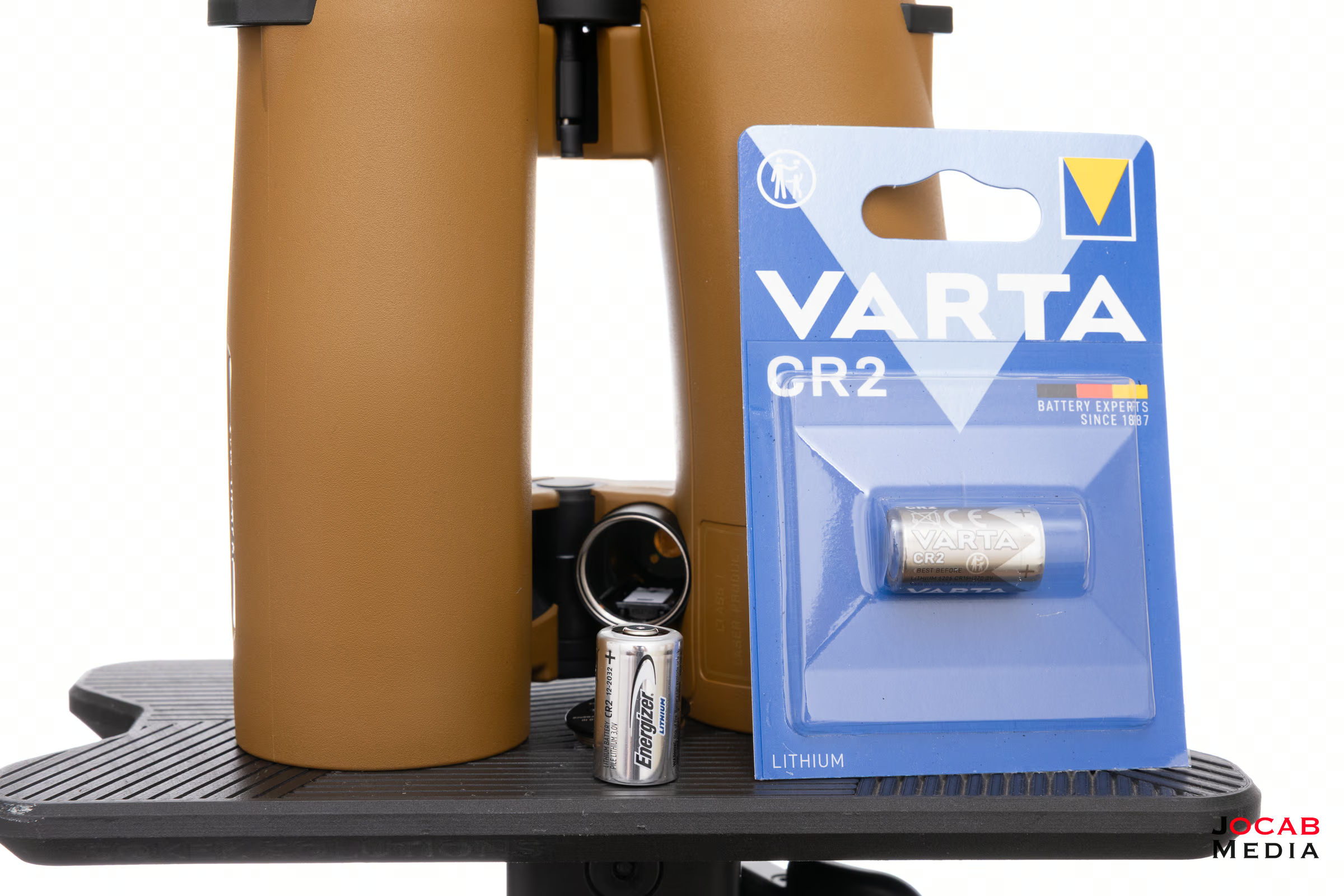
The Geovid Max is powered by a single CR2 battery, which is the common battery type for laser rangefinders.
With this information laid out on the table, why did I acquire the Leica Geovid Max? More specifically, why did I acquire the Leica Geovid Max 10×42 when I already own the Vectronix Vector X 10×42?
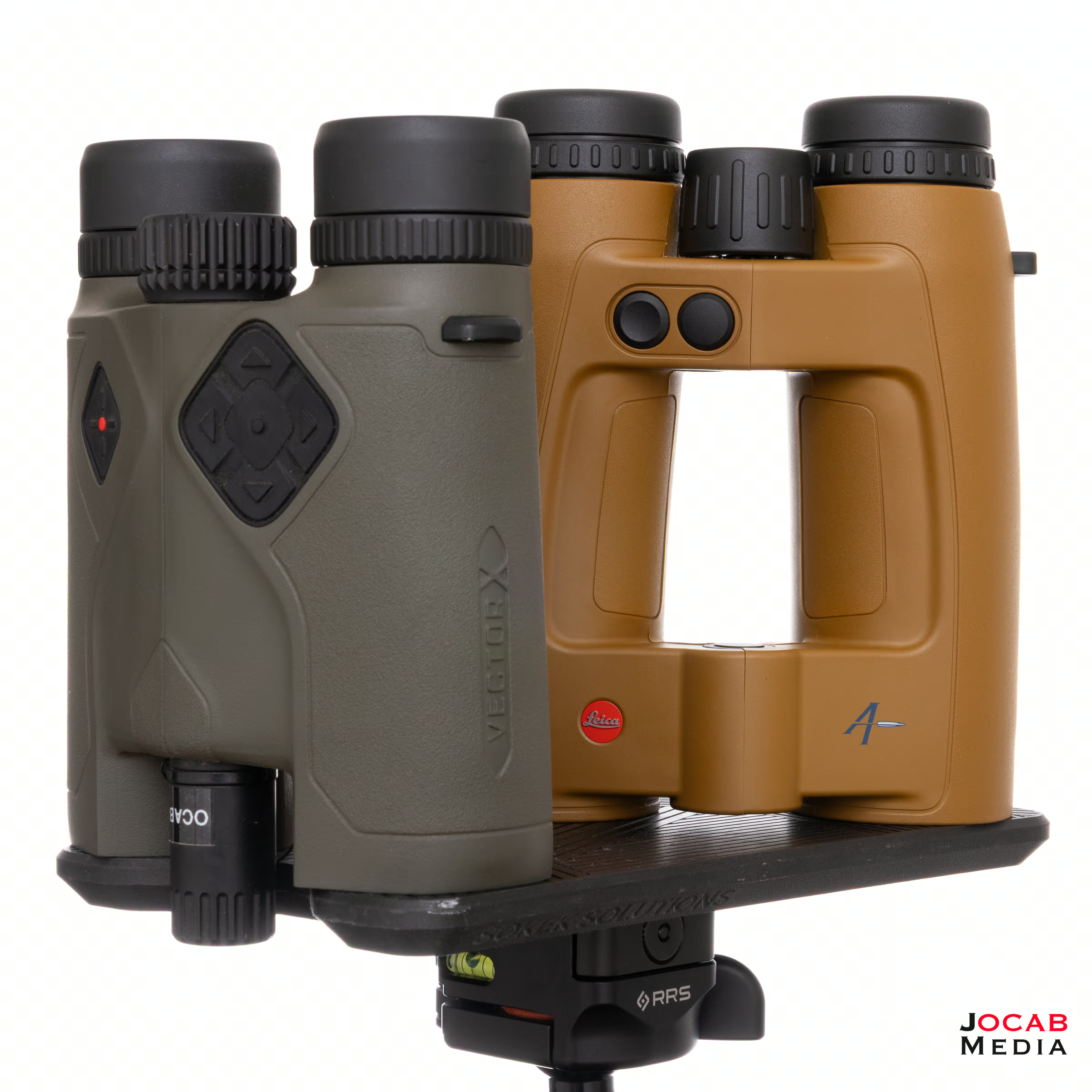
As alluded to earlier, the answer is top-tier optical quality in combination with all the advanced, high performing features you would want out of a laser rangefinder binocular with a ballistic solver.
The design of laser rangefinder binoculars is still a balancing act between optical performance and the performance of the corresponding heads up display. The most feature-rich displays come at the sacrifice of optical performance.
This was made very evident by the original SIG KILO10K. The KILO10K brought a highly regarded LED display which was not seen in any other laser rangefinder binocular at the time, while at the same time having maligned image quality.
On the other end of the spectrum, the Swarovski Optik EL Range TA has what is considered one of the best optically performing binoculars, rangefinder or non-rangefinder, while having the most generic heads up display and minimal ballistic capabilities.

The Leica Geovid Pro offered better optical quality than nearly all other rangefinder binoculars out there, yet is lacking in the display due to the design and speed of the readout. However, with the new Geovid Max, the early information from testers is that Leica solved all the issues with the Geovid Pro to make the best overall rangefinder binocular in today’s market.
After obtaining and using the Leica Geovid Max 10×42, I feel the optical quality is on par to the Swarovski Optik EL Range, if not better. The color and clarity is noticeably better than the Vectronix Vector X and the SIG KILO10K (even the Gen 2). In lower light conditions (dawn or dusk), the Geovid Max appears to have good contrast and resolution.
There is no blue tint in the right barrel of the Geovid Max, like you would see in the Vector X or the KILO10K. Both of those latter binoculars do have a slight tint in the right barrel, likely a byproduct of the display. Looking through the Geovid Max, there is no difference in the image colors for the left and right barrels. The edge clarity is excellent in the Geovid Max and the barrel distortion is not detrimental.
The color rendition seems to be true to life and I am not discerning any saturation or de-saturation.
I did not come across any noticeable chromatic aberration in the various lighting conditions and viewing areas that I used the Geovid Max under.
Disclaimer: I am not an expert on optics. I do not have a background in physics aside from the three quarters of physics I took to fulfill my undergraduate requirements for my Computer Science degree. My opinion on the optical performance is subjective. For a more scientific-based evaluation, you should look for a review or evaluation by the Dark Lord of Optics (Ilya).
The display is highly legible and you can customize the readout for the values you want in different locations in the field of view. You can display both line-of-sight and the equivalent horizontal range (corrected range if there is an angle to target), the elevation and correction, shot probability analysis, wind direction and speed that is being factored in, compass, and density altitude.
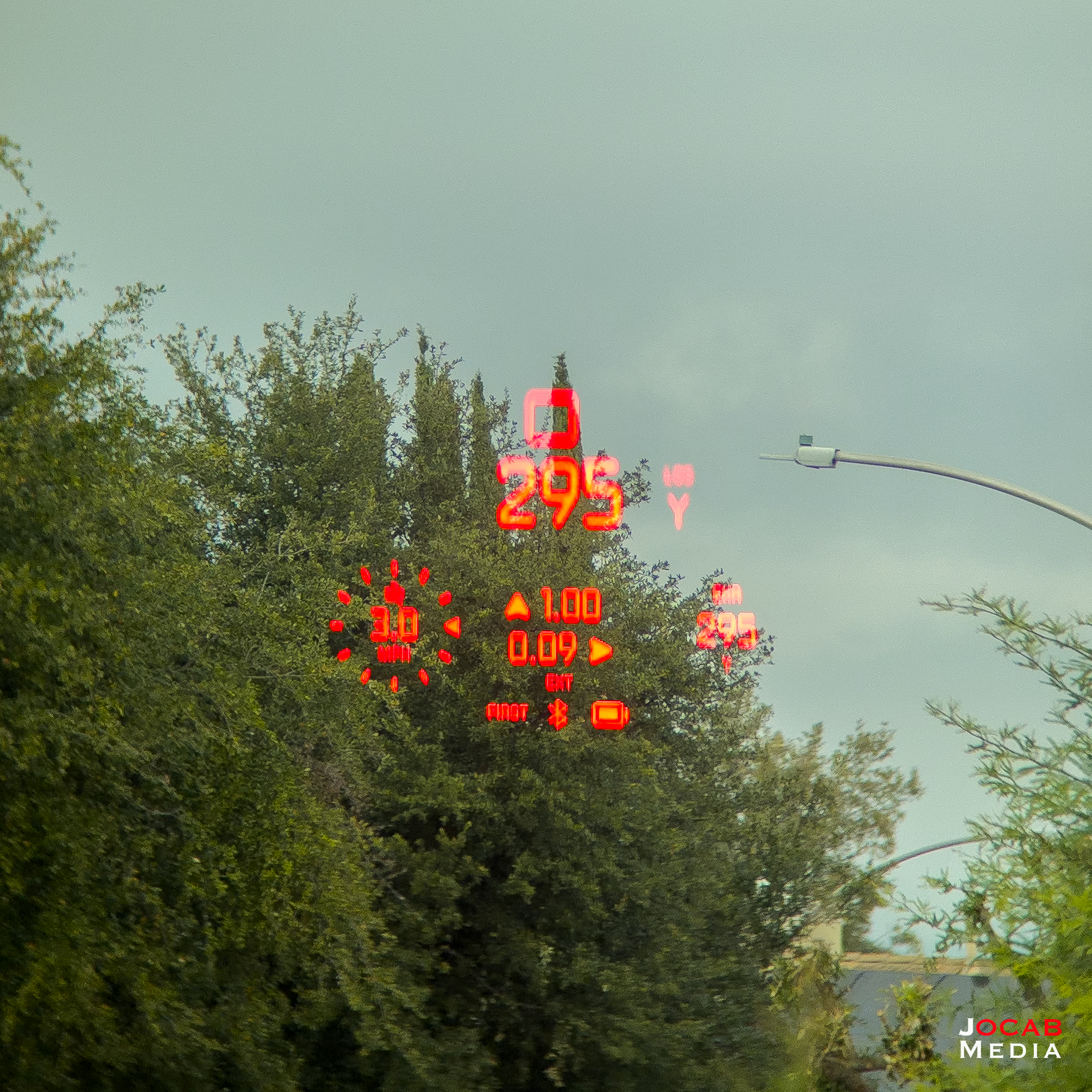
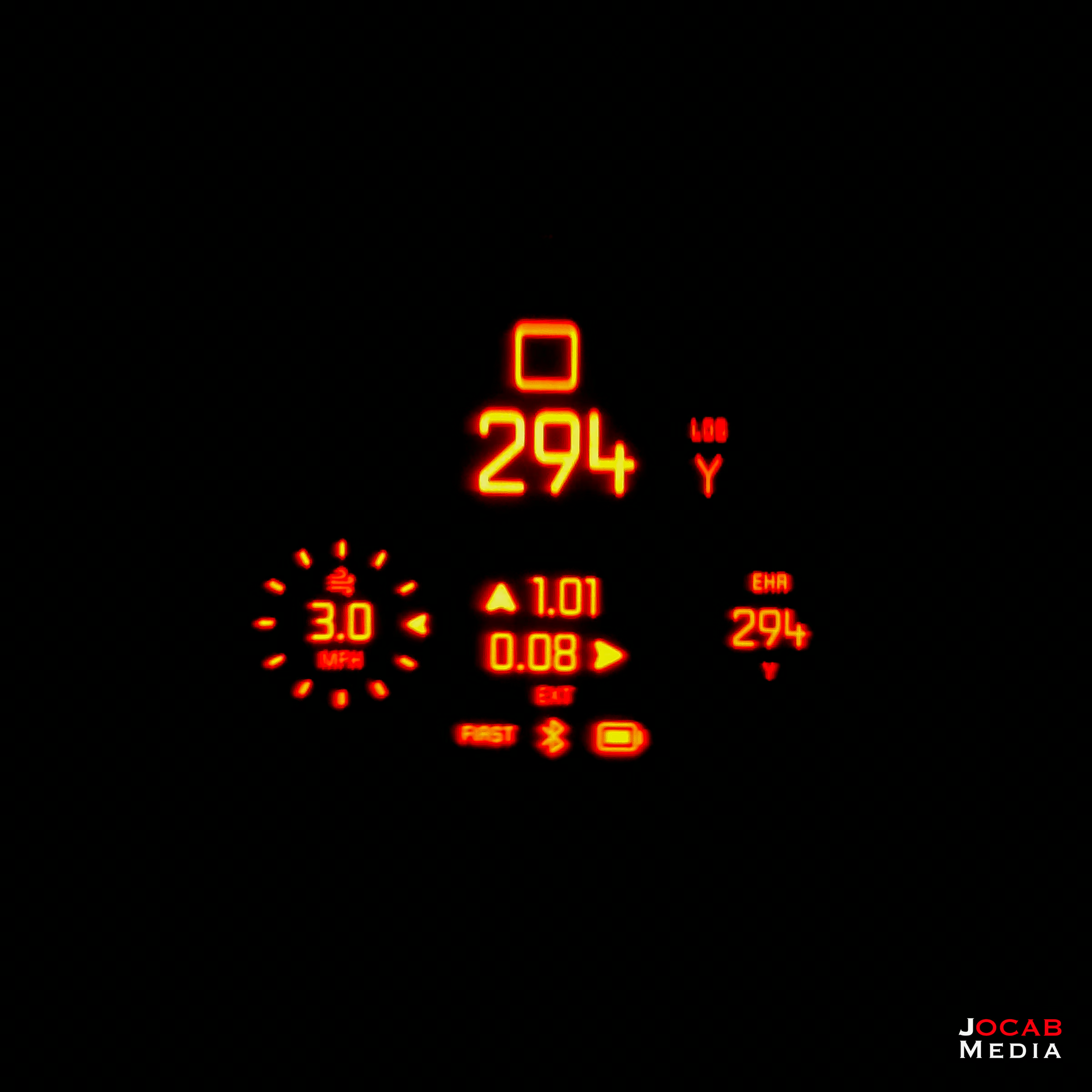
The through-the-lens photos do not do the display justice. I used an iPhone on a Mountain Mag digiscoping adapter, but the MicroLED display has a refresh rate that is problematic for an iPhone camera.
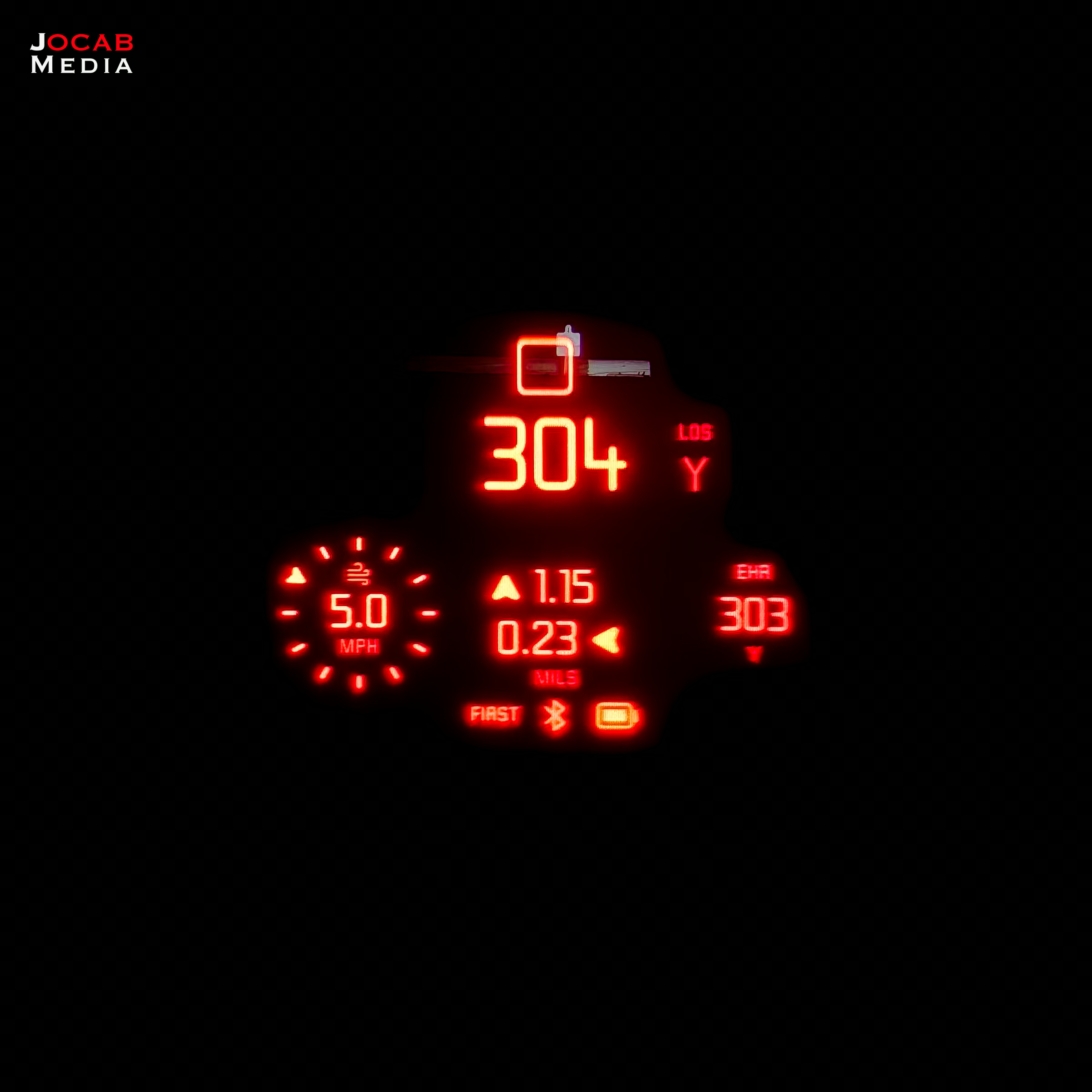
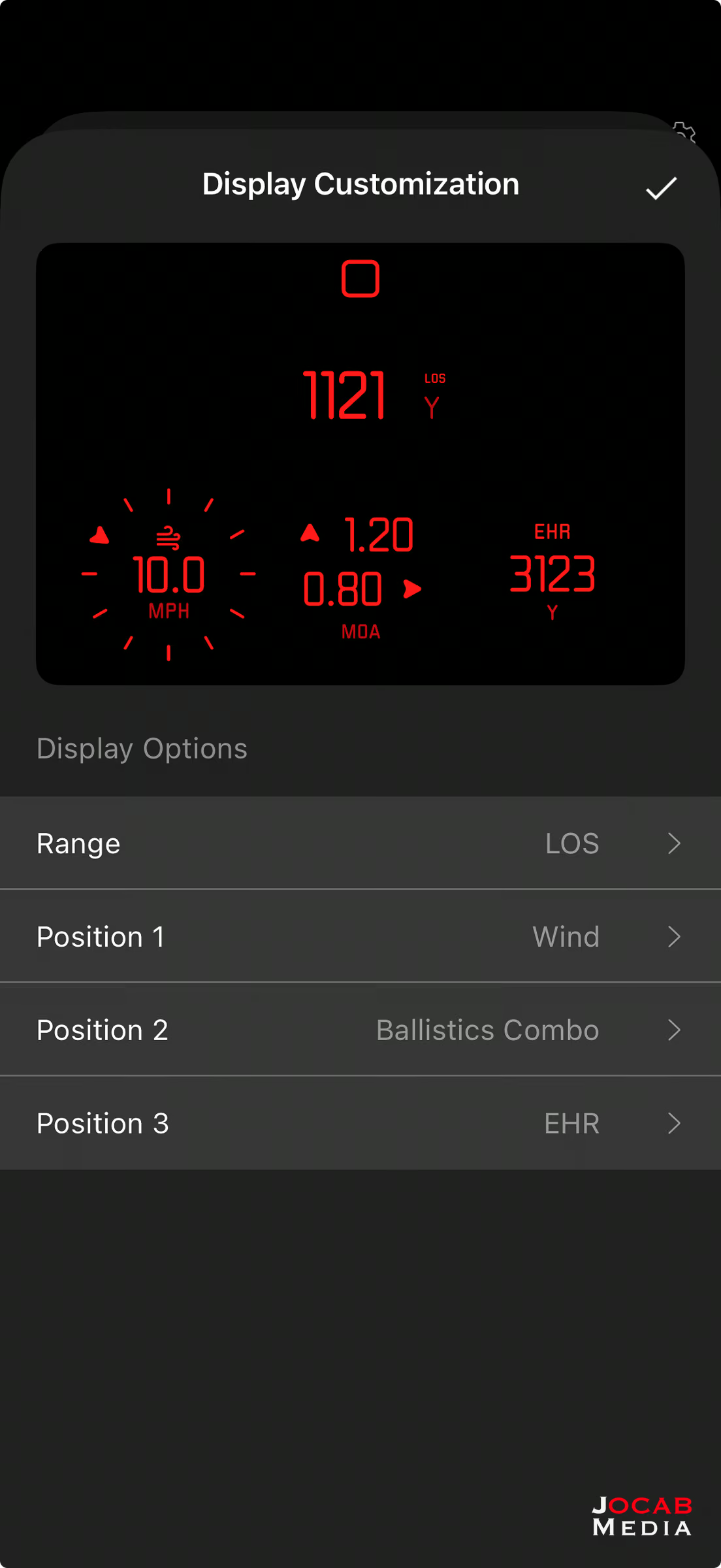
The above photos demonstrate how I have my main screen configured through the Leica Ballistics phone app.
I have the Line of Sight distance displayed at top-center below the reticle (square), with three sub-dials beneath. The left sub-dial has the wind-setting the solver used for the firing solution. The middle sub-dial has the firing solution (elevation and windage in MIL – ignore the ‘MOA’ in the screen capture). The right sub-dial has the Equivalent Horizontal Range (EHR), or the corrected distance if the target is at an angle.
Again, the data displayed is customizable within the permitted parameters. You can use all three sub-dials, two, one, or none if you elect to do so.
The main screen does not display the angle to the target nor does it display the gun profile name that is loaded. Nor does the main screen display the temperature or pressure data that is either being read by the binocular sensors or what is being used for the calculation.
I originally thought the Geovid Max did not display angle of attack (angle to the ranged object) and I was going to criticize this in my review. However, I accidentally discovered a secondary screen after double pressing the menu button.
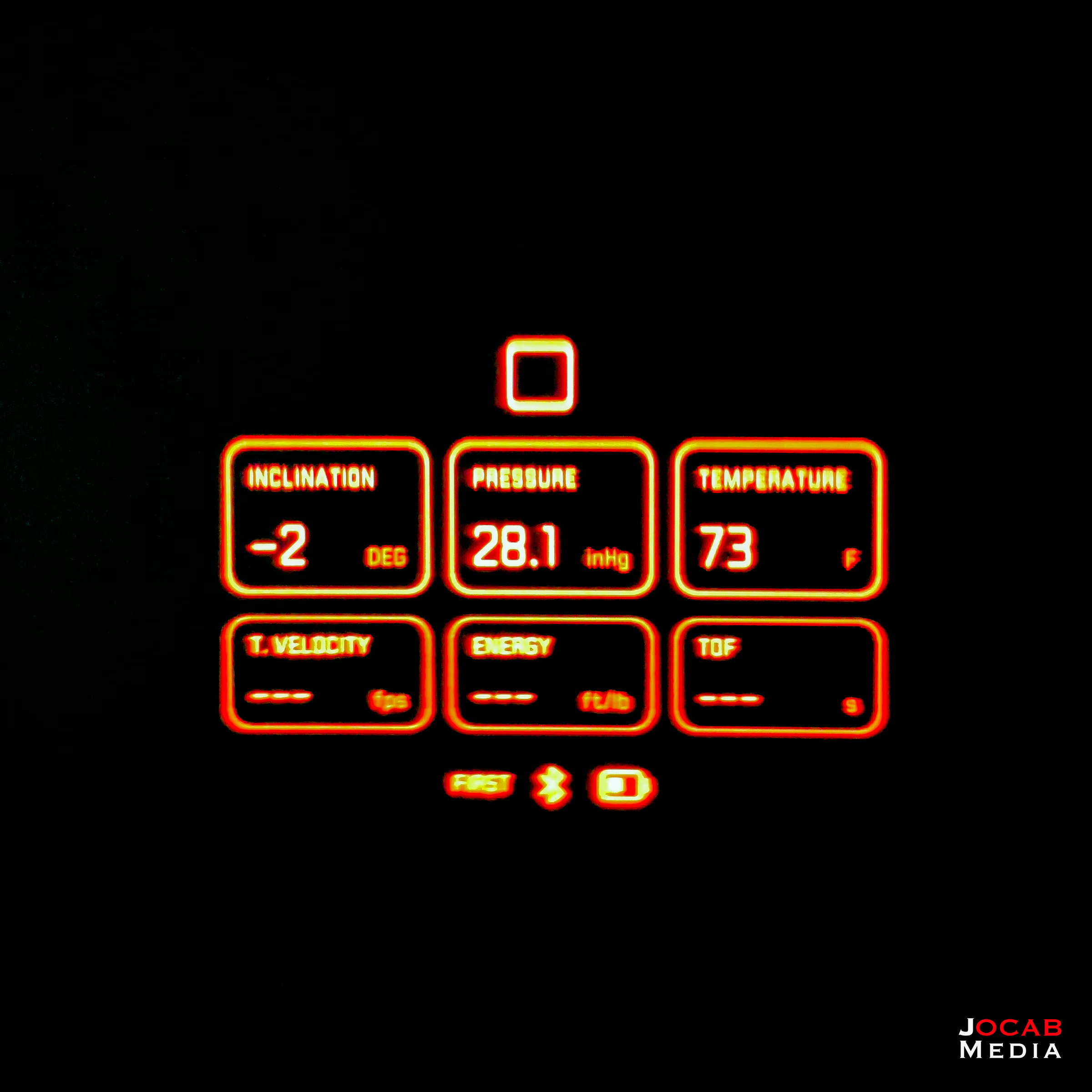
This screen displays the inclination to the target, the atmospheric pressure and temperature used for the calculation, the velocity and energy of the bullet at the target, and the time of flight.
Note that the velocity at target, energy at target, and time of flight is not populated if the solution is coming from the Garmin Foretrex 901. It is populated if the internal/onboard AB solver is used.
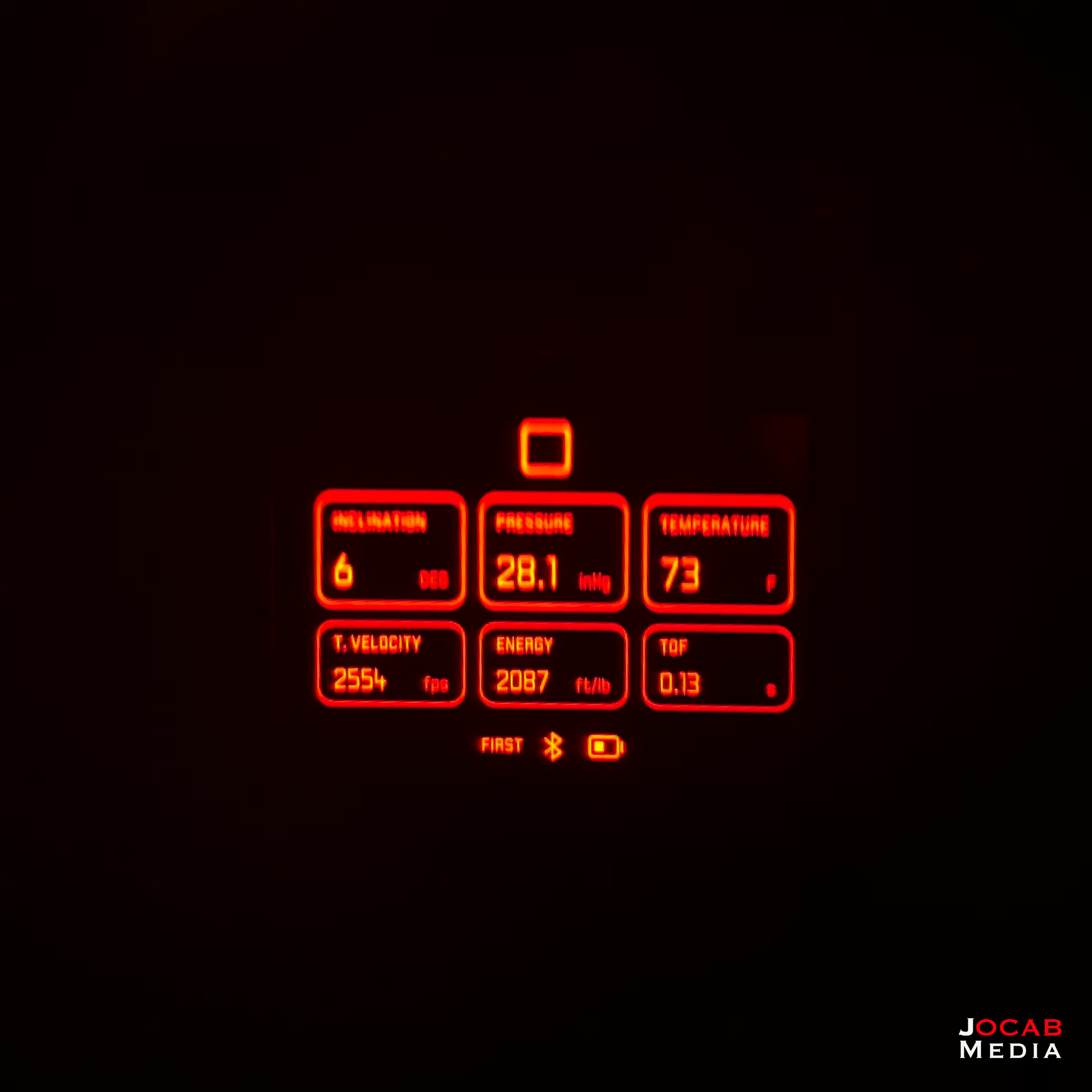
Unfortunately, it still does not display the active / loaded profile name from what I can find.
I am indifferent with the feature to choose the ranging ‘reticle’ or the aiming point, between a circle, square, and cross. I have been jumping around between all three and currently use the square.
I find the speed of the Geovid Max to be excellent, especially when starting from the powered down state. If the display has shut off and you ‘boot’ it up again by pressing the ranging button, it turns on very quickly (under a second). The ranging and data return is just as fast and only takes longer than a second when ranging beyond 2000 yards.
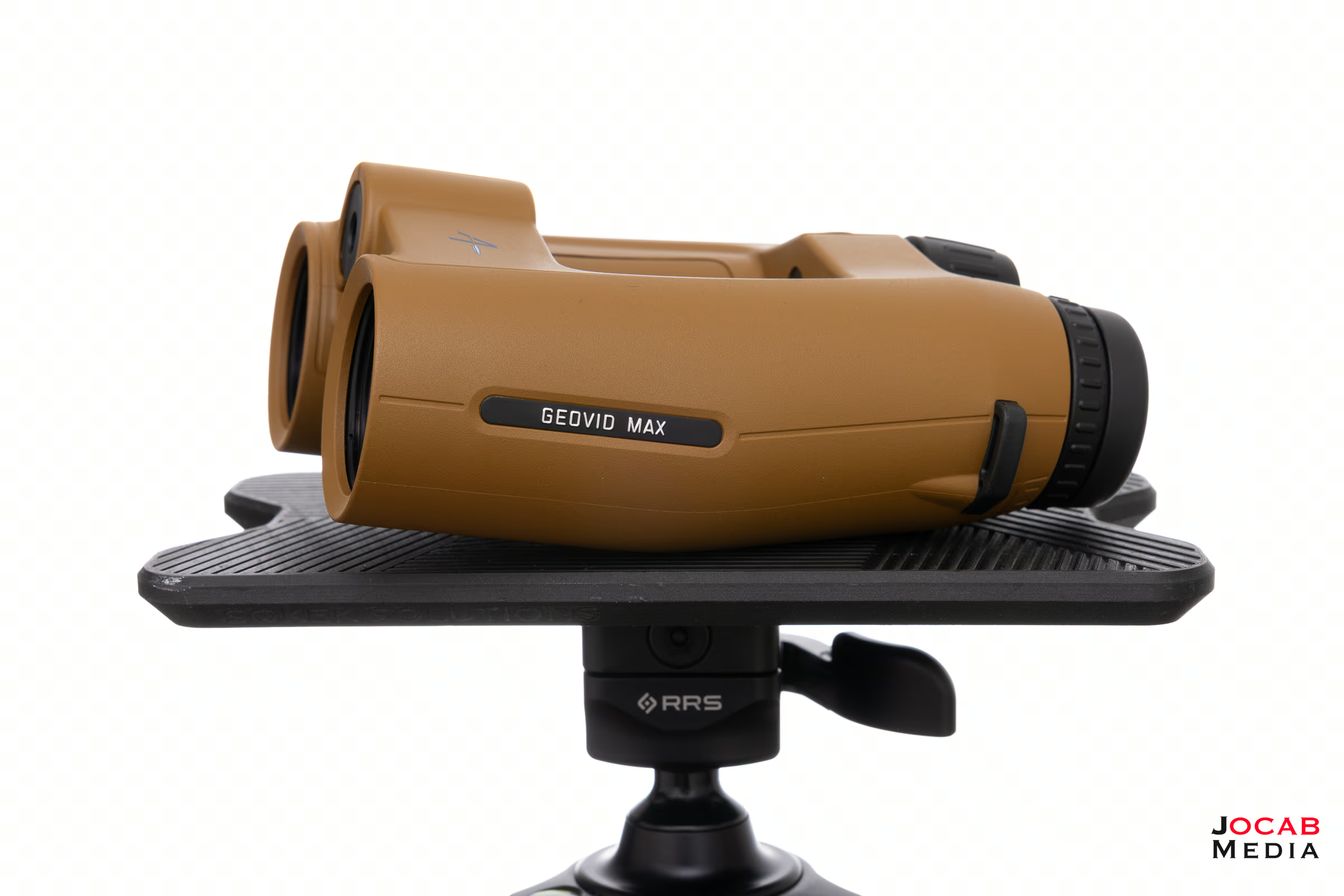
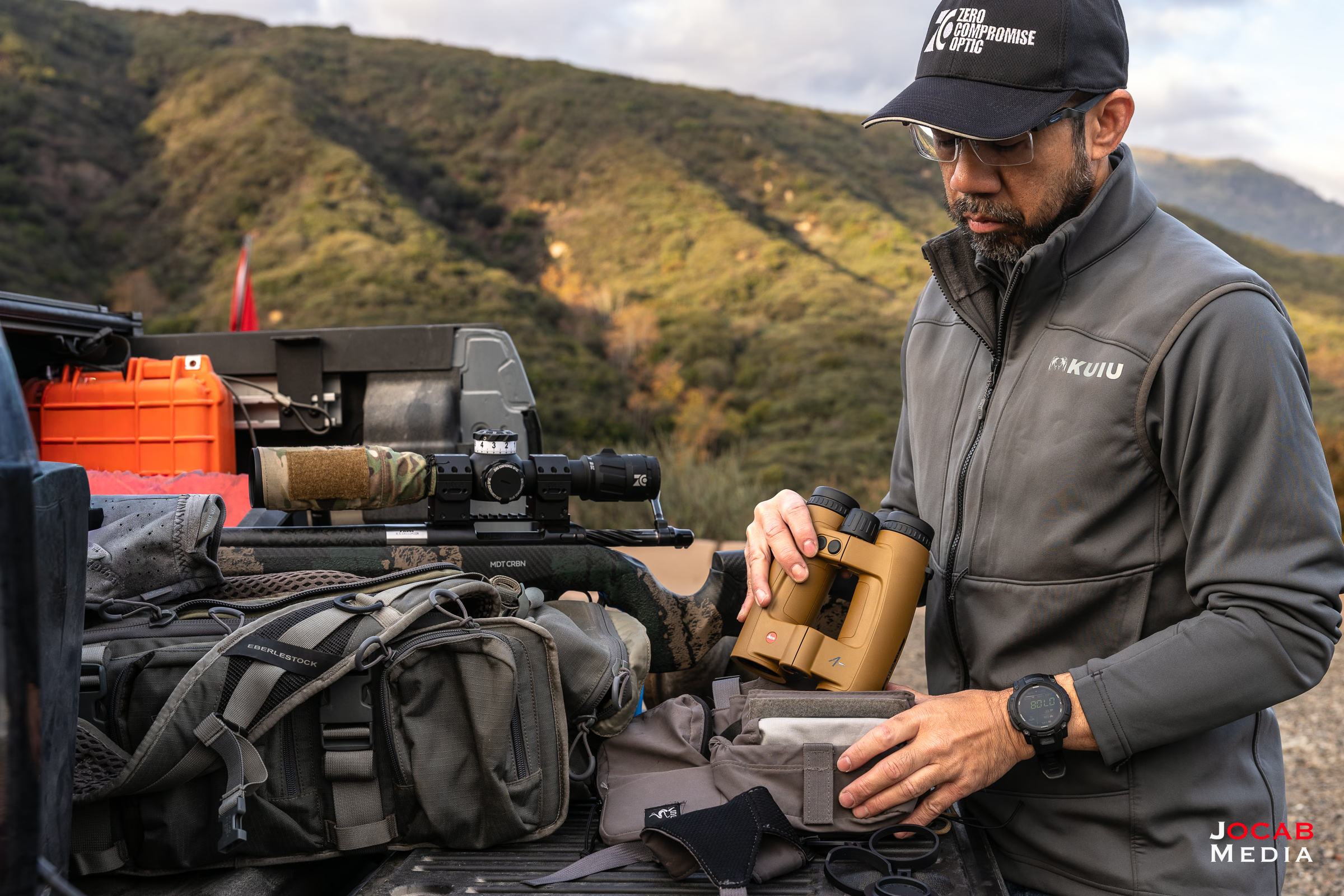
Ergonomically, the Leica Geovid Max is comfortable to hold with the unique shape of the barrels due to the Perger-Porro prism design that is exclusive to the Leica Geovid line. The placement of the ranging and menu button on the rear bridge is at a natural point for my finger (at least for me).
Although, the Geovid Max is a relatively large binocular and will likely need a larger binocular pouch or chest harness.
The 16mm eye relief is a bit short and those who wear corrective eyeglasses such as myself will be pressing glasses onto the eye cup ridge even when they are collapsed down.
As far as the performance of the laser, I will say a couple of things. First off, I did not achieve the 7300/8200 yards on reflective surfaces nor did I get 4600 yards on trees. In my testing which has been in some relatively contaminated Southern California air, I have only been able to get ~3000 yards on trees.
Second of all, the laser is not inline with the reticle on my unit. I have found that the laser is hitting high and right from the center of the reticle. If I use the square reticle, it will be near the upper right corner.
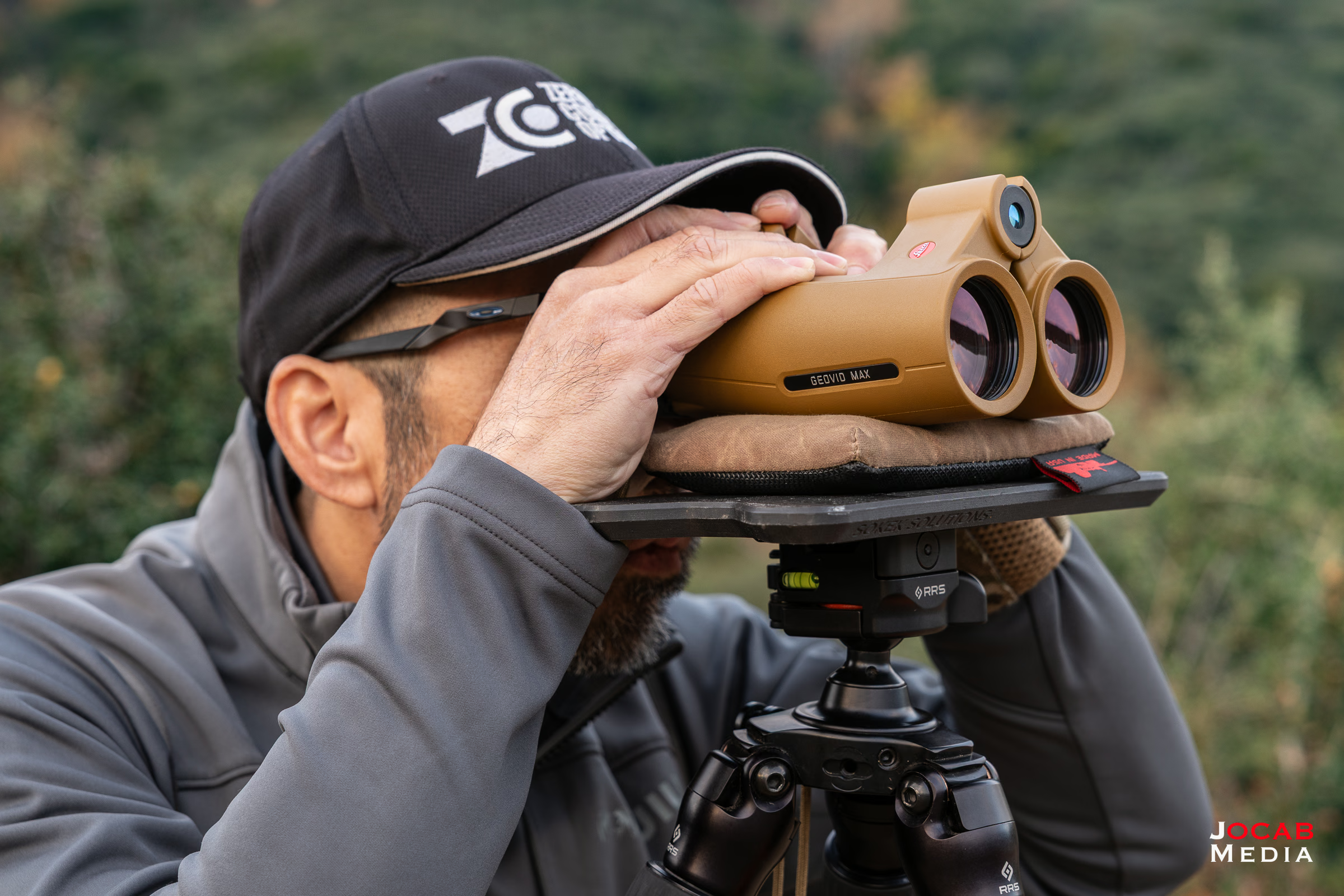
I was able to use the Leica Geovid Max 10×42 on Halloween weekend at the 2026 Defiance Ruckus Ghost Mountain PRSuit match in Temecula (California). I ended up using the Geovid Max on a tripod using a shooting bag (Armageddon Gear Gamechanger Schmedium with Git-lite fill).
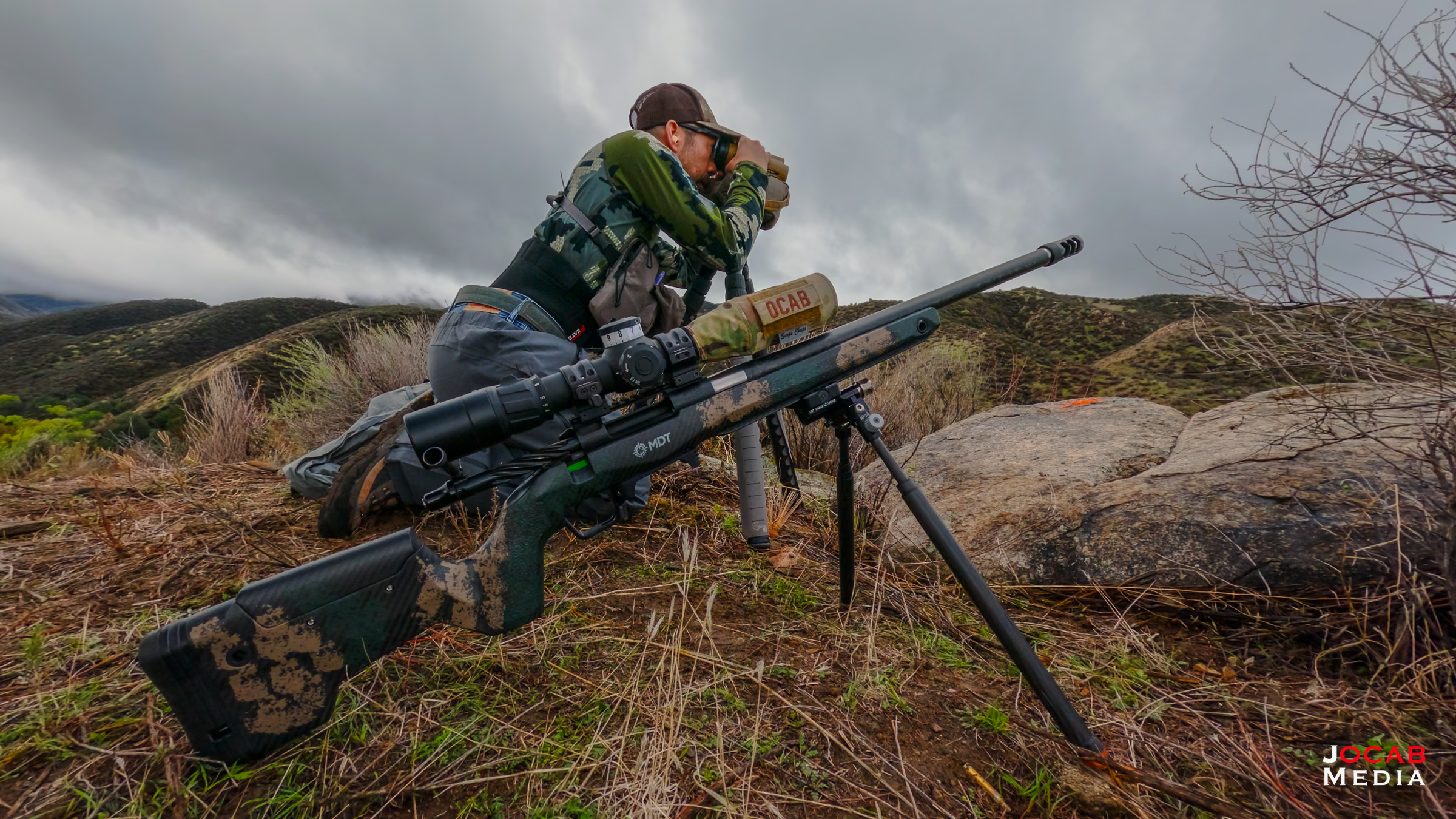
The Leica Geovid series of binoculars does not have a 1/4″-20 thread on the bridge for the common binocular adapter stud. I theorize this is due to the fact the laser emitter is in the front bridge of the Geovid Max.
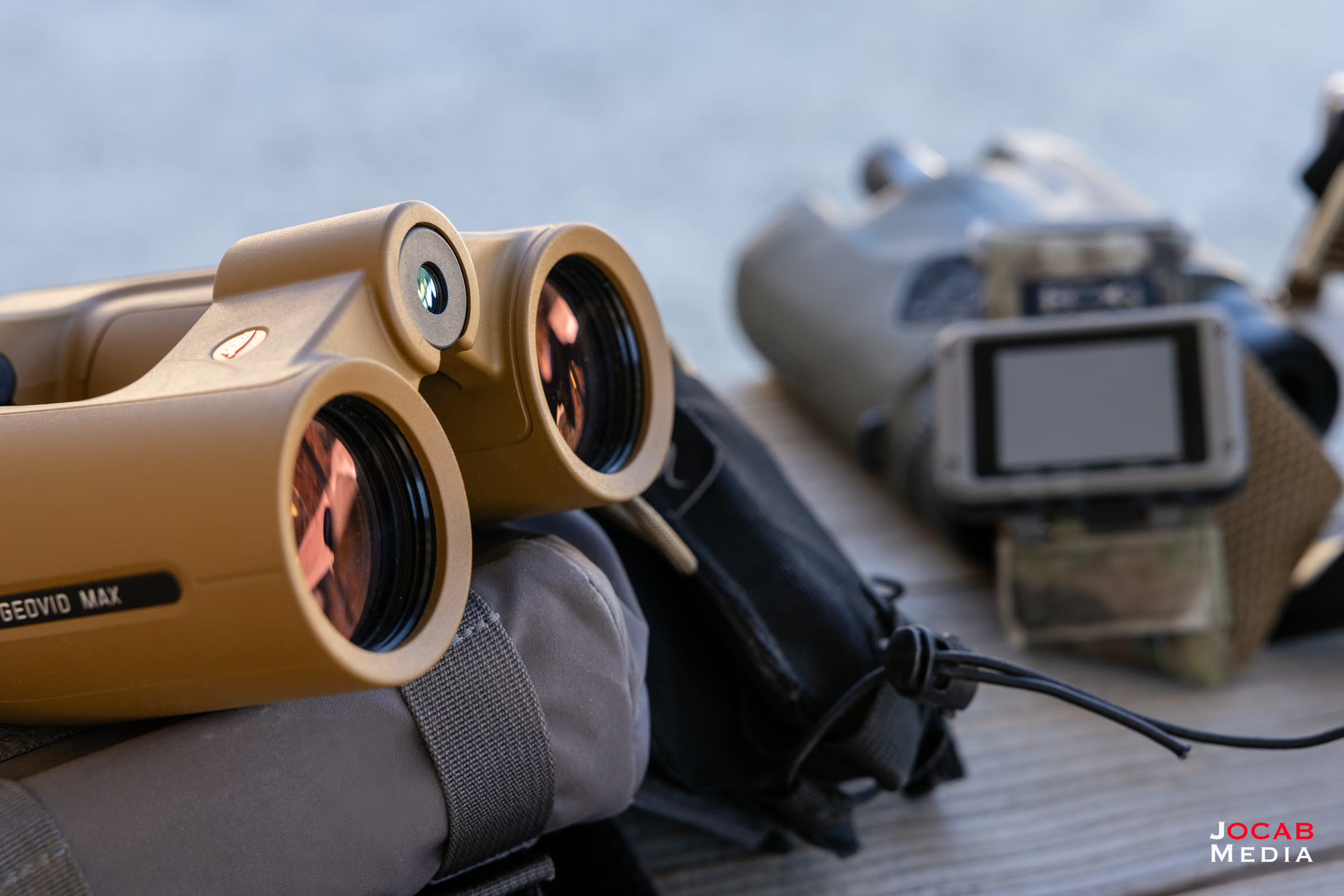
I opted to not use a Really Right Stuff Cinch-LR adapter as it adds a lot of bulk to the already bulky Leica Geovid Max and would make it very tight fitting in my Stone Glacier Sentinel (large) bino harness.
During the match, the Leica Geovid Max appears to have performed well. Although, I did find myself taking extra time to recheck the range to the target(s) by trying to offset the reticle to the target and ranging around the target due to the fact that the laser and reticle are not in perfect alignment.
There were two specific instances during the PRSuit match where I had ranging issues. The first was on a stage where the first IPSC target was around 570 yards, but the branches of a tree before the target were dipping on the top end of the line of sight to the target. When I was trying to get a range on the target, I was getting two readings, one being ~565 and ~590. Due to the branches, I thought the 565 yard reading was the branches and decided 590 yards must be the actual target. I aimed low on target just in case I was able to hit that target the first time. But the second engagement (1st target on a 2 target x 2 position stage) I missed the target twice (2-1 scoring).
After discussing it with the team prior, they also mis-ranged the target and said it was actually ~570 yards. I am guessing that I hit behind the target for the 590 range and that my ~565 reading was correct, and that the branches were a red herring.
The second instance of a ranging issue took place on Day 2 of the PRSuit match when it was raining during a stage. I was trying to get the distance of the targets (2 targets x 2 position stage) and the Geovid Max -would either give me 40 yards or the actual 500+ yards of the target.
Outside of that, the optical performance of the Leica Geovid Max proved to be very pleasing. I found the image to be excellent to my eyes with the constantly changing light conditions during the 2-day match, from sunny to overcast to dark clouds (and rain).
There really is not much to say about the onboard Applied Ballistics. The AB solver is already well-known and is an excellent ballistics calculator. What I will discuss is the connectivity with the Garmin Foretrex 901. I use the Foretrex 901 as my dope card during an NRL Hunter or other field match stage.
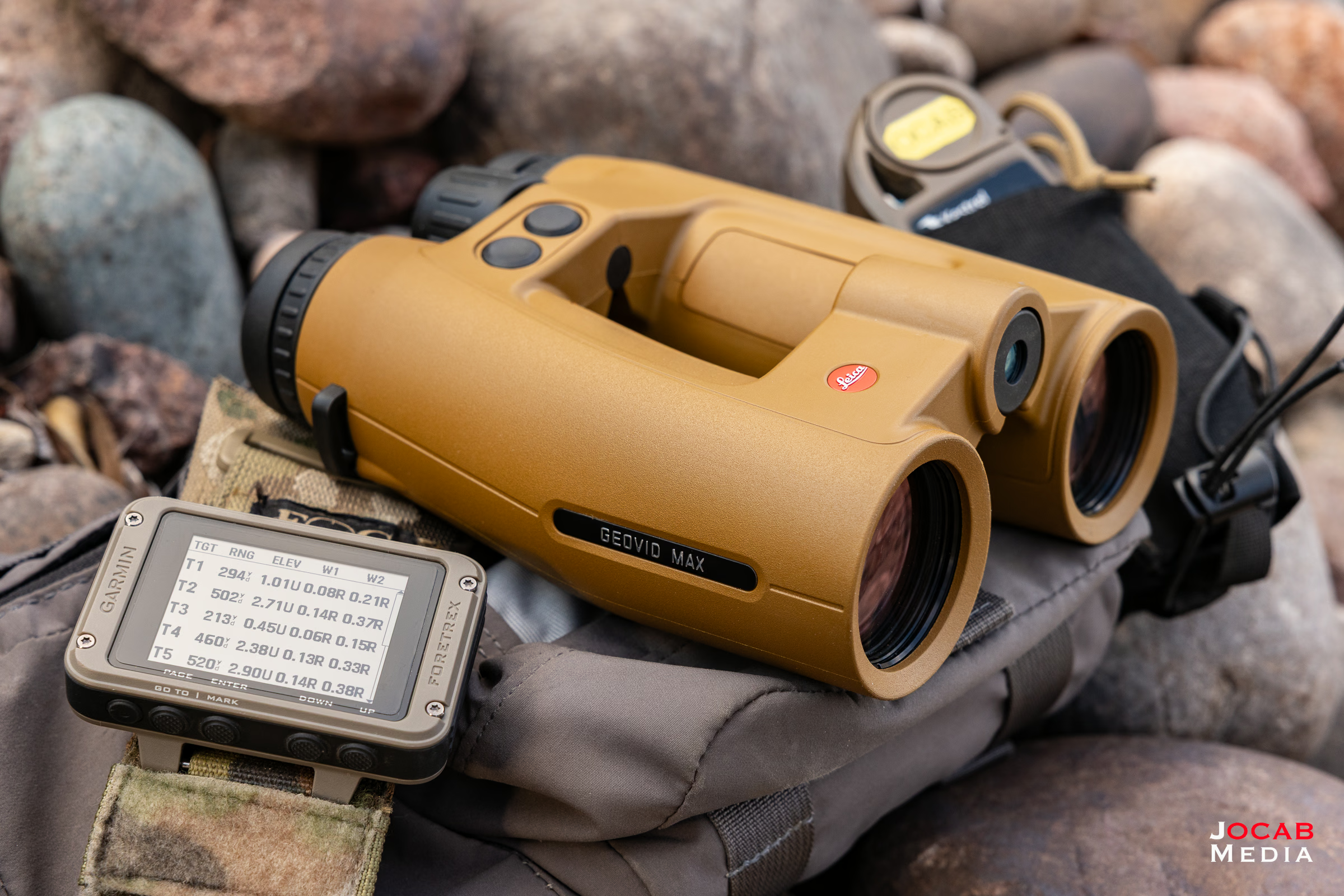
The Geovid Max has no issues connecting with the Foretrex 901. However, there are times when I actuate the ranging button to get a distance to target and it sometimes does not display the firing solution in the binocular screen.
I am not sure if it is because the range data was not sent to the Foretrex 901 at that time, or if the solution was not sent to the Geovid Max. This usually happens if I press the ranging button rapidly or if I am holding it down for scan mode.
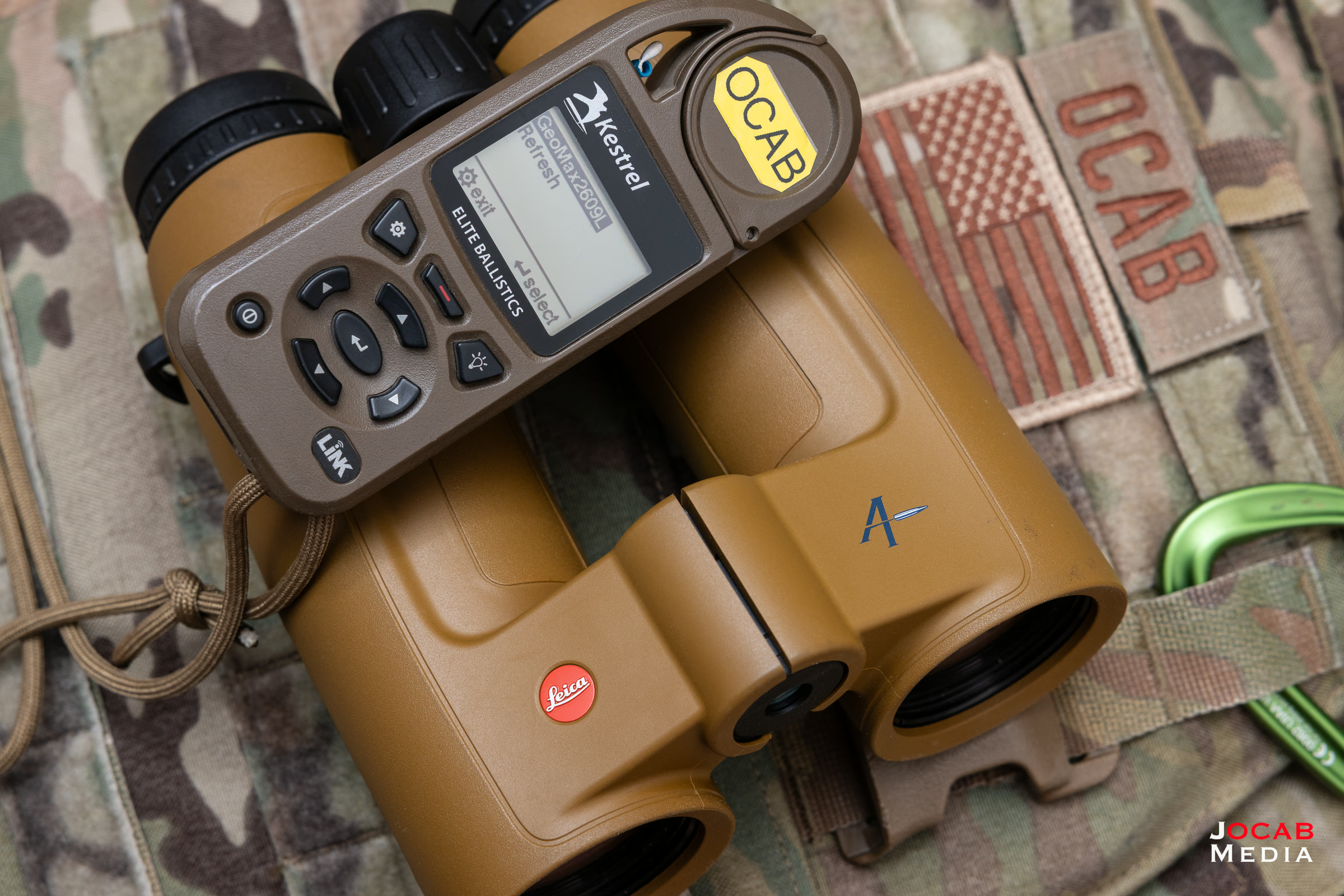
Connectivity with a Kestrel handheld meter such as a 5700 Elite is also straightforward and has similar performance in terms of the data transfer to and from the Geovid Max and Kestrel.
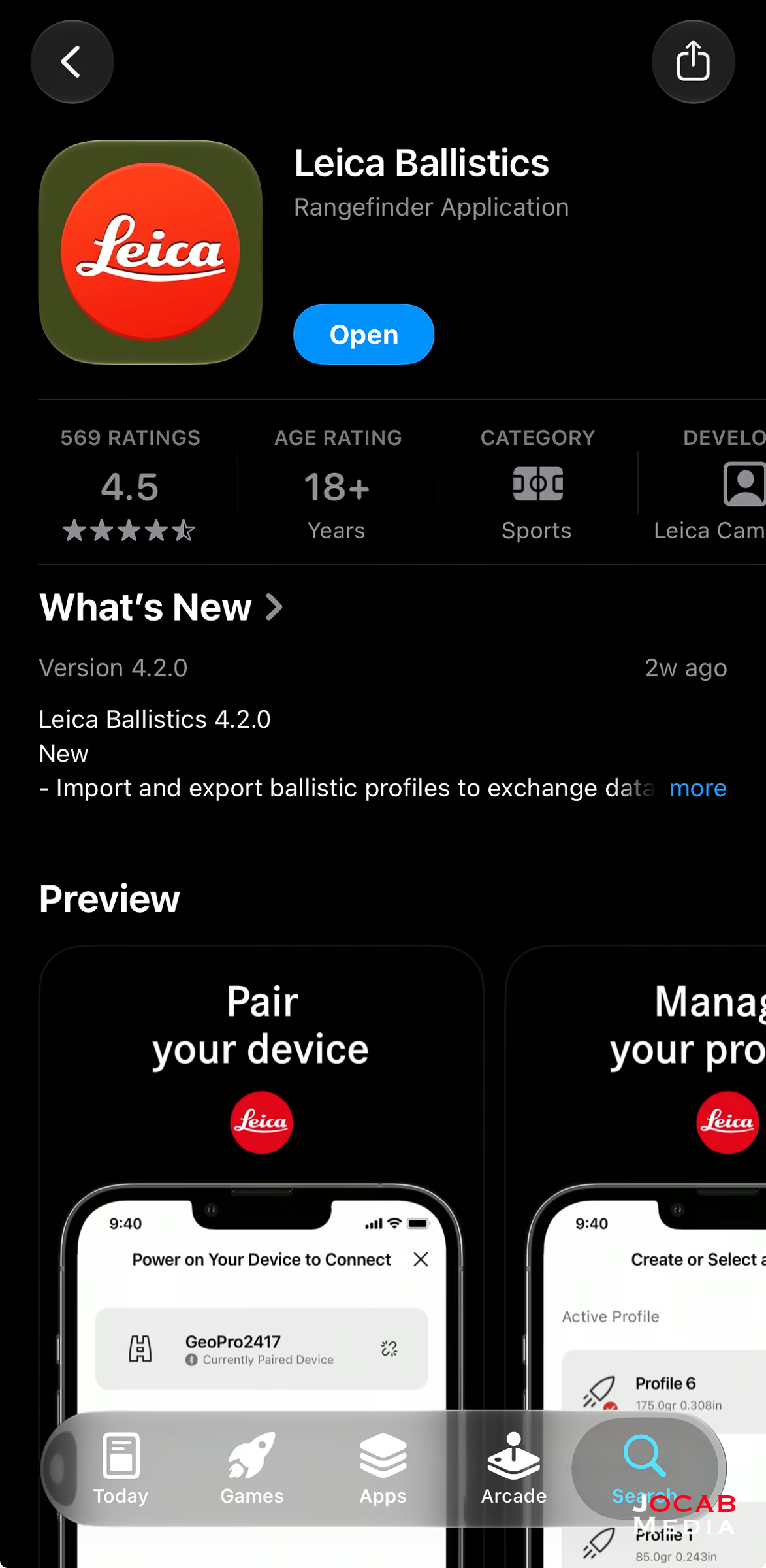
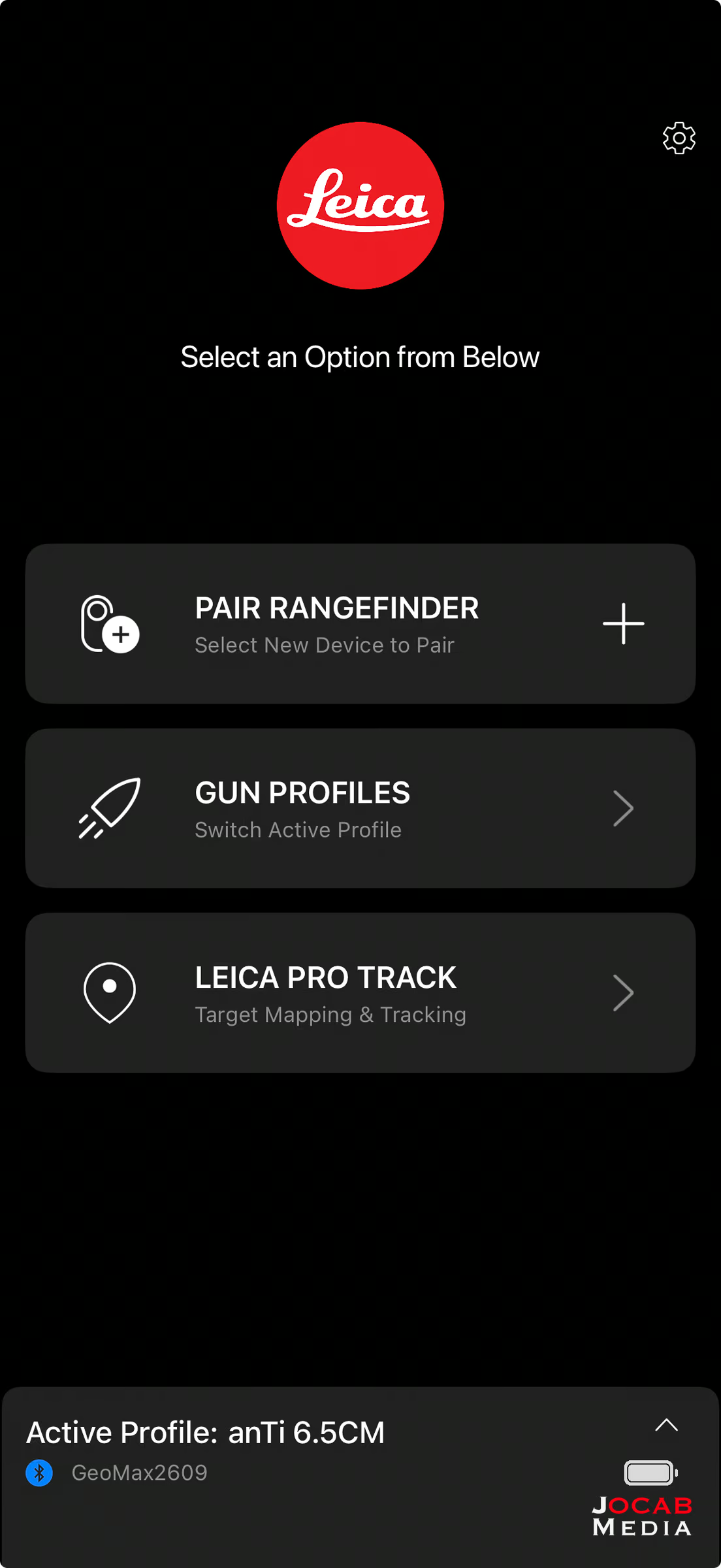
As far as managing the Leica Geovid Max with a smartphone, including loading gun profiles to the binocular, the user will need to use the Leica Ballistics phone app.
Unfortunately, it appears that you cannot use AB Quantum to push/sync profiles to the Leica Geovid Max like you can with other rangefinders such as the Vectronix Vector X.
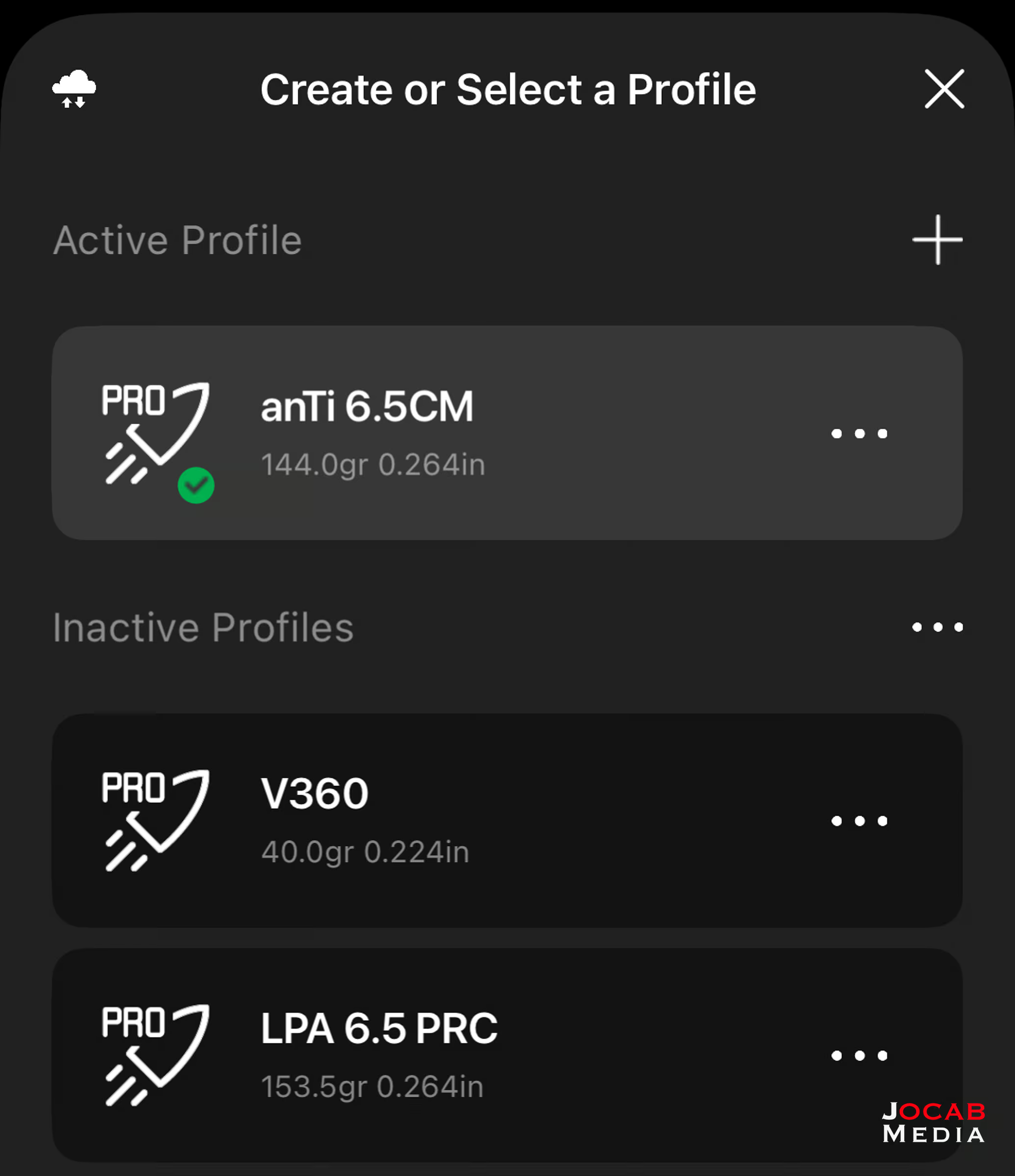
Furthermore, you can only have one profile on the binocular at any given time. Thus, if you wanted to switch to a different gun profile, you need to use your phone to make the profile change.
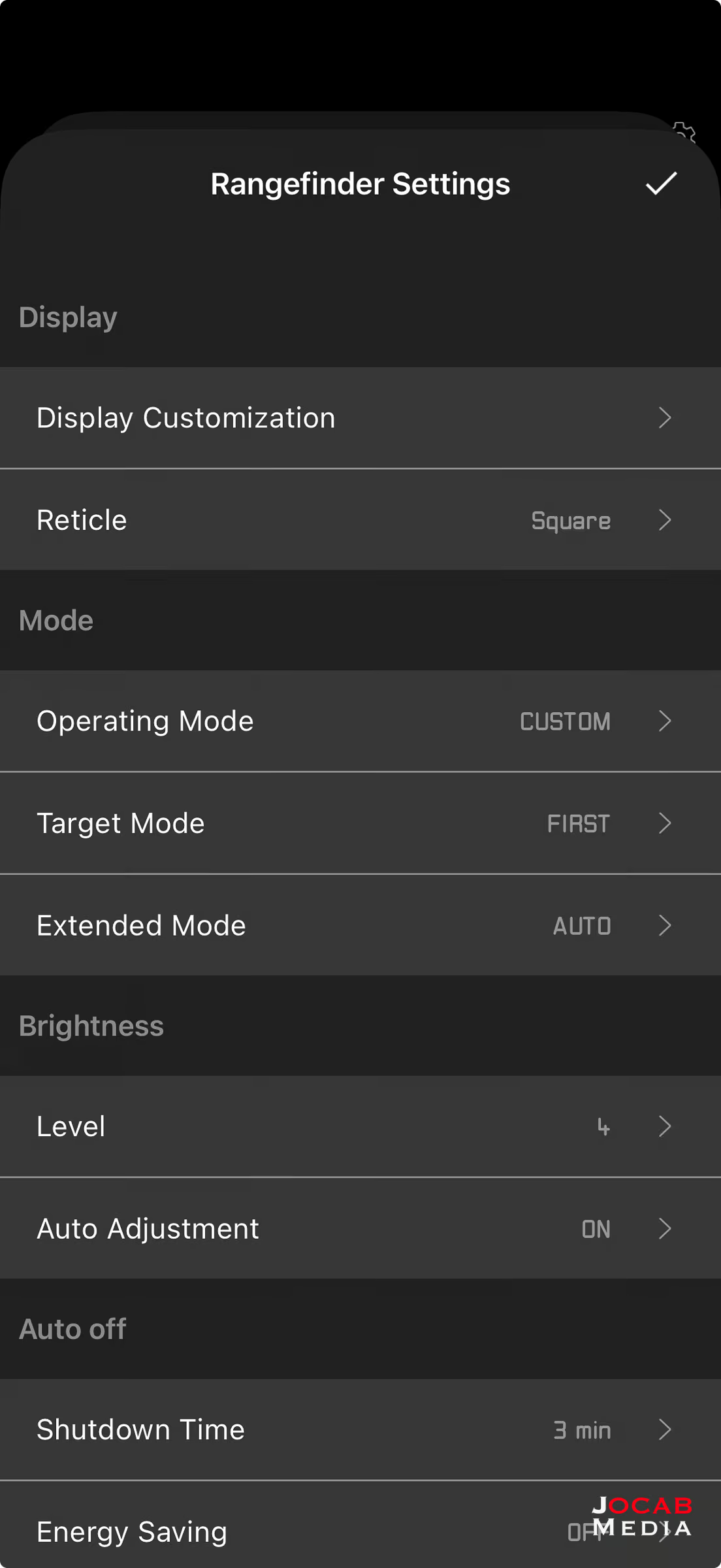
You also need the Leica Ballistics phone app in order to customize the primary display for the binocular data read out. This cannot be done independent of the phone app within the binocular menu system
What is my verdict on the Leica Geovid Max?
I feel this is an excellent Applied Ballistics capable laser rangefinding binocular. It combines top tier “Alpha Glass” optical performance with an above average (if not leading) laser and a fast data-rich display.
The data return is fast and I am not waiting for it to power on when I wake it up on a stage.
Connectivity with my Applied Ballistics accessories (specifically the Garmin Foretrex 901) performs as expected.
The Leica Geovid Max is comfortable to hold and the button placement feels natural to the grip in the hands.
There are a few criticisms I have for the Leica Geovid Max.
One is that the laser is not in-line with the center of the reticle and there is currently no feature to zero the reticle to the laser like with the SIG KILO8K and KILO10K. As stated, the laser on my unit is hitting up and right of the center of the reticle.
Another criticism is that the Leica Geovid Max lacks a 1/4-20″ tripod thread or other direct tripod mount capability. The only ways to mount the Geovid Max to a tripod will be with something like the Really Right Stuff Cinch-LR, the Wiser Precision BA-7 Sparrow, or a cradle. I have the RRS Cinch-LR and it works well enough.
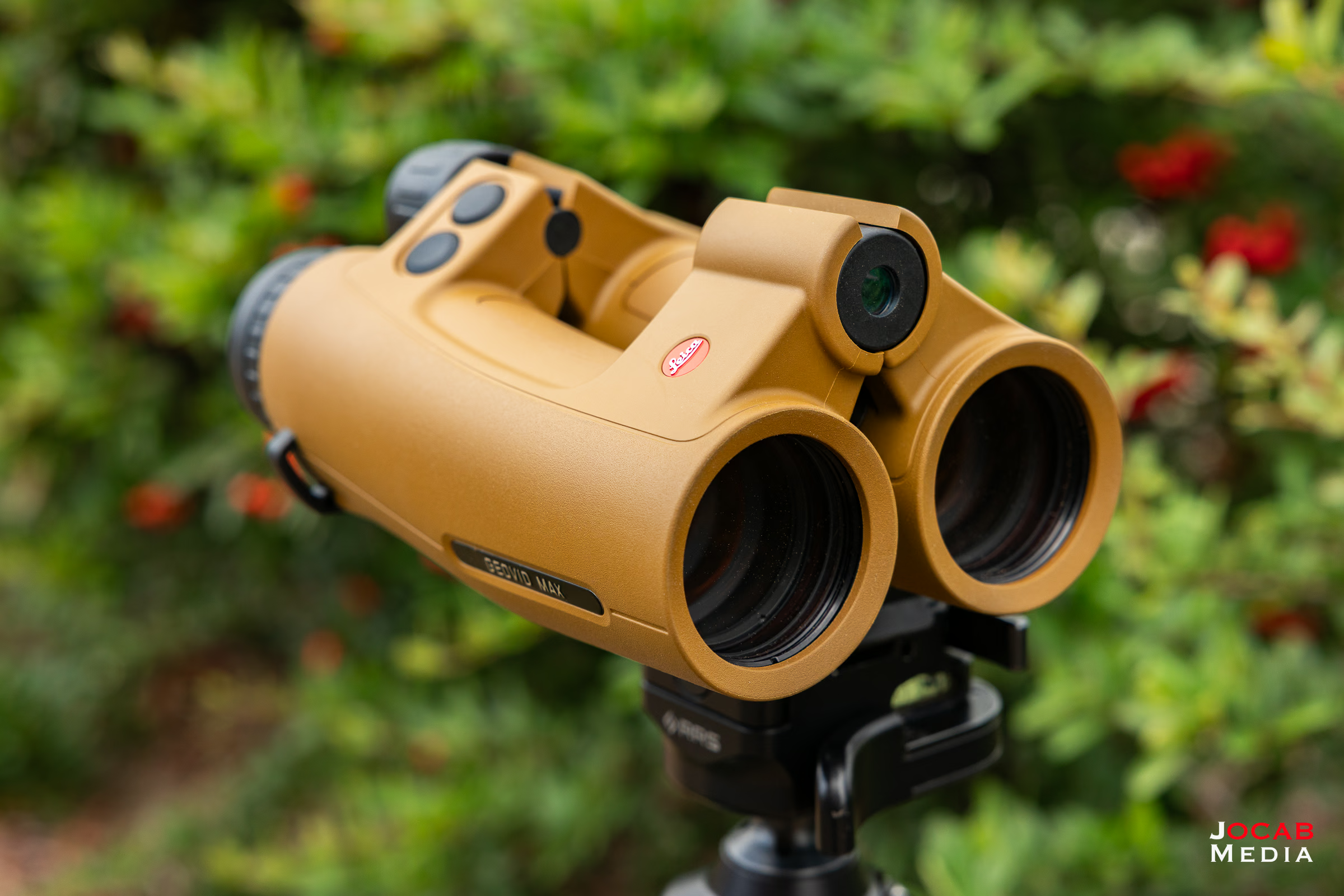
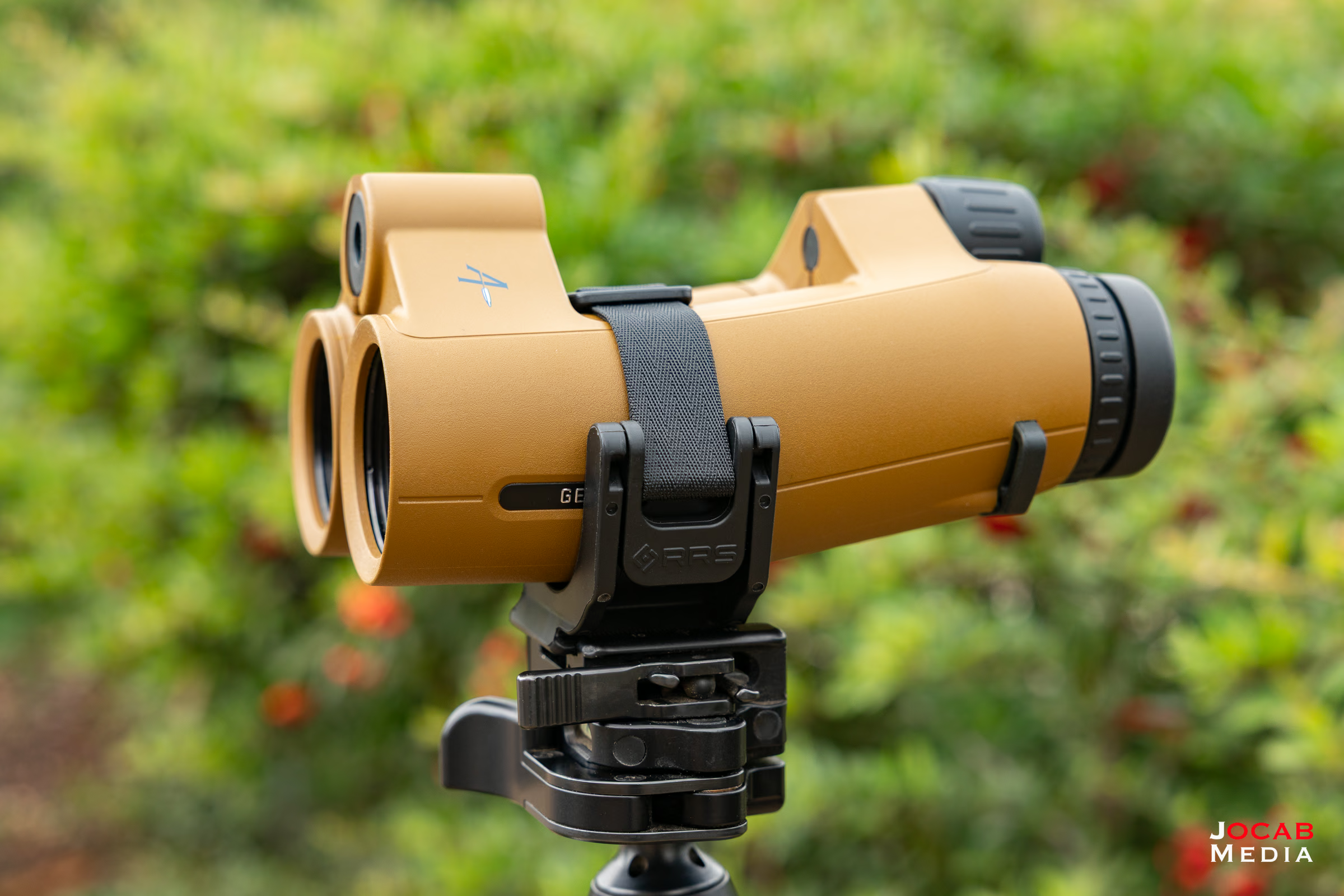
However, it adds significant bulk to the barrel of the binocular making it very difficult to pack in a binocular harness. I also have the Wiser Precision BA-7 Sparrow and find it to not be as sturdy or rigid when tightened down. Thus, I find myself just using the Geovid Max on tripod using a bag either on a tac table or directly on top of the tripod head.
A third criticism is that you cannot load more than one gun profile on the Leica Geovid Max at once. I wish you could have multiple profiles loaded, so that if you need to, you can switch profiles to a different gun (or even same gun with different bullet/ammo) without having to pull out a phone.
Furthermore, I am a bit disappointed you cannot manage profiles on the Geovid Max with the AB Quantum application. Given that the Leica Geovid Max has Applied Ballistics onboard and you can connect the Leica Geovid Max with AB Quantum, it is strange there is no support. Granted, this issue may be more with the AB Quantum software than with the Geovid Max.
Even though the Leica Geovid Max is comfortable to handle and use, it is on the larger side with regards to form factor. The Geovid Max comes in at 6.9 inches long by 4.9 inches wide with a height of 2.8 inches. There are bigger binoculars out there, but for a 10×42 these dimensions are on the larger size compared to others out there. Combine this with a weight of 37 ounces (2.3 lb or 2 lb 5 ounces), the Leica Geovid Max is a chunky 10×42 laser rangefinding binocular, especially when compared side-by-side with a SIG KILO10K or Vectronix Vector X.
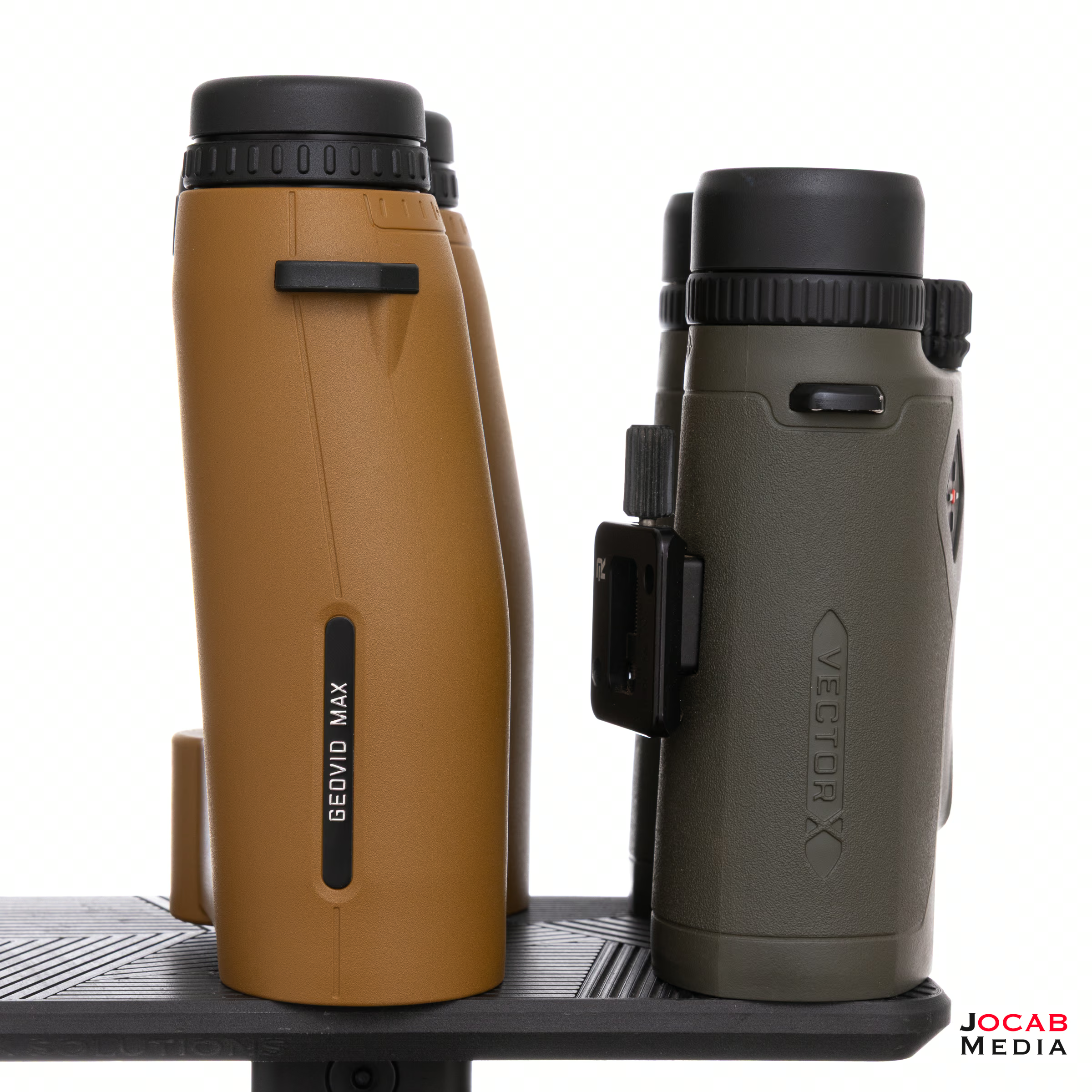
I mentioned that I use the Stone Glacier Sentinel binocular chest harness which works great with the Vectronix Vector X. The Leica Geovid Max fits in the Sentinel, but is more top heavy and can tip out easier. Not to mention, I cannot fit the Geovid Max with the RRS Cinch-LR adapter in the Stone Glacier Sentinel. I can jam it in, but it will not extract easily.
One final item I will bring to the table that I have not already mentioned is customer support. The Leica service center is in New Jersey and they have a 10-year warranty if the optic is damaged or defective with a 30-year warranty on the optical system.
For a period of 10 years we will repair or replace your Leica Sport Optic product purchased from an Authorized USA and Canadian dealer in the event it becomes damaged or defective, at no charge to you. If we cannot repair your product, we will replace it with a product in perfect working order of equal or better physical condition. It doesn’t matter how it happened, whose fault it was, or where you purchased it in the USA or Canada.
Please note that our Passport Protection Plan excludes coverage for intentional damage, misuse, cosmetic damage that does not affect the performance of the optic, fire, loss, theft, or unauthorized repair or modification.
…
Beyond the 10-year Passport Protection, Leica Sport Optics offers a 30-year warranty on the optical system of our products for products purchased in the USA and Canada from an authorized Leica Camera Inc. North American dealer. Once examined, if it is determined that the optical system is defective, we will repair or replace the instrument or defective part.
I have never personally worked with Leica customer support, but my research into the matter shows that Leica has relatively good service. On the other side of the coin, the customer support from Vectronix for the Vector X is relatively sub-par. Specifically when it comes to trying to get any binocular repaired as Vectronix does not repair damage and only replace (with cost to the owner), based on reports from users.
What is my recommendation regarding the Leica Geovid Max?
If you are a user of Applied Ballistics and are invested in the Applied Ballistics ecosystem, the Leica Geovid Max is a must-have laser rangefinder binocular.
Leica combines their top-tier alpha grade glass and reputable laser rangefinder technology with a superb Active-Matrix MicroLED screen and customizable display. All this is backed by very fast performance for data processing and data return to the operator. The combined package of the Leica Geovid Max feature set is going to place it above pretty much all laser rangefinder binoculars with integrated Applied Ballistics.
The Leica Geovid Max has an MSRP of $3999 USD. This was the original price of the Geovid Max which now has been lowered in price since the Max has replaced/supplanted the Pro in Leica’s binocular line. This places the Geovid Max in a very high end price range against the likes of the Swarovski Optik EL Range TA 42 and the Leupold BX-6 Range HD.
Given the high price point of the Geovid Max, it is understandable that one would look into other options. If you are invested in Applied Ballistics and cannot afford the $3999 USD price point of the Leica Geovid Max, I would recommend either the SIG KILO10 Gen 2 or the Vectronix Vector X.
If you are not invested the Applied Ballistics ecosystem, the Vortex Optics Talon with Geoballistics is easily available at the $2200 USD price point (at the time of this writing), and is getting a lot of praise. The new-in-2026 Leupold BX-6 Range HD with integrated Hornady 4DOF also has positive word of mouth.
Some may wonder about the Apex Optics Synergy, which is a 12×50 laser rangefinder binocular with Applied Ballistics. I saw a pre-production model at the 2026 SHOT Show and cannot give much of an opinion on it. These have been slowly trickling out and time will tell if the Synergy will be a better alternative to the Geovid Max, especially since the Synergy is currently priced at $3300 USD (pre-release price still valid as of this article release in November 2026).
As stated in the beginning of this write-up, the laser rangefinder binocular product segment is continuing to see continuous improvement by manufacturers. Buyers have a variety of options to choose from that should meet their needs.
As for me, I will be using the Leica Geovid Max 10×42 for the time being.
Pros:
- Top-tier optical quality
- Fast laser and ballistics solver data return
- Comfortable to hold
- Applied Ballistics ecosystem
Cons:
- No tripod mounting interface
- Laser not in-line with reticle (on author’s unit)
- Requires Leica Ballistics app to load profile
- Only one profile on binocular at any given time
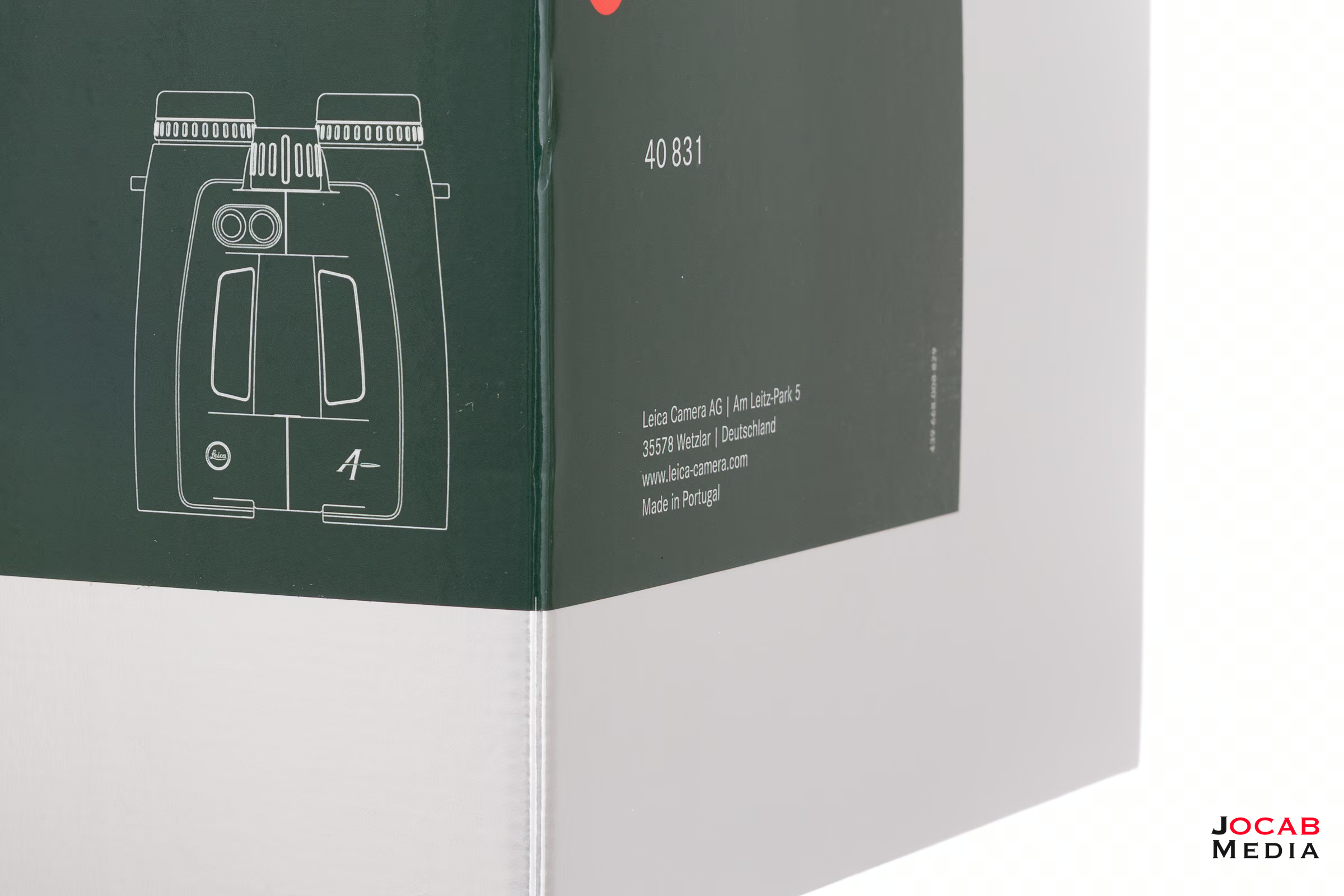
Note: Even though Leica is a German company, the Geovid Max as well as all of Leica’s laser rangefinders (monocular and binocular) are made in their manufacturing facility in Portugal.

Comment on this post